- Products
-
Shops
AI Search

Model/Type | Multiple models | Manufacturer (Origin) | Suzhou | Product Grade | Industrial-grade |
Content ≥ | 99(%) | Implementation Quality Standards | Manufacturer/Place of Origin | ||
Specifications | Nanoscale | Content | 99 |
Product Description:
Model/Type | Structure | Traits | Purity | Thickness | Usage | Other Notes |
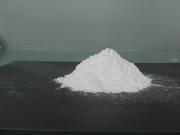
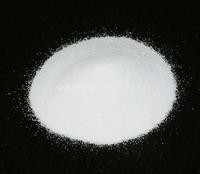
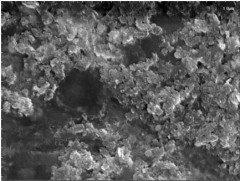
UG-SGraphene-01 | Single-layer graphene oxide | Solid powder | >99% | Completely single layer, thickness 0.7-1.2nm, numbering in the hundredsnm-Numberµm | Used for various film formation, drug carriers, composite materials, etc. | In water andDMFIt has excellent solubility in...,Metal content<10ppm, Insoluble impurities<0.01% |
ug-SGraphene-02 | Single-layer graphene | Solid powder | >99% | Layer thickness0.7-1.2nm, hundredsnm-Numberµm, | Suitable for various conductive additives, composite materials, etc. | Metal content<10ppm |
ug-SGraphene-03 | Nitrogen-doped single-layer graphene | Solid powder | >99% | Layer thickness0.7-1.2nm, hundredsnm-Numberµm | Suitable for various conductive additives, composite materials, etc. | Metal content<10ppm |
Product Introduction:
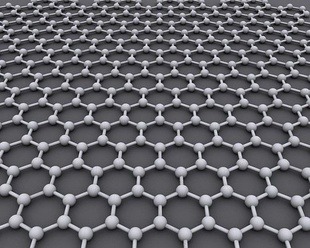
Graphene is currently the thinnest yet strongest nanomaterial in the world. It is almost completely transparent, absorbing only 2.3% of light. Its thermal conductivity reaches up to 5300 W/m·K, higher than that of carbon nanotubes and diamond. At room temperature, its electron mobility exceeds 15000 cm²/V·s, surpassing that of carbon nanotubes or silicon crystals, while its resistivity is only about 10⁻⁶ Ω·cm, lower than that of copper or silver, making it the material with the lowest resistivity in the world. Due to its extremely low resistivity and exceptionally fast electron mobility, it is expected to be used to develop thinner, faster-conducting next-generation electronic components or transistors. Since graphene is essentially a transparent and excellent conductor, it is also suitable for manufacturing transparent touch screens, light panels, and even solar cells.
Adding graphene to battery electrode materials can significantly enhance charging efficiency and increase battery capacity. Self-assembled multilayer graphene sheets are not only an ideal design for lithium-air batteries but can also be applied to many other potential energy storage fields, such as supercapacitors and electromagnetic railguns. Furthermore, the new graphene material will not rely on platinum or other precious metals, effectively reducing costs and environmental impact.
Display Industry: Graphene as transparent electrodes may be one of the fastest applications for graphene to achieve commercial use. Various displays, such as LCD TVs and camera screens, all require transparent electrodes. Displays made with graphene are characterized by being flexible, thin, and allowing light to pass through easily, so the backlight does not need to be as bright. Graphene displays can be bent, and while current flexible electronic paper struggles to display colorful animations, graphene displays can overcome this limitation. In the Harry Potter novels, the "Daily Prophet" with its moving pictures will no longer be just a figment of the author's imagination. Currently, the primary material for transparent electrodes is indium tin oxide, but its raw materials are running out. If graphene is used as a replacement, carbon—the raw material for graphene—is abundant on Earth.
Supercapacitor: A microscale graphene-based supercapacitor that charges and discharges 100 to 1,000 times faster than existing devices, helping to produce smaller mobile phones. Research also indicates that it can enable rapid charging for phones and cars, as well as allow certain tools to become smaller.
Medicine (Drug Carriers): Due to factors such as the coating material, particle size, nanostructure, and surface polarity of magnetic and targeted nanomedicines, these characteristics affect drug loading capacity, drug release rate, biosafety, biodegradability, and in vivo distribution. Therefore, in clinical applications, the type of nanocarrier must be carefully selected to achieve optimal results.