- Products
-
Shops
AI Search

Introduction
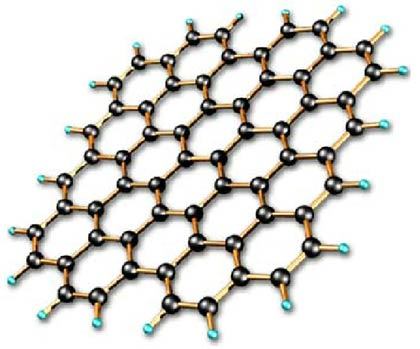
Graphene is a planar thin film composed of carbon atoms arranged in a hexagonal honeycomb lattice through sp2 hybrid orbitals. It is a two-dimensional material with a thickness of just one carbon atom, currently recognized as the thinnest yet also the hardest nanomaterial in the world. It is almost completely transparent, absorbing only 2.3% of light. Its thermal conductivity reaches up to 5300 W/m·K, surpassing carbon nanotubes and diamond. At room temperature, its electron mobility exceeds 15000 cm²/V·s, higher than that of carbon nanotubes or silicon crystals, while its resistivity is only about 10⁻⁶ Ω·cm, lower than copper or silver, making it the material with the lowest resistivity currently known.
Current Application Status
1. A Good Physics Experiment Platform
The electronic structure of graphene provides a more convenient means for verifying relativistic quantum electrodynamic effects. For example, scientists often need to rely on distant galaxies or expensive experimental equipment to test relativity, but graphene makes this process simpler and faster.
II. Applications in the Field of Electronic Technology
Graphene has excellent electrical conductivity, making it a **material** for fabricating nanoscale electronic devices. It can replace silicon as the next-generation electronic material, enabling devices that are smaller in size, lower in energy consumption, yet faster in speed. Examples include high-frequency transistors, single-electron transistors, superconducting field-effect transistors, and transparent electrodes.
III. Applications in Energy Storage
Graphene applied as an anode material for lithium-ion secondary batteries can significantly enhance its specific capacity, reaching up to 540 mAh/g. After incorporating C60 and carbon nanotubes, the specific capacity can achieve 784 mAh/g and 730 mAh/g, respectively.
The entire surface of single-layer graphene can form an electric double layer, offering unique advantages for applications in supercapacitors. Additionally, it can be applied in fields such as solar cells and gas storage materials.
IV. Applications in Other Areas
Graphene possesses an ultra-thin thickness, extremely high electrical conductivity, very weak spin-orbit coupling, the absence of hyperfine interactions, and sensitivity in electrical properties. It has a wide range of applications in fields such as field emission materials, quantum computers, ultra-sensitive sensors (e.g., biosensors, pressure sensors, pH sensors, chemical sensors, etc.), liquid crystal devices, and electromechanical resonators.
Graphene has a single-atom layer structure and a large specific surface area, making it highly suitable as a drug carrier. Currently, it is used to prepare biocompatible polyethylene glycol-functionalized graphene, which can maintain stable dispersion in plasma. This enables efficient loading of the antitumor drugs camptothecin derivative (SN38) and doxorubicin (DXR) onto graphene, opening a new chapter in biomedicine.
Grefini
Currently, both domestic and international methods for preparing graphene are relatively complex, the entire process is difficult to control, and only a small amount of graphene nanofilms can be produced, which greatly limits the application of graphene.
Grefini (Beijing) Technology Co., Ltd. has pioneered the world's first new technology for extracting graphene using jet cavitation. The technology features pure physical processing, no pollution, low cost, and the ability to produce in large quantities, providing a strong guarantee for the widespread application of graphene.