- Products
-
Shops
AI Search

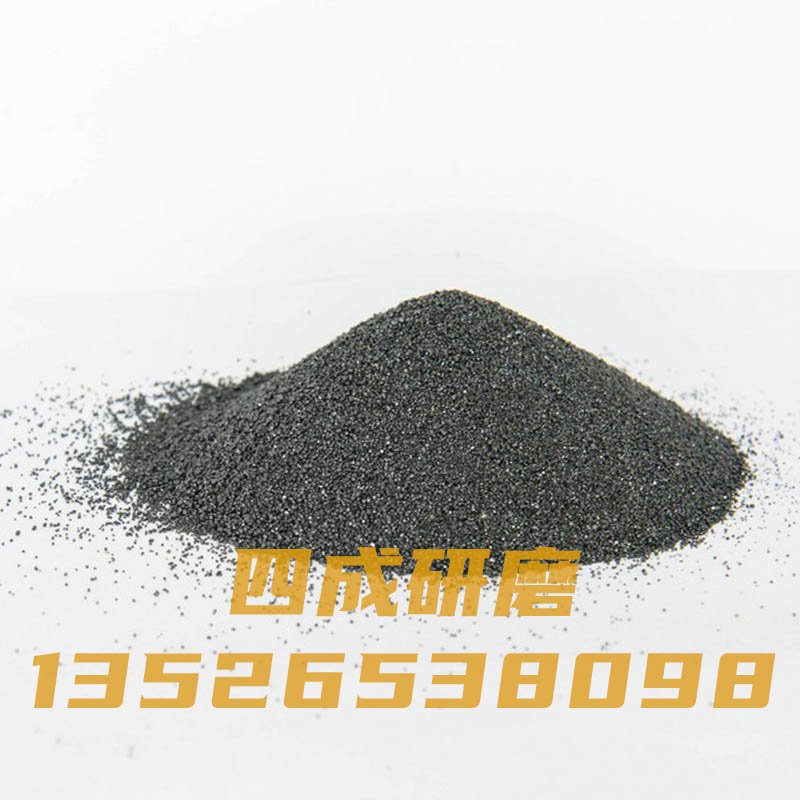
Chrome ore sand AFS40-50 with low silicon and high chromium content for preventing shrinkage deformation of steel castings.
Chromite sand AFS 40-50 is a black foundry sand with a semi-metallic luster. It originates from natural chromite ore. Chromite sand has a Mohs hardness of 5.5-6.5 and a specific gravity of 4.3-4.8 g/cm³. Natural chromite ore consists of two phases: spinel and gangue, which are typically associated. The spinel is Mg·FeO Al Cr2O3, while the gangue is serpentine H4 Fe·Mg3 Si2O9 (hydrated magnesium silicate). The chromite ore also contains small amounts of forsterite, quartz, omphacite, and other forms. Among these, quartz (SiO2) is harmful to chromite sand used in foundry applications and must be removed through processing.
Chromite sand AFS 40-50 is a black casting sand with a semi metallic luster. It comes from chromite ore in nature. Chromite sand has a Mohs hardness of 5.5-6.5 and a specific gravity of 4.3-4.8g/cm3. Natural chromite ore is composed of two parts: spinel and gangue, which are usually associated. Spinel is Mg • FeO Al Cr2O3, gangue is serpentinite H4 Fe • Mg3 Si2O9 (hydrated silicon magnesium), and there are also small amounts of magnesium olivine, quartz, green pyroxene and other forms in chromite. The quartz (SiO2) in it is harmful to the chromite sand used in casting and needs to be removed through processing methods.
Performance characteristics of Chromite sand AFS 40/50
(1)Chromite sand has excellent chilling properties. While this characteristic does not reduce hot tearing, it can influence the temperature gradient and promote directional solidification without the need for chill blocks. This property is particularly important for large, thick-walled castings, as it facilitates sequential solidification and reduces porosity defects.
(2)Chromite ore sand is inert and therefore does not react with other metal oxides. It is not wetted by manganese steel. Manganese steel castings can be successfully produced using chromite sand. If the mold is properly coated and the silica content is low, there will be no fayalite reaction.
(3)Chromite sand has low linear expansion, and linear expansion is a factor that may cause sand inclusion in castings. Therefore, it can be used to prepare green sand molds for large castings.
(4)Chromite sand, through fine-particle sintering, accompanied by chilling effects and high residual thermal strength, eliminates metal penetration and reduces the risk of chemical sand adhesion.
(5)Chromite sand has strong compatibility; it can be used together with various binders while also falling within a specific particle size range. Chromite sand can also be mixed with silica sand for use.
(6)Chromite sand has low silicon content, which reduces the intake of silicon dust during the cleaning of casting sand and does not pose health risks to humans.
(1) Chromite sand for steel casting has excellent quenching properties, which do not reduce hot cracking but can affect temperature gradients and promote directional solidification without the need for cold iron. This characteristic is important for large thick walled steel castings. Chromite sand can promote sequential solidification and reduce porosity defects.
(2) Chromite ore sand is inert and therefore does not react with other metal oxides. It is not wetted by manganese steel water. Manganese steel castings can successfully use chromium iron ore sand. If the mold is coated normally and the silicon oxide content is low, there is no iron olivine reaction.
(3) The thermal expansion of chromite sand is small. Linear expansion is a factor that may cause sand inclusion in castings. Therefore, it may be used to mix wet sand molds for large castings.
(4) Chromite sand is sintered through fine-grained sintering, accompanied by quenching and high residual heat strength, eliminating metal penetration and reducing the risk of chemical sand sticking.
(5) Chrome ore sand has strong compatibility and can be used together with various binders, while also belonging to a certain particle size range. Chromite sand can also be mixed with silica sand for use.
(6) The silicon content of chromite sand is low, and cleaning the casting sand can reduce the intake of silicon dust, which will not have a health impact on the human body.
Technical parameters of Chromite sand AFS 40-50:
1. Chemical composition
Cr2O3 (Chromium(III) oxide) | ≥ 46% |
SiO2(silicon dioxide) | ≤ 1.0% |
FeO(Iron oxide) | ≤ 26.5% |
CrFe (chromium-to-iron ratio) | ≥1.5:1 |
MgO(Magnesium Oxide) | ≤ 10% |
CaO(Calcium Oxide) | ≤ 0.3% |
Al2O3(Aluminum Oxide) | ≤ 15.5% |
P(Phosphorus) | ≤30 ppm |
S(sulfur) | ≤30 ppm |
Cr/Fe(Chromium-iron ratio) | ≥ 1.55:1 |
2.Physical Properties:
Mohs Hardness | 5.5-6 |
Melting Point | 2180 ℃ |
Sintering Point | >1800℃ |
Specific Gravity | 4.0-4.8 g/cm3 |
Bulk Density (LPD) | 2.5-3 g/cm3 |
Color | Black |
PHPH Value | 7-9 |
Thermal conductivity | 0.63 W/M·K |
Thermal Expansion Rate (1000)℃) | 0.6% |
Acid Demand Value (ADV) | ≤ 5ML |
Turbidity (JTU) | ≤ 110 |
Soil content | ≤ 0.1% |
Moisture | ≤ 0.1% |
Application scope of Chromite sand AFS 40/50:
1. Casting of Large Thick-Walled Castings: Processes such as chromite sand combined with sand mold casting, furan resin self-hardening sand, and sodium silicate self-hardening sand are used for large-volume and heavy-weight iron and steel castings. These methods enable the castings to cool in a predetermined sequence, which helps improve internal density and enhance the strength of the castings. Additionally, for processes using silica sand, chromite sand can be used as facing sand to replace silica sand at critical areas prone to porosity and veining, effectively preventing casting defects such as cracks and porosity.
2. Lost foam casting. In lost foam casting, the use of chromite sand can prevent defects such as sand inclusion and sand adhesion caused by quartz sand casting. It is used to manufacture castings such as valves and impellers made of high-chromium cast steel and high-manganese steel.
3. Shell Molding: Chromite sand can be used as a core sand material for complex components in shell molding to produce sand cores. It is used to manufacture high-precision, smooth-surfaced 304 and 316 stainless steel castings, as well as carbon steel precision castings, effectively preventing sand adhesion issues in the internal cavities of castings.
4. Sand Casting: Chromite sand can also be used in sand casting processes, such as green sand casting and sodium silicate self-hardening sand casting, to produce various small, medium, and large components, including pump bodies, pipes, valves, and more.
1. Large scale thick walled casting: Chromite sand combined with sand casting, furan resin self hardening sand, water glass self hardening sand and other processes are used for large volume and weight cast iron and steel castings. It can cool the castings in a predetermined order, which is conducive to improving the internal tightness of the castings and enhancing their strength. In addition, for the process of using silica sand, chromite ore sand can be used as surface sand instead of silica sand in key areas where porosity and veins are prone to occur, which can effectively prevent casting defects such as cracks and porosity.
2. Lost foam casting. In lost foam casting, using chromite sand can prevent defects such as sand inclusion and sticking caused by quartz sand casting. Used for manufacturing castings such as valves and impellers made of high chromium cast steel and high manganese steel materials.
3. Shell casting: Chromite sand can be used as a core sand material for complex components in shell casting, making sand cores. Used for producing high-precision, smooth surface 304316 stainless steel castings and carbon steel precision castings. It can effectively prevent the problem of sand sticking in the inner cavity of castings.
4. Sand casting: Chromite sand can also be used for sand casting, such as sand casting, water glass self hardening sand casting, etc., to produce various large, medium, and small parts, such as pump bodies, pipelines, valves, etc.
Chromite sand AFS 40/50The particle size distribution is as follows:
+30mesh(600um) | 1.60 |
+40mesh(425um) | 22.00 |
+50mesh(300um) | 34.50 |
+70mesh(212um) | 32.90 |
+100mesh(150um) | 9.00 |
AFSFineness value | 43.47 |
Other models of Chromite sand:
Domestic conventional particle sizes: 10-20 mesh, 20-40 mesh, 20-60 mesh, 30-70 mesh, 40-70 mesh, 50-100 mesh, 70-140 mesh, 140-270 mesh, 0-1mm, 200 mesh, 325 mesh, 400 mesh, 70#-0
Export conventional particle sizes: AFS 25-35, AFS 25-30, AFS 30-35, AFS 35-40, AFS 40-45, AFS 45-50, AFS 40-50, AFS 50-55, AFS 55-60, AFS 60-65, 0-1mm, 200#, 325#, 400#.