- Products
-
Shops
AI Search

Spare Parts for Jet Mill - Classifying Wheel
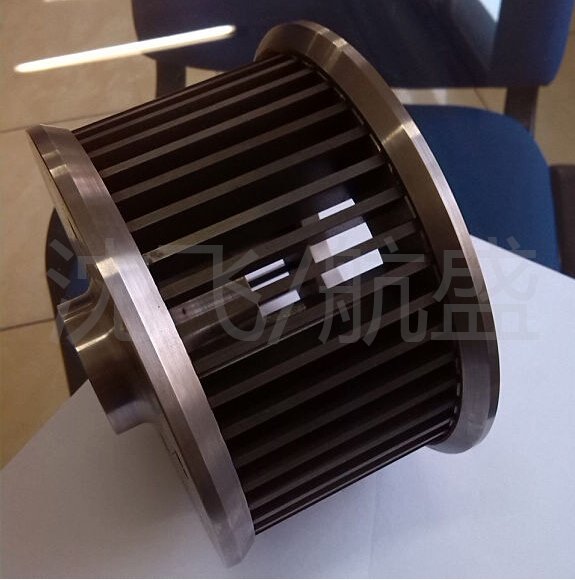
Horizontal and Vertical Classification Wheels
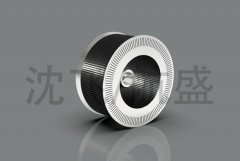
The classifier wheel is installed on the upper body of the jet mill. Rotating at a high peripheral speed, it generates a centrifugal force field. The rising airflow carries the crushed material into this centrifugal force field. Fine particles that meet the particle size requirement pass through the gaps between the blades and enter the collection system, while coarse particles are thrown out by centrifugal force and returned to the grinding zone for further crushing.
Therefore, the classifying wheel is the core component of the jet mill. Currently, the classifying wheels of jet mills are available in two installation configurations: horizontal and vertical.
A symmetrical vortex is formed by the Laval nozzle, with the lower part of the vortex driving the material at the bottom of the grinding chamber upward to the crushing zone. The central area of the vortex above the nozzle moves upward, while the sides move downward, enabling cyclic crushing. Fine powders are carried by the central flow into the classification zone. The horizontal classification wheel can generate a well-formed and stable flow field, which is conducive to the ultra-fine crushing of materials.
The vertical classifier wheel can also form a symmetrical centrifugal force field. However, since the gas-solid two-phase flow is obstructed by the bottom plate of the classifier wheel, it must bypass the bottom plate, pass through the side space between the classifier wheel and the chamber, and enter through the upper two-thirds area of the classifier wheel. This reduces the classification efficiency of the classifier wheel. Additionally, some of the powder entering the classifier wheel will accumulate at the bottom, forming a conical pile, which is not conducive to cleaning the jet mill.
The horizontal classifier wheel operates differently: the upward airflow carries the powder directly into the centrifugal force field, where fine particles change their direction of motion upon entering the classifier wheel and exit in a spiral pattern. Within the centrifugal force field, the direction of gravity on the particles aligns with the direction of centrifugal force, enabling precise classification and facilitating the ejection of coarse particles from the centrifugal force field into the grinding zone for further pulverization. The horizontal classifier wheel also offers greater stability and reliability in operation, and for large-scale pulverizers, multiple classifier wheels can be arranged horizontally opposite each other.
In summary, the horizontal classifier wheel has more advantages compared to the vertical classifier wheel. Over twenty years of manufacturing and operational experience with domestic jet mills have also demonstrated the performance advantages of the horizontal classifier wheel.
Objectivity: vertical and horizontal classifier wheels each have their own advantages and disadvantages. The horizontal classifier wheel offers high classification precision, but its high linear speed increases wear. In contrast, the vertical classifier wheel is simple to manufacture and experiences less wear, though its classification precision is far inferior to that of the horizontal wheel. Therefore, for producing coarse powder with a focus on output, an airflow mill and classifier with a vertical classifier wheel can be used. However, for customers pursuing fineness (quality) and large particle control (below 10 microns), an airflow mill with a horizontal classifier wheel is recommended.
Additionally, the horizontal jet mill offers advantages in terms of usage and maintenance. For instance, when changing product specifications (fineness), cleaning the mill does not require disassembling the motor. In contrast, the vertical jet mill requires disassembling and reassembling the motor suspended at the top, which is more cumbersome and labor-intensive compared to the horizontal type.
To inspect and replace the nozzle of a vertical jet mill, it is necessary to open the side cover of the lower body and remove the entire nozzle tube before proceeding with the operation. This often requires disassembling and reassembling the lower body, which weighs several hundred kilograms, making it very inconvenient. In contrast, the nozzle of a horizontal jet mill is connected via threads, and inspection and replacement can be done simply by opening the observation window.