- Products
-
Shops
AI Search

Product Details
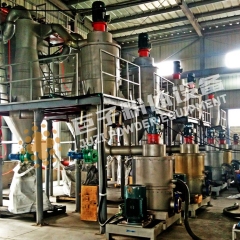
Introduction to Flexible Production Technology for Resource Utilization of Paper Mill Sludge
I. Main Technical Content
This project uses paper mill sludge as raw material. After pretreatment, it undergoes air drying and graded crushing to produce lignocellulose, mineral powder, or composite fiber materials. The key technologies employ the principle of air drying and advanced ultrasonic separation to ensure product quality and environmental protection. The products are flexible and diversified to meet market demands.
II. Technical Specifications
The composite fiber powder produced has a particle size of 80 mesh ≤ 0.02%, 100 mesh ≤ 0.5%, ash content ≤ 60%, and density of 0.15–0.25 g/mm³, applied in the rubber and plastics industries. The wood cellulose powder meets the standard for wood powder used in molding compounds, while the mineral powder complies with the technical requirements for raw materials in papermaking, rubber, and plastics.
III. Economic Indicators
The electricity cost per ton is 97.5 yuan (130 kW × 0.75), with other costs at 35 yuan, totaling 132.5 yuan per ton. The annual output is 15,000 tons, with a total investment of 2.6 million yuan (fully automated), or an intermittent production investment of 1.2 million yuan, yielding a daily output of 50 tons. The annual economic benefit is 1.2 million yuan, with the investment being recovered within 3 years.
IV. Production Process:
Compound fiber powder
Sludge → Pretreatment → Air Drying → Crushing (Separation) Fiber Powder
Mineral powder
V. Uses
Wood-plastic composite materials, plastic and rubber reinforcing fillers, molding powder raw materials, friction material raw materials, paper recycling raw materials, raw materials for composite boards and shoe soles, fibers for asphalt and concrete, etc.
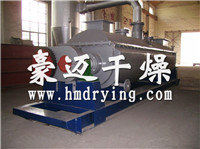
Overview of Sludge Dryer:
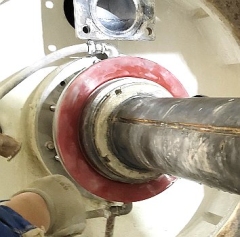
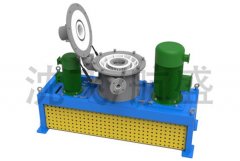
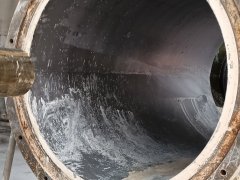
The hollow shaft is densely arranged with wedge-shaped hollow blades, through which the heat medium flows via the hollow shaft. The heat transfer area per unit effective volume is very large, with the heat medium temperature ranging from -40°C to 320°C. The medium can be steam or liquid types, such as hot water or thermal oil. Through indirect conduction heating, there is no heat loss carried away by air, and all the heat is used to heat the material. The only heat loss is the dissipation to the environment through the insulation layer of the equipment body. The wedge-shaped blade heat transfer surface has a self-cleaning function. The relative motion between material particles and the wedge-shaped surface creates a scrubbing effect, which can wash away materials adhering to the wedge-shaped surface, ensuring that the heat transfer surface remains clean during operation. The shell of the blade dryer is W-shaped, and typically two to four hollow stirring shafts are arranged inside the shell. The shell is equipped with a sealed end cover and a top cover to prevent the leakage of material dust and to collect solvent vapor from the material. A baffle plate is installed at the discharge port to maintain the material level height, ensuring that the heat transfer surface is covered by the material and functions effectively. The heat medium flows through the shell jacket and the hollow stirring shafts via a rotary joint. The hollow stirring shafts have different internal structures depending on the type of heat medium to ensure optimal heat transfer performance.
Application of Paper Mill Sludge Dryer:
●Paddle dryers have been successfully used in industries such as chemical, petrochemical, dyeing, industrial sludge drying, papermaking sludge drying, printing and dyeing sludge drying, and domestic sludge drying. The equipment's heat transfer, cooling, and stirring characteristics enable it to perform the following unit operations: calcination (low temperature), cooling, drying (solvent recovery), heating (melting), reaction, and sterilization.
● The stirring blades also serve as heat transfer surfaces, increasing the heat transfer area per unit effective volume and shortening processing time. The wedge-shaped blade heat transfer surfaces also have a self-cleaning function. The compression-expansion stirring function ensures uniform mixing of materials. The materials move in an axial "plug flow" pattern, resulting in minimal gradients of temperature, humidity, and mixing degree within the axial zone.
● Using thermal oil as the heat medium, the paddle dryer can perform low-temperature calcination. For example: calcium sulfate dihydrate (Ca2SO4·2H2O) is calcined and converted into calcium sulfate hemihydrate (Ca2SO4·1/2H2O). Sodium bicarbonate (NaHCO3) is calcined and converted into soda ash (Na2CO3), etc.
● By introducing a cooling medium, such as water or chilled brine, it can be used for cooling. For example, in the soda ash industry, the paddle-type soda ash cooler replaces the outdated air-cooled soda ash cooler, saving energy and exhaust gas treatment equipment, reducing operating costs. It can also be used for cooling nickel-iron alloy powder and various granular materials. In a single machine, materials can be cooled from 1000°C to below 40°C.
● The primary function of the drying equipment is to achieve an ideal state for solvent recovery, energy consumption, and environmental control without using hot air. It is particularly suitable for materials that require solvent recovery, are flammable, easily oxidized, or heat-sensitive. It has been widely used in the fine chemical, petrochemical, and dye industries.
● Within the axial range, the uniformity of temperature, humidity, and mixing degree allows the equipment to be used for heating or melting, or for conducting reactions with solid materials. It has been successfully applied in the compound fertilizer and modified starch industries. The paddle dryer can be used for sterilizing food and flour. The large heating area per unit effective volume quickly heats the material to the sterilization temperature, avoiding prolonged heating that could alter the material's quality.
Paper sludge dryer suitable materials:
Petrochemical Industry
Polyolefin powder, polycarbonate resin, high-density and low-density polyethylene, linear low-density polyethylene, polyacetal pellets, nylon 6, nylon 66, nylon 12, cellulose acetate, polyphenylene sulfide, allyl resin, engineering plastics, polyvinyl chloride, polyvinyl alcohol, polystyrene, polypropylene, polyester, polyoxymethylene, styrene-acrylonitrile copolymer, ethylene-propylene copolymer.
Environmental Protection Industry:
PTA sludge, electroplating sewage sludge, boiler fly ash, pharmaceutical factory waste residue, sugar mill waste residue, monosodium glutamate factory waste residue, and coal ash.
Feed Industry:
Soy sauce residue, bone-based feed, distiller's grains, food scraps, apple pomace, orange peel, soybean meal, chicken bone feed, fish meal, feed additives, biological sludge
Food Industry: starch, cocoa beans, corn kernels, table salt, modified starch, pharmaceuticals.
Chemical Industry: soda ash, NPK compound fertilizer, kaolin, bentonite, white carbon black, carbon black, phosphogypsum, calcium nitrate, magnesium carbonate, aluminum hydroxide, barium sulfate, calcium sulfate, calcium carbonate, dyes, molecular sieves, saponin.
Characteristics of Paper Mill Sludge Dryer:
●Low energy consumption of the paddle dryer: Due to indirect heating, there is no large amount of entrained air to carry away heat, and the outer wall of the dryer is equipped with an insulation layer. For slurry-like materials, evaporating 1 kg of water requires only 1.22 kg of steam.
● Low cost of the paddle dryer system: It has a huge heat transfer surface per unit effective volume, which shortens processing time and reduces equipment size. This significantly decreases the building area and space required.
● Wide range of material processing: By using different heat transfer media, it can handle both heat-sensitive materials and those requiring high-temperature treatment. Common media include steam, thermal oil, hot water, cooling water, etc. It can operate continuously or intermittently and is applicable in many fields.
● Low environmental pollution: No carrier air is used, resulting in minimal dust entrainment. The evaporation of material solvents is very low, making it easy to handle. For materials that are polluting or require solvent recovery, a closed-loop circulation can be adopted.
● Low operating cost: The equipment requires only 1-2 people per day for normal operation. With low-speed stirring and a reasonable structure, wear is minimal, and maintenance costs are very low.
● Stable Operation: Due to the special compression-expansion mixing action of the wedge-shaped blades, the material particles are fully in contact with the heat transfer surface. Within the axial zone, the gradients of temperature, humidity, and mixing degree of the material are very small, thereby ensuring process stability.
Paper Mill Sludge DryerTechnical Parameters:
Feature Parameter Table | ||||||||
Model | KJG-2.7 | KJG-9 | KJG-13 | KJG-18 | KJG-24 | KJG-29 | KJG-36 | KJG-41 |
Heat transfer area m2 | 2.7 | 9 | 13 | 18 | 24 | 29 | 36 | 41 |
Effective volume m³3 | 0.06 | 0.32 | 0.59 | 1.09 | 1.53 | 1.85 | 2.42 | 2.8 |
Speed range r.p.m | 15-30 | 10-25 | 10-25 | 10-20 | 10-20 | 10-20 | 10-20 | 10-20 |
Power (kW) | 2.2 | 4.0 | 5.5 | 7.5 | 11 | 11 | 15 | 15 |
The width of the device body is A mm. | 306 | 584 | 762 | 940 | 1118 | 1118 | 1296 | 1296 |
Total width B mm | 736 | 841 | 1066 | 1320 | 1474 | 1474 | 1676 | 1676 |
The body length is C mm. | 1956 | 2820 | 3048 | 3328 | 3454 | 4114 | 4115 | 4724 |
Total length D mm | 2972 | 4876 | 5486 | 5918 | 6147 | 6808 | 6960 | 7570 |
E mm (distance between inlet and outlet) | 1752 | 2540 | 2768 | 3048 | 3150 | 3810 | 3810 | 4420 |
Center height F mm | 380 | 380 | 534 | 610 | 762 | 762 | 915 | 915 |
Total height G mm | 762 | 838 | 1092 | 1270 | 1524 | 1524 | 1778 | 1778 |
Inlet N inch | (2)3/4 | (2)3/4 | (2) 1 | (2) 1 | (2) 1 | (2) 1 | (2) 1 | (2) 1 |
The outlet is O inches. | (2)3/4 | (2)3/4 | (2) 1 | (2) 1 | (2) 1 | (2) 1 | (2) 1 | (2) 1 |
Feature Parameter Table | |||||||||
Model | KJG-48 | KJG-52 | KJG-62 | KJG-68 | KJG-73 | KJG-81 | KJG-87 | KJG-95 | KJG-110 |
Heat transfer area m2 | 48 | 52 | 62 | 68 | 73 | 81 | 87 | 95 | 110 |
Effective volume m³3 | 3.54 | 3.96 | 4.79 | 5.21 | 5.78 | 6.43 | 7.39 | 8.07 | 9.46 |
Speed range r.p.m | 10-20 | 10-20 | 10-20 | 10-20 | 5-15 | 5-15 | 5-15 | 5-15 | 5-10 |
Power (kW) | 30 | 30 | 45 | 45 | 55 | 55 | 75 | 75 | 95 |
The width of the device body is A mm. | 1474 | 1474 | 1651 | 1652 | 1828 | 1828 | 2032 | 2032 | 2210 |
Total width B mm | 1854 | 1854 | 2134 | 2134 | 2286 | 2286 | 2438 | 2438 | 2668 |
The body length is C mm. | 4724 | 5258 | 5410 | 5842 | 5461 | 6020 | 5537 | 6124 | 6122 |
Total length D mm | 7772 | 8306 | 8865 | 9296 | 9119 | 9678 | 9119 | 9704 | 9880 |
E mm (distance between inlet and outlet) | 4420 | 4954 | 4953 | 5384 | 5004 | 5562 | 5080 | 5664 | 5664 |
Center height F mm | 1066 | 1066 | 1220 | 1220 | 1220 | 1220 | 1220 | 1220 | 1220 |
Total height G mm | 2032 | 2032 | 2362 | 2362 | 2464 | 2464 | 2566 | 2566 | 2668 |
Inlet N inch | (2)11/2 | (2)11/2 | (2)11/2 | (2)11/2 | (2)11/2 | (2)11/2 | (2)2 | (2)2 | (2)2 |
Outlet 0 inches | (2)11/2 | (2)11/2 | (2)11/2 | (2)11/2 | (2)11/2 | (2)11/2 | (2)2 | (2)2 | (2)2 |
Note: Some parameters are adjusted during design based on different materials; the design shall prevail.