- Products
-
Shops
AI Search

Product Introduction
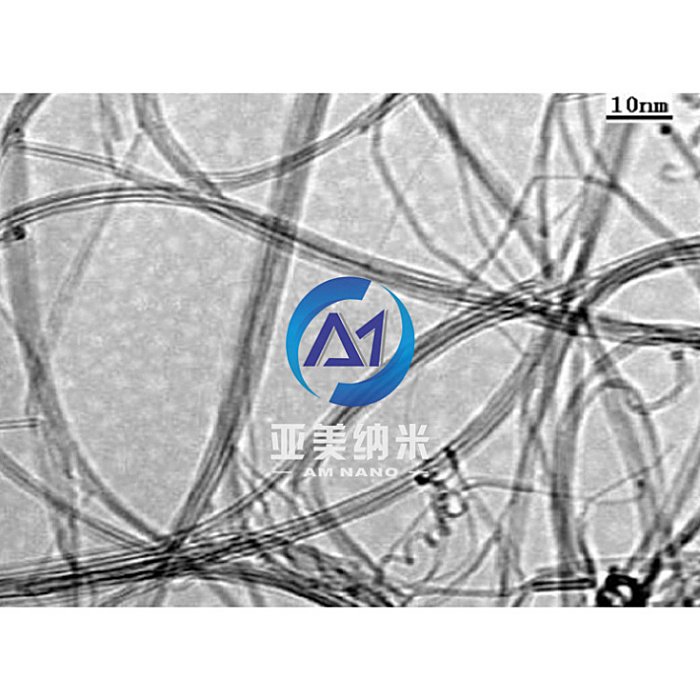
Carbon nanotubes, as one-dimensional nanomaterials, are lightweight and feature a hexagonal structure**, exhibiting many exceptional mechanical, electrical, and chemical properties. In recent years, with the deepening of research on carbon nanotubes and nanomaterials, their broad application prospects have been continuously revealed.
Carbon nanotubes, also known as buckytubes, are a type of one-dimensional quantum material with a unique structure (radial dimensions on the nanometer scale, axial dimensions on the micrometer scale, and both ends of the tube are essentially sealed). Carbon nanotubes are primarily composed of coaxial cylindrical tubes, ranging from a few to dozens of layers, formed by carbon atoms arranged in hexagonal patterns. The distance between adjacent layers is fixed at approximately 0.34 nm, and the diameter typically ranges from 2 to 20 nm. Based on the orientation of the carbon hexagons along the axial direction, carbon nanotubes can be classified into three types: zigzag, armchair, and chiral. Among these, chiral carbon nanotubes exhibit chirality, while zigzag and armchair carbon nanotubes do not.
Product Applications
As a cutting-edge carbon nanomaterial, carbon nanotubes have broad application prospects in various fields, including transparent conductive films, metal lubricants, and composite materials.
1. Lithium-ion battery materials
Major domestic lithium-ion battery companies have begun experimenting with carbon nanotube conductive agents in ternary power batteries, and some have already started using them in batch production.
2. Transparent Conductive Film
Transparent Conductive Film (TCF) is a thin film that is both electrically conductive and highly transparent, with widespread applications in the fields of flat-panel displays and solar cells.
3. Flat Panel Display
Flat Panel Displays (FPD) offer advantages over traditional Cathode Ray Tube (CRT) displays, such as high resolution, compact size, no radiation, low energy consumption, and excellent portability. As FPD production technology continues to develop and mature, its replacement of CRT has been steadily increasing, and it has now become the mainstream display technology globally. In the future, as the preparation and application technologies of carbon nanotube conductive films gradually mature, the proportion of carbon nanotubes used in flat panel displays is expected to increase progressively.
4. Solar Cells
Transparent conductive films can be used to fabricate transparent electrodes for solar cells. With the continuous development of solar cell technology, improving solar conversion efficiency, enhancing flexibility, increasing stability, simplifying production processes, and reducing production costs are the main development directions for solar cells. By replacing traditional solar cell electrodes with carbon nanotube transparent conductive films, flexibility can be effectively enhanced, the manufacturing process can be simplified, and production costs can be reduced. As the production process of carbon nanotube conductive films becomes more mature and refined, their industrial application in solar cells will be further advanced.
5. Grease
Grease is primarily used in mechanical friction parts to reduce friction, prevent mechanical wear, and also protect against metal corrosion while sealing out dust. Grease is typically formulated from mineral oil (or synthetic lubricating oil) and a thickener. Carbon nanotubes possess excellent self-lubricating properties and, as additives, can reduce the friction coefficient of materials, effectively enhancing wear resistance and friction reduction. Additionally, carbon nanotubes have good electrical conductivity. Compared to commonly used commercial conductive fillers such as metal particles like copper, silver, and zinc, as well as conductive materials like carbon black, carbon nanotubes can form an effective conductive network even in small amounts. Incorporating carbon nanotubes into grease can lower its resistivity and friction coefficient, thereby improving its lubricating performance.
Packaging and Storage
This product is packaged in inert gas-filled plastic bags and should be stored sealed in a dry, cool environment. It should not be exposed to air to prevent moisture-induced oxidative agglomeration, which may affect dispersion performance and usage effectiveness. The packaging quantity can be provided according to customer requirements, with sub-packaging available.