- Products
-
Shops
AI Search

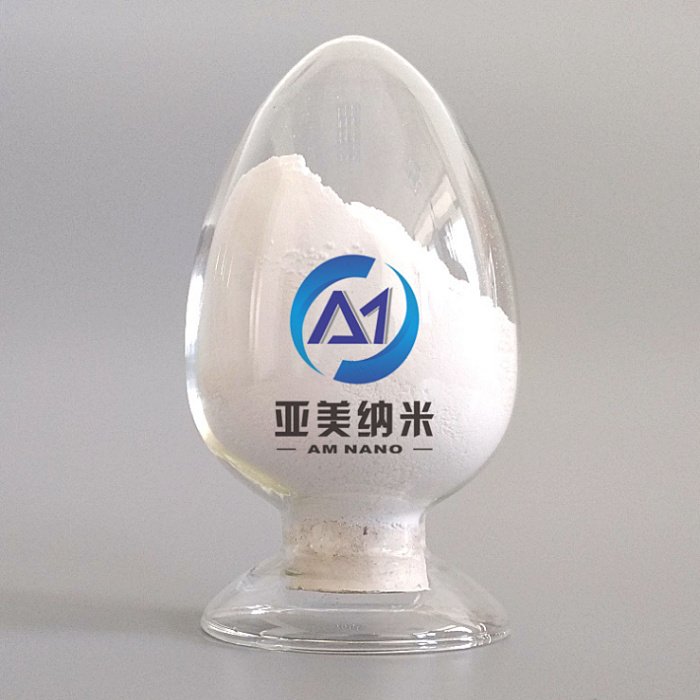
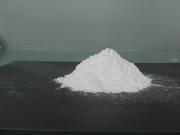
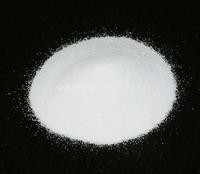
Boron nitride is a crystal composed of nitrogen atoms and boron atoms. Its crystal structures are classified into hexagonal boron nitride (HBN), wurtzite boron nitride (WBN), and cubic boron nitride. Among these, hexagonal boron nitride has a crystal structure similar to the layered structure of graphite, appearing as a white powder with properties such as looseness, lubricity, moisture absorption, and light weight, hence it is also known as "white graphite." Its theoretical density is 2.27 g/cm³, specific gravity is 2.43, and Mohs hardness is 2.
Hexagonal boron nitride possesses excellent electrical insulation, thermal conductivity, and chemical stability. It has no obvious melting point, withstanding temperatures up to 3000°C in 0.1 MPa nitrogen, 2000°C in a neutral reducing atmosphere, and up to 2800°C in nitrogen and argon atmospheres. However, its stability is relatively poor in an oxygen atmosphere, limiting its use to temperatures below 1000°C. The expansion coefficient of hexagonal boron nitride is comparable to that of quartz, but its thermal conductivity is ten times that of quartz. It also exhibits good lubricity at high temperatures, making it an excellent high-temperature solid lubricant. Additionally, it has a strong neutron absorption capacity, stable chemical properties, and is chemically inert to almost all molten metals.
Hexagonal boron nitride is insoluble in cold water. When water is boiled, it hydrolyzes very slowly, producing small amounts of boric acid and ammonia. It does not react with weak acids or strong bases at room temperature and is slightly soluble in hot acids. Decomposition occurs only when treated with molten sodium hydroxide or potassium hydroxide. It exhibits considerable resistance to corrosion from various inorganic acids, bases, salt solutions, and organic solvents.
Hexagonal boron nitride is one of the ceramic materials with extremely high thermal conductivity, boasting a thermal conductivity ten times that of quartz. Its hot-pressed products have a high thermal conductivity coefficient of 33 W/m·K, comparable to that of pure iron. Its expansion coefficient is similar to that of quartz, making it one of the smallest among ceramics, which results in excellent thermal shock resistance. Additionally, it is an outstanding high-temperature insulating material among ceramics and is transparent to microwaves and infrared radiation.
Hexagonal boron nitride offers advantages in mechanical properties, including non-abrasiveness, excellent lubricity, fire resistance, and ease of processing. In terms of electrical properties, it boasts good dielectric strength, low dielectric constant, low loss at high frequencies, microwave transparency, and excellent electrical insulation.
Hexagonal boron nitride offers advantages in thermal properties, including high thermal conductivity, high heat capacity, low thermal expansion, thermal shock resistance, high-temperature lubricity, and high-temperature safety. In terms of chemical properties, it boasts chemical stability, corrosion resistance, oxidation resistance, low wettability, biocompatibility, and non-stick characteristics.