- Products
-
Shops
AI Search

Product Parameters
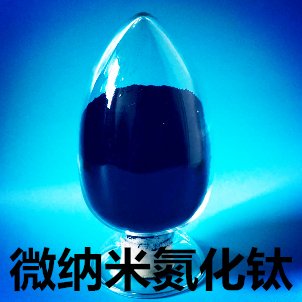
Product | Titanium Nitride Nanoparticles(TiN) |
Product Model | ZH-TiN-01 |
Average particle size | 20nm |
Product Purity | 99.9% |
Specific surface area | 66.284m2/g |
Theoretical density | 5.430g/cm3 |
Bulk density | 0.814g/cm3 |
Melt Point. | 2600℃ |
Boiling Point. | 3800℃ |
Crystal type | Nearly spherical |
Outside View | Black fluffy powder |
Dispersion | Prepared by gas-phase method, easily dispersible in liquids and polymer materials. |
Note | The product particle size can be customized. The company offers surface treatment technology, dispersants, and application technical guidance. |
Product Features Titanium Nitride Nanoparticles(TiN)Using aerosol ablation methodPreparation,High purity, small particle size, uniform distribution, large specific surface area, high surface activity, high nitrogen content, high temperature resistance, oxidation resistance, high hardness, and excellent infrared absorption performance.80%...), UV light shielding greater than85%The above can be applied to thermal insulation coatings and automotive ceramic films, providing heat insulation and temperature control. This material has good electrical conductivity and can be used as conductive materials such as electrodes and electrical contacts in molten salt electrolysis. It is highly effective for toughening ceramics and high-temperature structural ceramics.
Product Applications
Application of 1nm Titanium Nitride Plastic in Packaging Materials for High Barrier and Anti-Yellowing Properties: Utilizing nano-TiN composite barrier technology toNano-TiNWhen combined with resin to form a composite material, these nanoparticles can block molecular gaps, making it difficult for gases to diffuse and permeate, thereby enhancing the barrier properties of resins and plastics. Due to the very small amount of nanomaterial added, this material can be directly applied in existing processes without the need for equipment upgrades. Even at an addition ratio of one ten-thousandth, it ensures that the polyester remains transparent, clear, and exhibits improved barrier performance.More than 8 times. Due to the high nitrogen content of our titanium nitride, the dispersed titanium nitride slurry appears light blue. Without adding any colorants, it can mask the yellowing characteristics of the polyester itself (solving the yellowing issue), reducing the need for customers to add large amounts of colorants and lowering costs.
2 inPETApplication in Engineering Plastics:A small amount of nano titanium nitride powder is used in thermoplastic engineering plastics such asPET, PA, etc., can be used as crystallization nucleating agents. By dispersing nano-titanium nitride in ethylene glycol to prepare a nano-slurry, and then incorporating it into PET engineering plastics through polymerization, the dispersion of nano-titanium nitride in PET engineering plastics can be significantly improved. This greatly accelerates the crystallization rate of PET engineering plastics, simplifying their molding process and expanding their application range. Meanwhile, numerous nano-titanium nitride particles are dispersed withinPETIn Chinese, due to the nano effect, it is possible toThe wear resistance and impact resistance of PET engineering plastics have been significantly improved.
Application of high thermal radiation coatings: high nitrogen content nanoTiNAs a key material for high-thermal-radiance coatings used at high temperatures, the coating material developed by adding this component was prepared using plasma spraying technology. Tests revealed a significant improvement in thermal radiance performance. This product is primarily applied in energy-saving for high-temperature furnaces and kilns, as well as in other areas.
4. For example, in the development of lead-free solder materials, trace amounts of titanium nitride nanopowder are added to alloys such as tin, silver, copper, and zinc to lower the melting temperature.200℃, resulting in a more uniform alloy and reducing the temperature of the oxide solid solution.30℃, while achieving the same operating temperature as the original lead-tin solder, if the wettability can be further improved, it would solve the significant application difficulties of existing lead-free solders.
5. The preparation of green electronic materials must avoid the use of harmful elements such as lead, cadmium, and hexavalent chromium. Challenges in high-temperature bonding glass phases, lead-free and cadmium-free ceramic dielectrics, and encapsulation glass glazes include high solid-phase synthesis temperatures, high softening points, and high ceramic-forming temperatures. The addition of a trace amount of titanium nitride nanopowder can lower the solid-phase reaction temperature.200℃, even if reduced50℃Being able to use existing process equipment is also a major breakthrough. Titanium oxide and its solid solutions are themselves components of electronic materials, and introducing them in nanoscale form may lead to beneficial performance mutations.
6. Pollution Control Law Restricts Bromine Content(Br)The use of benzene polymers poses challenges for electronic flame-retardant plastic shell frameworks. If trace amounts of nano-powders such as silicon nitride, silicon carbide, titanium nitride, and titanium carbide are added to engineering plastics, they not only enhance mechanical strength, wear resistance, and heat resistance but also have the potential to replace the flame-retardant properties of bromine-containing materials. This would represent a significant breakthrough in the application of organic polymers.
7. Applications in Other Fields:In nanocomposite hard tools, cemented carbide, high-temperature ceramic conductive materials, heat-resistant and wear-resistant materials, dispersion-strengthened materials, and others, it can also be applied to electrode catalysts for fuel cells, antistatic materials, and conductive ceramics.
Packaging and Storage
This product is filled with inert gas.Plastic bagPackaging: Store sealed in a dry, cool environment. Avoid exposure to air to prevent moisture-induced oxidative agglomeration, which may affect dispersion performance and usability. Packaging quantities can be customized according to customer requirements, with sub-packaging available.