- Products
-
Shops
AI Search

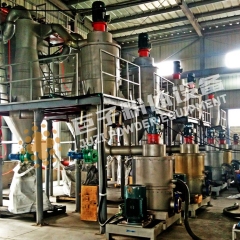
**Manufacturer Haomai Drying** Zinc Oxide Calcination Equipment
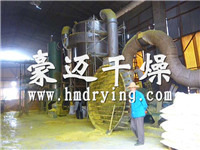
High-quality Zinc OxideDryer,Calcination of Zinc OxideEquipment, flash dryer,Dynamic calcination of zinc oxideDryerThe manufacturer—Changzhou Haomai Drying Engineering Co., Ltd.—innovates in manufacturing. The equipment designed and produced by Haomai is of high quality, and the company enjoys a strong reputation for credibility.DeviceAdvanced craftsmanship.Energy conservation and environmental protectionSimple operation, long service life, and the company has a complete sales and after-sales service system.Welcome to call and discuss! Our quality is not only reflected in our products but also in our services! Contact number: 13706****** Manager Zhang
The "Nano Active Zinc Oxide Combined Calcination Process" developed by Changzhou Haomai Drying Co., Ltd. fully utilizes calcination exhaust gas, simplifying and shortening the process flow while being suitable for large-scale industrial continuous production. It is a practical equipment technology that reduces production costs and improves economic efficiency.
Introduction to Zinc Oxide Drying and Calcination:
Currently, the main types of zinc oxide produced include active zinc oxide, high-purity zinc oxide, and nano zinc oxide. The dynamic zinc oxide drying and calcination process equipment researched and designed by our company represents advanced process equipment technology.
Introduction to Zinc Oxide Drying and Calcination Products
The traditional production methods for producing zinc oxide from zinc carbonate primarily involve two approaches: one using a vertical kiln, and the other using a rotary kiln. The zinc oxide produced through these methods has low activity, high energy consumption, and causes severe environmental and material pollution and waste. By adopting our company's dynamic drying and calcination process equipment, high-activity, high-purity zinc oxide can be produced. The zinc oxide flash drying and calcination furnace offers advantages such as energy efficiency, no environmental pollution, high recovery efficiency, a small footprint, and a high degree of automation.
Working Principle of Zinc Oxide Drying and Calcination:
The exhaust gas generated from calcining materials in a dynamic calciner enters the Sted dryer. A feeder sends filter cake-like zinc carbonate with a moisture content of 30–50% into the dryer, where it is dispersed and dried to form powdered zinc carbonate. This powdered zinc carbonate then enters the dynamic calciner, where hot air produced by burning coal, natural gas, or coal gas is introduced. The hot air mixes with the zinc carbonate in the calciner for heat transfer. Heated by hot air at 400–1000°C, the zinc carbonate rapidly decomposes into zinc oxide within seconds. The decomposed zinc oxide is collected by a collector and stored in a silo.
Performance characteristics of zinc oxide drying and calcination:
1. The decomposition temperature is uniform and rapid, enabling the production of high-activity, high-purity zinc oxide, with activity >80 and purity >99.
2. Filter cake-like zinc carbonate is used to produce powdered zinc oxide in a single system.
3. The heat consumption for production is 150–200×10⁴ kcal/ton.
4. Environmentally friendly, compact footprint, easy maintenance and operation, and highly automated.
5. Recovery rate > 99%
Technical Specifications for Zinc Oxide Drying and Calcination:
Within the series of machine models, the single-unit zinc oxide production capacity is 1,000, 2,000, 3,000, and 5,000 tons per year.
Process flow of zinc oxide drying equipment:
Zinc oxide drying and calcinationTechnical Specifications
| Model | XSG-2 | XSG-4 | XSG-6 | XSG-8 | XSG-10 | XSG-12 | XSG-16 | XSG-20 |
| Inner diameter of the main unit (mm) | 200 | 400 | 600 | 800 | 1000 | 1200 | 1600 | 2000 |
| Airflow M3/h | 350-500 | 1150-2000 | 2450-4500 | 4450-7550 | 7000-12500 | 10000-20000 | 18000-36000 | 28200-56500 |
| Evaporated water content (kg/h) | 12-17 | 40-70 | 80-150 | 150-250 | 230-4250 | 300-600 | 600-1000 | 1000-1500 |
| **Installed Capacity (kW)** | 10 | 20 | 40 | 65 | 85 | 105 | 150 | 230 |
| **Height m | 4.0 | 4.8 | 5.8 | 6.5 | 7.1 | 7.8 | 8.8 | 10.1 |
| Floor area (m²) | 15 | 20 | 28 | 35 | 40 | 52 | 80 | 150 |
Note: 1. The water evaporation amount is based on the water evaporated per hour when the inlet air temperature is 180°C and the outlet air temperature is 80°C.
2. In addition to the above models, special designs can be made for users.
3. The above installed capacity is based on standard configuration; the power configuration can be significantly reduced depending on the material.
Material Handling and Characteristics (Based on Type 6 Flash Evaporator)
| Material Name | Stearic acid | Aluminum hydroxide | Zinc carbonate | Sodium monosulfuronate | TMTD | DSD acid | Iron Oxide Red | Antimony dioxide | Cuprous chloride | White is too black |
| Inlet air temperature °C | 150 | 180 | 150 | 120 | 140 | 150 | 200 | 180 | 200 | 280 |
| Initial moisture content % | 80 | 55 | 80 | 30 | 65 | 60 | 60 | 45 | 30 | 85 |
| Final moisture content % | 0.5 | 1.5 | 1.0 | 1.0 | 0.5 | 0.5 | 0.5 | 1.0 | 3.0 | 5.0 |
| Actual drying capacity (kg/h) | 140-160 | 250-280 | 130-170 | 80-110 | 80-120 | 80-120 | 300-350 | 280-320 | 290-310 | 250-300 |
| Material Name | accelerator | Oil-soluble ink | Manganese Zinc Acid Substitute | Phthalocyanine Blue | Calcium citrate | Ultra-fine calcium carbonate | Mud treatment agent | Sodium dichloroisocyanurate | Sodium dichloroisocyanurate |
| Inlet air temperature °C | 150 | 150 | 120 | 150 | 140 | 160 | 200 | 180 | 150 |
| Initial moisture content % | 60 | 45 | 30 | 55 | 40 | 70 | 75 | 25 | 30 |
| Final moisture content % | 0.5 | 2.0 | 1.0 | 1.0 | 1.0 | 1.5 | 5.0 | 0.2-2 | Request for Information Please provide the specific product or service you are inquiring about, and I will assist you with the pricing information.

|