- Products
-
Shops
AI Search

The Laval nozzle is the most commonly used component in rocket engines and aircraft engines, consisting of two conical tubes: one is a converging tube, and the other is a diverging tube. The Laval nozzle is a crucial part of the thrust chamber. The front half of the nozzle narrows from a larger diameter to a smaller one, converging toward a narrow throat. Beyond the narrow throat, the nozzle expands from a smaller diameter to a larger one, widening outward toward the base of the rocket. The high-pressure gas in the rocket body flows into the front half of the nozzle, passes through the narrow throat, and then exits from the rear half.
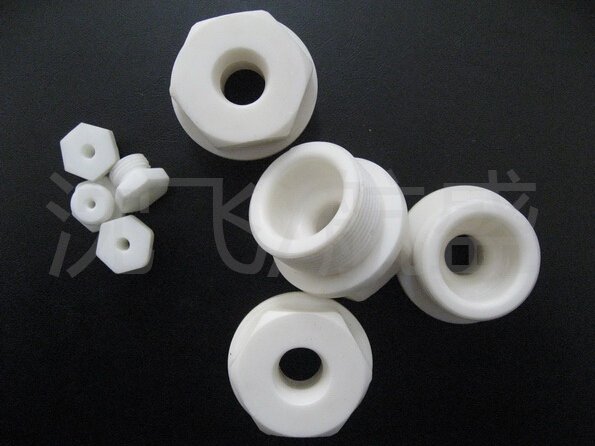
Introduction to the Laval Nozzle
The Laval nozzle is the most commonly used component in rocket engines and aircraft engines, consisting of two conical tubes: one is a converging tube, and the other is a diverging tube. The Laval nozzle is a crucial part of the thrust chamber. The front half of the nozzle narrows from a larger diameter to a smaller one, converging toward a narrow throat. After the narrow throat, the nozzle expands from a smaller diameter to a larger one, extending outward to the base of the rocket. The high-pressure gas in the rocket body flows into the front half of the nozzle, passes through the narrow throat, and then exits from the rear half.
This structure allows the airflow velocity to change due to variations in the nozzle's cross-sectional area, enabling the airflow to transition from subsonic to sonic speeds and further accelerate to transonic speeds. Therefore, this horn-shaped nozzle is called a transonic nozzle.
Since it was invented by the Swede Gustaf de Laval, it is also known as the "Laval nozzle." Let's analyze the principle of the Laval nozzle. The gas flow in a rocket engine, driven by the pressure in the combustion chamber, moves backward through the nozzle and enters section A of the nozzle. During this stage, the gas motion follows the principle that "when a fluid flows through a pipe, the velocity is higher where the cross-section is smaller, and lower where the cross-section is larger," so the gas flow continuously accelerates. By the time it reaches the narrow throat, the flow velocity has already exceeded the speed of sound. However, transonic fluids no longer follow the principle of "higher velocity at smaller cross-sections and lower velocity at larger cross-sections"; instead, the opposite occurs—the larger the cross-section, the faster the flow velocity. At section B, the velocity of the gas flow is further accelerated to 2-3 kilometers per second, equivalent to 7-8 times the speed of sound, thereby generating tremendous thrust.
The Laval nozzle essentially functions as a "flow accelerator." In fact, not only rocket engines but also missile nozzles adopt this flared shape, which is why the Laval nozzle is widely used in weaponry.