- Products
-
Shops
AI Search

Why should pellets be dried?
If green pellets are not dried and enter the preheating zone with a large amount of moisture, the intense evaporation of moisture inside the pellets will cause them to crack or even burst. Moreover, if insufficiently dried green pellets directly enter the high-temperature zone for roasting, even if they do not burst, the excessive moisture inside the pellets will absorb a large amount of thermal energy during evaporation. As a result, the pellets cannot quickly reach the specified roasting temperature, inevitably prolonging the roasting time, reducing productivity, and causing severe fuel consumption. Additionally, when producing pellets from magnetite concentrate or ore fines, thorough drying is particularly necessary.
The process of producing pellets imposes very strict requirements on the physicochemical performance indicators of the iron ore concentrate used as raw material for pelletizing. In particular, the moisture content of the iron ore concentrate has a significant impact on the quality of pelletizing. In traditional iron ore concentrate drying processes, the drying furnace is located at the feed end of the rotary drum dryer, while the exhaust gas pipeline is situated at the discharge end, causing the material flow and hot flue gas to move in the same direction. The drawback of this process is:
1. The average temperature difference between flue gas and iron ore concentrate is relatively small, resulting in low heat exchange efficiency and high energy consumption.
2. The equipment is large in size, resulting in high initial investment costs and high operating expenses.
3. Since the feed chute is located in the high-temperature flue gas area, the belt of the feed belt conveyor and the lining plate of the feed chute may be damaged by backflow of hot air or baking from hot flue gas.
4. Due to the intersection between the feed chute and the hot air duct of the drying furnace, the feed chute will reduce the air supply area of the hot air duct of the drying furnace.
5. When an accident occurs in the dryer or during the initial furnace drying phase, the high-temperature flue gas inside the dryer cannot be discharged in a timely manner, making it very difficult to handle the furnace drying process and the state of production accidents.
6. The drying exhaust gas adopts a forced draft process. Due to the lack of effective measures at the feed and discharge ends, air leakage is severe, increasing the workload of the dust removal fan and dust collector.
Our company has introduced advanced technology from both domestic and international sources, combined with historical experience in drying iron ore pellets in China, and developed a new type of pellet dryer to solve these challenges.
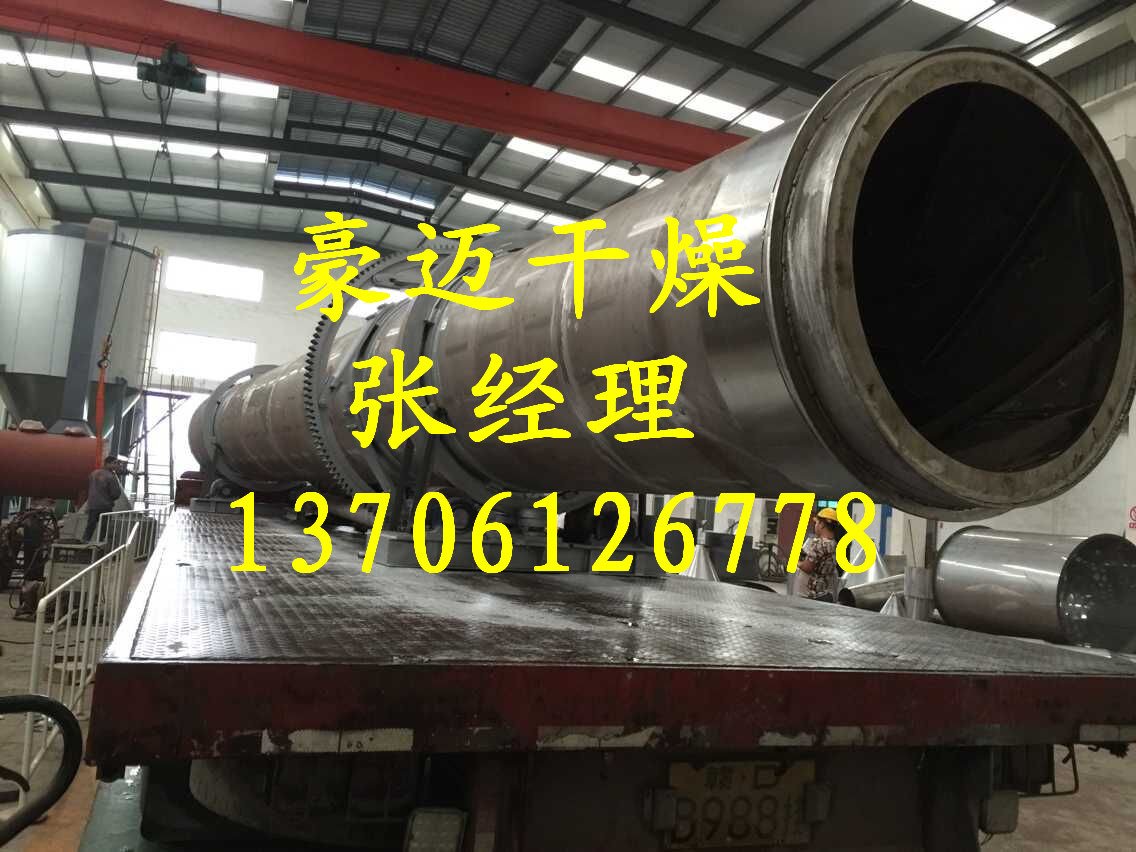
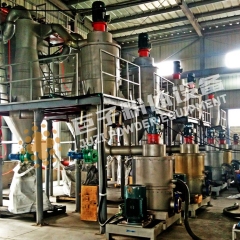
Pellet dryer, also known as iron ore concentrate pellet dryer. This equipment is primarily used for drying iron ore concentrate pellets, as well as slag produced from rapid water quenching of smelted materials in steel plants. It can also be used for drying high-density materials such as calcium carbide slag, limestone, clay, river sand, quartz sand, and water slag. It is widely applied in industries such as building materials, chemicals, and foundry. Domestically, the pellet dryer produced by our company is the most technologically advanced pellet drying equipment in the machinery industry. The materials entering the dryer should not stick to the cylinder wall or the lifting plates. The temperature of the gas for heat exchange entering the dryer should not exceed 750 degrees Celsius. If high-temperature drying is required for special purposes, the inner cylinder and lifting plates at the inlet of the dryer can be made of heat-resistant plates. This series of pellet dryer equipment consists of a steel structure base, a drying pan, lifting and guiding devices installed inside the drying pan, rolling rings, support rollers, and a transmission mechanism.
Iron Ore Pellet Dryer
A drying furnace is installed at the discharge end of the rotary drum dryer, creating a counterflow movement between the material flow and the hot air flow. A chimney is provided on the drying furnace, equipped with an electric valve. A drag-type discharge method is adopted to seal the outlet of the rotary drum dryer using the dried iron concentrate. The outlet of the feed chute is positioned close to the inner wall of the rotary drum dryer, and the windward side at the intersection of the feed chute and the exhaust gas duct is designed with a streamlined shape. The advantages of this design are as follows: it improves heat exchange efficiency, effectively reducing energy consumption in the iron concentrate drying process; it reduces the size of the drying drum, lowering equipment investment; in the event of a dryer malfunction or during the initial baking phase of production, high-temperature flue gas can be urgently discharged to prevent the gas from damaging the belt of the feed conveyor and the lining of the feed chute; the drag-type discharge method fundamentally resolves issues such as severe pollution in the drying workshop, low drying efficiency, and high equipment failure rates.
Drying equipment for iron ore concentrate used in pellet production, comprising a rotary kiln, an exhaust gas pipeline and a drying furnace connected to the rotary kiln, a feed chute, a feed belt conveyor arranged above the feed chute, and a discharge belt conveyor arranged below the discharge end of the rotary drum dryer, characterized in that the exhaust gas pipeline is arranged at the feed end of the rotary drum dryer, the feed chute passes through the exhaust gas pipeline and is inserted into the rotary drum dryer, the drying furnace is arranged at the discharge end of the rotary drum dryer, a hot air pipeline is provided between the discharge end of the rotary drum dryer and the drying furnace, the hot air pipeline is fixedly connected to the tail sealing cover of the rotary drum dryer, and a chimney is provided at the top of the rotary kiln, with an electric valve arranged at the lower part of the chimney.
Drying process of iron ore pellet dryer:
1. The moist iron ore concentrate is fed into the rotary drum dryer via the feed belt conveyor through the feed chute, and flows toward the discharge end of the rotary drum dryer.
2. The drying furnace installed at the discharge end of the rotary drum dryer delivers hot drying air into the rotary drum dryer through a hot air duct, creating a counterflow movement between the moist iron concentrate material stream and the hot air stream.
3. After heat exchange between the dry hot air and the moist iron concentrate material flow, the air is discharged from the rotary drum dryer through the exhaust gas pipeline.
4. The dried iron concentrate flows toward the discharge outlet at the discharge end of the rotary drum dryer.
5. Adopt a drag-type discharge method, which reduces the operating speed of the discharge belt conveyor from 1.1–1.3 m/s to 0.7–0.8 m/s, causing the dried iron ore concentrate at the discharge port of the rotary drum dryer to accumulate, thereby keeping the discharge port of the rotary drum dryer in a material-sealed state.
6. The iron ore concentrate slowly discharged from the discharge port onto the belt of the discharge belt conveyor is evenly drawn out and sent to the next process.
Characteristics of Iron Ore Pellet Dryer:
1. A drying furnace is installed at the discharge end of the rotary drum dryer, allowing the material flow and the drying hot air to form a counter-current movement pattern.
2. A chimney is installed at the top of the drying furnace, and an electric valve is placed on the chimney duct.
3. The dried iron concentrate is discharged using a drag-type discharge method, which seals the outlet of the dryer. The discharge belt conveyor slowly and evenly drags out the iron concentrate, while the dried iron concentrate is continuously replenished to the outlet.
4. The outlet of the feed chute should be as close as possible to the inner wall of the rotary drum dryer to achieve an air-sealing effect.
5. The windward side at the intersection of the feed chute and the waste gas pipe is streamlined.
6. Under the condition of processing the same amount of iron ore concentrate, the countercurrent average temperature difference is larger than the cocurrent average temperature difference, resulting in better heat exchange efficiency and effectively reducing energy consumption in the iron ore concentrate drying process.
7. Due to the excellent heat exchange efficiency, the size of the drying drum in the rotary drum dryer can be reduced, thereby lowering equipment investment.
8. The drying furnace is equipped with a smoke exhaust system, which can be used to quickly discharge high-temperature flue gas in the event of a dryer accident, preventing damage to the dryer. It can also be used during the initial furnace drying phase. Since there is no material passing through the rotary drum dryer during this phase, the equipment cannot withstand the high-temperature flue gas. Therefore, the high-temperature flue gas is promptly discharged through the smoke exhaust system to protect the dryer from damage.
9. Since the feed chute is located near the low-temperature flue gas area, the flue gas will not burn the belt of the feed belt conveyor, nor will it damage the lining plate of the feed chute.
10. The outlet of the feed chute should be as close as possible to the inner wall of the rotary drum dryer. This way, the material discharged from the chute will seal the outlet, preventing external cold air from entering the interior of the rotary drum dryer, thereby achieving an air-locking effect.
11. Increase the effective area of the hot air duct in the drying furnace, resulting in low hot air resistance and high flow rate.
12. A drag-type discharge method is adopted to seal the discharge outlet of the dryer with dried iron concentrate. The discharge belt conveyor slowly and evenly drags out the iron concentrate, while the dried iron concentrate continuously replenishes the discharge outlet, forming a dynamic balance—namely, the balance between feed rate and discharge rate. This prevents any occurrence of flame bursts or air leakage in this area, fundamentally resolving issues such as severe pollution in the drying workshop, low drying efficiency, and high equipment failure rates.
13. The windward side at the intersection of the feed chute and the waste gas pipe is streamlined to reduce resistance to the waste gas and lower the likelihood of dust adhering to the feed chute.
The slag dryer, metal powder dryer, and iron ore pellet dryer series designed by Changzhou Haomai Drying Engineering Co., Ltd. feature reasonable design, excellent workmanship, stable performance, advanced technology, high output, low energy consumption, small footprint, high mechanization, and strong scalability. They can be used not only for drying slag, iron ore pellets, and metal powder but also for drying various wet materials such as fly ash and lignite, meeting most customer needs. For more information on the iron ore pellet dryer, please contact the hotline:13906112721 Manager Zhang