- Products
-
Shops
AI Search

I. Equipment Overview
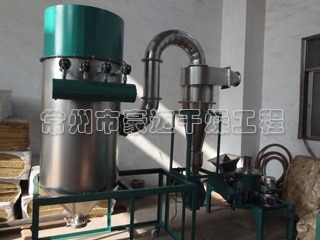
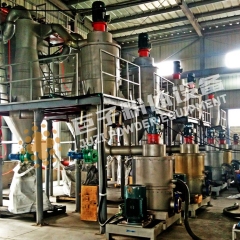
1、WFJ-15The Micro-Pulverizer Unit (referred to as the unit) is an advanced powder processing machinery developed by introducing technology from Hosokawa Micron Corporation of Japan and combining it with the actual conditions in China. This unit features stable technical performance, low noise, energy efficiency, high production efficiency, attractive design, and a small footprint. Compared with domestic models, it offers adjustable particle size and low temperature rise during pulverization, making it particularly suitable for the micro-pulverization of heat-sensitive materials such as sugar, plastic powder, and traditional Chinese medicinal herbs. The unit consists of a pulverizing main machine, a fine powder collection device, powder conveying pipes, and an electrical control cabinet. The main machine is equipped with an air classification device, which allows for adjustable particle size and prevents over-pulverization. The pulverized powder is transported under negative pressure to a cyclone and a bag filter for collection, and is then discharged through a discharge valve. This unit is an ideal piece of equipment for industries such as pharmaceuticals, food, and chemicals.
2, Model Meaning
WFJ-15 Micro-Pulverizer Unit
Air volume
Unit
Crush
Micro powder
II. Equipment Structure and Features
The machine consists of three parts: the main unit, the auxiliary unit, and the electronic control system. It features a compact design and a reasonable structure, utilizing an air-sifting method without screens or meshes. Equipped with a classification mechanism, it enables simultaneous crushing and classification. The negative pressure conveying system continuously expels the energy generated in the crushing chamber during operation, making it suitable for crushing heat-sensitive materials. This machine has a wide range of applications, supports continuous production processes, and allows for adjustable particle size output. It can handle the crushing and classification of various materials, such as chemicals, food, pharmaceuticals, cosmetics, dyes, resins, and shells. The machine is composed of a feeding mechanism and a crushing mechanism, and by changing the screen mesh based on the different properties and particle sizes of the materials, it can achieve ideal results.
III. Main Specifications and Technical Parameters
1. Crushing Requirements
Feed particles: less than10Millimeter
Product temperature: less than65℃
Particle size of the product:80-320Eye (adjustable)
Production capacity10-200kilogram/Hours (by different materials and particle sizes)
2. Main Technical Parameters
Host power:7.5Kilowatt
Graded Power:0.75Kilowatt
Feeding power:0.37Kilowatt
Fan power:4Kilowatt
Nesting power:0.75Kilowatt
Bag vibration power:0.55Kilowatt
Host speed:4500Turn/I'm sorry, but you haven't provided any Chinese text for me to translate. Could you please provide the Chinese text you'd like me to translate into English?
Graded speed:800-2400Turn/Points (adjustable)
Feed screw speed:20~50Turn/Points (adjustable)
Area:4200X1200X2700(mm)
IV. Structure and Working Principle
1Main Structure and Working Principle of the Crushing Machine
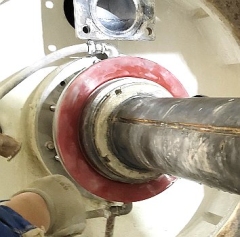
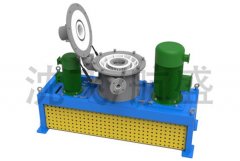
The main machine consists of a frame, a stepless speed reduction gear, an automatic feeder, and a crushing chamber. The crushing chamber is equipped with key working components such as a classification device, a lining ring, and crushing blades. The classification shaft is inserted into the main crushing shaft, and the bearing seal is of a labyrinth type.
2Working Principle
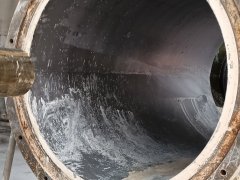
The material is pushed into the crushing chamber by an automatic feeder. Due to the effect of negative pressure, the material entering the crushing chamber is crushed by the high-speed impact and shearing of the crushing blades, as well as by the high-frequency vibration generated by the vortex. The crushed powder, under the influence of negative pressure, enters the classification wheel. As the classification wheel rotates, the powder is simultaneously subjected to aerodynamic and centrifugal forces. When the powder particles are larger than the classification particle size, they are thrown onto the cone sleeve and returned to the crushing chamber for further crushing. The qualified material, driven by aerodynamic forces, is sent to the collection pipe and then discharged by the auxiliary machine.