- Products
-
Shops
AI Search

PVDF can be used as a binder for the positive electrode.
Binders for lithium batteries are mainly divided into two categories: oil-soluble and water-based binders. PVDF, as one of the oil-soluble binders, is widely used in the lithium battery field. It connects the electrode active materials, conductive agents, and electrode current collectors, serving multiple functions: 1) Dispersion and thickening: ensuring the uniform distribution of key active materials on the electrode surface; 2) Structural stabilization: primarily through intermolecular forces, stably connecting the current collector and conductive active materials to maintain the mechanical integrity of the electrode; 3) Facilitating transport: improving the wettability of the electrode surface and electrolyte interface, thereby promoting the transport of lithium ions.
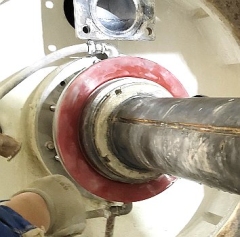
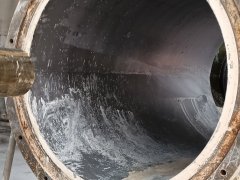
The jet mill uses materials with extremely high hardness and excellent wear resistance as lining, ensuring that the crushing process is carried out in aIt is carried out under the condition of "hard against soft," thereby ensuring that the product is completely free from contamination by worn-off metal or non-metal impurities, resulting in high product purity.
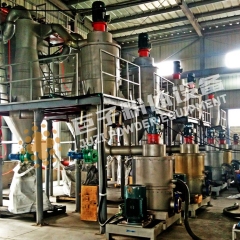
Jet milling is a unique method of pulverization. In addition to micro-grinding, it can also achieve grinding and drying, grinding and mixing, as well as grinding and coating.。


As the industrial requirements for plastic and rubber products continue to...Aluminum hydroxideAluminum flame retardantGranuleThe micronization of particles will gradually replace conventional mechanical mills with jet mills, thereby improving their effectiveness and expanding their range of applications.
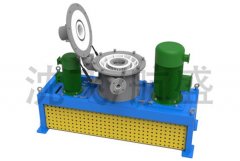
Jet millThe working principle of a jet mill, also known as a fluid energy mill or jet mill, is that it is a highly efficient ultra-fine grinding equipment. Unlike the principle of traditional mechanical mills, it utilizes the immense kinetic energy generated by high-pressure gas passing through nozzles to create high-speed airflow, causing material particles to collide with each other (second-generation domestic products) or impact against fixed plates (first-generation domestic products) to achieve grinding. From this, it can be understood that to achieve ultra-fine powder, the airflow used in jet milling must have a very high velocity to possess significant energy. Depending on the type of gas used, the pressure and temperature of the gas entering the nozzle, and the nozzle design, the velocity of the airflow exiting the nozzle can be subsonic, sonic, or supersonic. Generally, the airflow velocity ranges from 200 to 500 m/s, and in some cases, it can reach 800 to 1000 m/s or even higher. According to gas dynamics, to generate such airflow velocities, a necessary condition is that the gas must have a very high initial pressure before entering the nozzle, and advanced nozzle chamber designs must be employed. The most commonly used gases are superheated steam and compressed air. Although some inert gases such as nitrogen and carbon dioxide are also used, they are primarily employed for grinding heat-sensitive and flammable or explosive materials.