- Products
-
Shops
AI Search
Technical Advantages
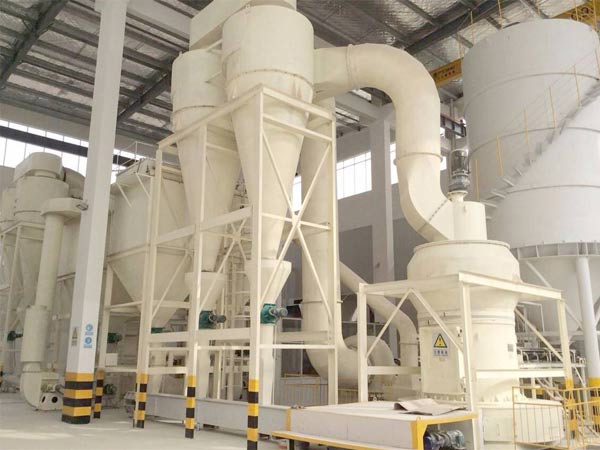
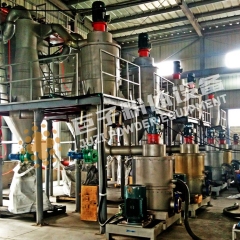
1. The mill is installed in a floor-mounted configuration, with the above-ground portion being only 50% of the height of a traditional mill, reducing the plant height, saving on plant investment, and facilitating equipment maintenance.
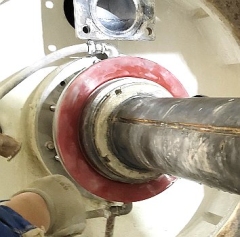
2. The grinding roller bearing seal adopts a new sealing method, achieving maintenance-free and oil-free operation. It prevents powder from entering the bearing, significantly reducing equipment maintenance costs.
3. The graded cavity adopts a suspended structure, allowing automatic lifting and shifting to reduce equipment resonance, lower noise, and improve maintenance convenience.
4. Innovative grinding ring and roller design, optimizing the arc-shaped interlocking method. Compared with traditional old-style Raymond mills, this design reduces the material's falling speed through the grinding zone, extends the crushing and grinding time, and combines the broad feed particle size requirements of Raymond mills with the ultra-fine grinding capabilities of ultra-fine mills. Crushing, grinding, and ultra-fine processing are achieved in one step, with a fineness reaching d90:10um.
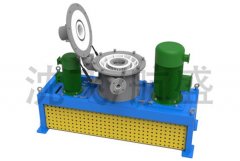
5. The rotary boom-type installation structure of the classifier avoids resonance between the main unit and the classifier, reduces equipment vibration, lowers operational noise, eliminates the need for hoisting maintenance tools, and provides open-access inspection and maintenance, enhancing operational convenience.
6. The intermediate tangential cyclone air intake causes the material to rise in a spiral pattern within the crushing and classification chamber, which is more conducive to the extraction of coarse powder, reduces fan energy consumption, and lowers production costs.
7. The entire system operates under negative pressure throughout the process, with no positive pressure zones, ensuring an excellent production environment. The dust emission concentration meets national standards, achieving ≤30 mg/m³.
8. The classifier adopts German vertical classifier technology. For the same particle size classification, the motor speed can be reduced by 50%, which not only improves the service life of the bearings but also reduces the wear of the classification turbine, extending the replacement cycle. The classifier is equipped with a secondary air structure and utilizes a wind-grate air intake method, ensuring that this structure is wear-free. Through the combined adjustment of variable frequency speed control and secondary air, the classification efficiency can be increased by 5–20%, resulting in a more concentrated particle size distribution.
9. The medium-pressure pulse-jet bag filter adopts sealed welding, with a total air leakage rate of <2%. It features a compact structure, large filtration area, long service life, and is suitable for filtering ultrafine powders. The overall collection efficiency exceeds 99.99%, and the dust emission concentration is less than 30 mg/m³, surpassing national standards and meeting environmental emission requirements.
10. The induced draft fan provides power airflow for the system and is connected using a high-pressure centrifugal fan suction method. This ensures that all stages operate under negative pressure, with no dust leakage.
Application materials
Processes various non-flammable and non-explosive ores with a Mohs hardness below 6 and moisture content below 6%, such as calcium carbonate, graphite, bentonite, wollastonite, coal powder, water slag, fly ash, aluminum oxide, zircon sand, quartz sand, gypsum, talc, calcite, limestone, marble, barite, dolomite, granite, kaolin, bauxite, iron oxide red, iron ore, and power plant environmental protection materials (desulfurization and denitrification).