- Products
-
Shops
AI Search

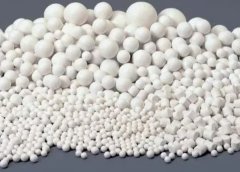
The alumina balls from Japan's Daimei Chemical have the following notable characteristics::
High purity:
With a purity of up to 99.99% and extremely low levels of radioactive isotopes such as U and Th, it is suitable for radiation-sensitive applications.。
High purity ensures the stability and consistency of the material, making it suitable for high-precision fields such as electronics and optics.。
High wear resistance and crack resistance.:
Due to its fine and uniform α-alumina crystal structure, alumina balls exhibit extremely high wear resistance and crack resistance, resulting in a long service life.。
When grinding alumina powder, its wear resistance is several times that of commercially available zirconia beads.。
Hot water resistance and corrosion resistance:
Even if the slurry temperature rises during the crushing process, the wear resistance will not decrease, allowing it to be used over a wide temperature range.。
Excellent corrosion resistance to acids and alkalis.。
Crushing control:
The density is two-thirds that of zirconia beads, and it does not apply excessive energy when crushing nanoparticles, which can suppress over-grinding and re-agglomeration.。
The filling weight is two-thirds that of zirconia, which helps save energy.。
Small diameter beads:
Provide beads in various sizes, including φ0.1mm, φ0.2mm, φ0.3mm, φ0.4mm, and φ0.5mm.。
A 0.1mm bead is currently the smallest diameter alumina bead available on the market.。
Copy
| Model/Model number | Crystal form | BET specific surface area (m²/g) | Primary particle size (µm) | Bulk density (g/cm³) | Tap density (g/cm³) | Forming density (g/cm³) | Sintered density (g/cm³) |
|---|---|---|---|---|---|---|---|
| TM-DA | α-Alumina | 13.5 | 0.10 | 0.8 | 0.9 | 2.2 | 3.95 |
| TM-DAR | α-Alumina | 14.5 | 0.10 | 0.9 | 1.0 | 2.3 | 3.96 |
| TM-5D | α-Alumina | 9.0 | 0.20 | 0.8 | 0.8 | 2.3 | 3.93 |
Crushing and Dispersion of Fine Ceramic PowdersSuitable for the production of fine ceramic materials.
Crushing and Dispersion of Electronic Component MaterialsUsed for manufacturing substrates, insulating layers, and other components of electronic elements.
Crushing and dispersion of inks, pigments, and coatingsImprove the uniformity and performance of the material.
Crushing and dispersion of battery materialsUsed for manufacturing high-performance battery materials.
Crushing and dispersion of glass and abrasivesImprove the grinding efficiency and quality of materials.
Particle size control of nanoscale materialsSuitable for grinding and dispersing nanomaterials.