- Products
-
Shops
AI Search

Inlet screening concentration:30%-40% Processing capacity:15-48t/h
Applicable Materials:White clay, mud, sugar, salt, milk powder, fruit juice, quartz sand, powder metallurgy, etc.
Application Scope:Chemical, food, pharmaceutical, mineral processing, water treatment, medical industries, etc.
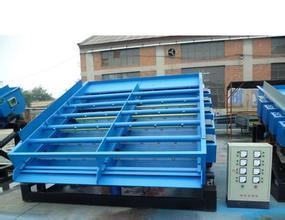
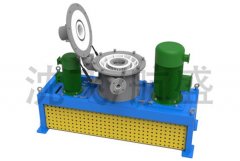
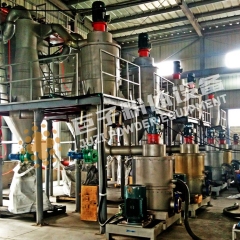
High-frequency screens, also known as classifying screens or screening machines, are composed of components such as an exciter, a pulp distributor, a screen frame, a rack, suspension springs, and a screen mesh. The screening machine features high efficiency, low amplitude, and high screening frequency. Unlike the principles of ordinary screening equipment, the high-frequency screen employs a high frequency. On one hand, it disrupts the surface tension of the pulp and the high-speed oscillation of fine particles on the screen surface, accelerating the separation of high-density (specific gravity) valuable minerals and the dissociation effect, thereby increasing the probability of contact between particles smaller than the separation size and the screen apertures. This creates favorable separation conditions, allowing particles smaller than the separation size, especially those with high specific gravity, to pass through the screen apertures along with the pulp, becoming the undersize product.
High-frequency fine vibrating screen, referred to as high-frequency screen, is a type of classification equipment used in mineral processing plants. It classifies materials by particle size based on the varying widths of the screen slots. In the grinding circuit, it performs control classification of the grinding product, where coarse-grained intergrowths (oversize) are screened out and returned to the mill for further grinding. Fine particles (undersize) can be discharged promptly, preventing over-grinding. By timely screening out materials that meet the fineness requirements, the mill's output can be increased, energy consumption reduced, and efficiency improved. Installing a high-frequency screen in the beneficiation circuit allows coarse-grained concentrate to be screened out and sent back to the mill for regrinding, while the fine particles under the screen undergo further concentration, thereby improving the concentrate grade.
1. The vibration parameters are relatively high. The operating frequency of the high-frequency vibrating screen is 24 Hz or above, with a vibration intensity of 5–7 g. The moisture content of the oversize product is low (around 25%), and both the processing capacity and solid recovery rate are high.
2. The self-synchronizing liquid lubrication vibrator is used for excitation, and the screen frame is made of special noise-reducing materials with high-strength bolt connections. The simple structure ensures reliable operation and low noise levels, with the overall working noise kept below 85dB(A).
3. The pre-dewatering section is equipped with an arc-shaped screen surface, which facilitates dewatering and the formation of a filter layer.
4. Install a feed box before the screen to ensure that materials are evenly distributed across the full width of the screen surface, thereby improving the utilization rate of the screen surface.
5. Equipped with an integrated base frame for easy transportation and installation.
| Specifications and Models | Sieve area (㎡) | Selected concentration (%) | Processing capacity (t/h) | Power (kW) |
| GPS-2×2 | 3.0 | 30-40 | 10-15 | 0.75 |
| GPS-2×3 | 4.5 | 30-40 | 15-25 | 1.5 |
| GPS-2×4 | 6.5 | 30-40 | 24-36 | 2.25 |
| GPS-2×5 | 8.7 | 30-40 | 32-48 | 3 |