- Products
-
Shops
AI Search

【Effective Cross-sectional Area】:15-150【Production Capacity】:37000-378000m³/h
Application Areas
Industries such as cement, silicate products, new building materials, refractory materials, and glass ceramics.
Applicable Materials
Limestone, cement clinker, bauxite, active lime, aluminum hydroxide, bentonite, etc.
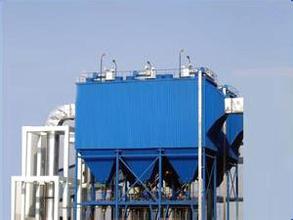
The power supply of an electrostatic precipitator consists of a control box, a step-up transformer, and a rectifier. The output voltage level of the power supply also has a significant impact on the dust removal efficiency. Therefore, the operating voltage of the electrostatic precipitator needs to be maintained at 40-75KV or even above 100KV.
Compared to other dust removal equipment, electrostatic precipitators consume less energy and have higher dust removal efficiency. They can also be used in situations with high flue gas temperatures and high pressure. Practice has shown that the larger the volume of flue gas being treated, the more economical the investment and operating costs of using an electrostatic precipitator become.
Its purification process primarily relies on two systems: the discharge electrode and the collecting electrode. When high-voltage direct current is applied between the two electrodes, negative and positive ions are generated in the electrode space. These ions act on the surface of exhaust gas particles passing through the electrostatic field, causing them to move toward the electrode with the opposite polarity under the influence of the electric field force. The particles then deposit on the electrodes, achieving the purpose of dust collection. Both electrode systems are equipped with rapping devices. When the rapping hammer periodically strikes the two electrode systems, the dust adhering to them is dislodged, falls into the lower hopper, and is discharged out of the machine through the ash removal device.
| Specifications and Model | Effective cross-sectional area | Airflow rate (m³/h) | **Operating Temperature (℃) | Withstand Pressure (Pa) | Electric field wind speed (m/s) | Design efficiency | Inlet dust concentration (g/Nm³) | Outlet dust concentration (g/Nm³) | Resistance loss (Pa) |
| 15-III | 15 | 37000 | 400 | 6000 | 0.7-0.9 | ≥99.9 | <500 | <50mg | <200 |
| 20-III | 20 | 51000 | 400 | 6000 | 0.7-0.9 | ≥99.9 | <500 | <50mg | <200 |
| 30-III | 30 | 756000 | 400 | 6000 | 0.7-0.9 | ≥99.9 | <500 | <50mg | <200 |
| 40-III | 40 | 100000 | 400 | 6000 | 0.7-0.9 | ≥99.9 | <500 | <50mg | <200 |
| 50-III | 50 | 126000 | 400 | 6000 | 0.7-0.9 | ≥99.9 | <500 | <50mg | <200 |
| 60-III | 60 | 152000 | 400 | 6000 | 0.7-0.9 | ≥99.9 | <500 | <50mg | <200 |
| 70-III | 4 | 177000 | 400 | 6000 | 0.7-0.9 | ≥99.9 | <500 | <50mg | <200 |
| 80-III | 08 | 210000 | 400 | 6000 | 0.7-0.9 | ≥99.9 | <500 | <50mg | <200 |
| 90-III | 09 | 230000 | 400 | 6000 | 0.7-0.9 | ≥99.9 | <500 | <50mg | <200 |
| 100-III | 100 | 252000 | 400 | 6000 | 0.7-0.9 | ≥99.9 | <500 | <50mg | <200 |
| 110-III | 110 | 280000 | 400 | 6000 | 0.7-0.9 | ≥99.9 | <500 | <50mg | <200 |
| 120-III | 120 | 300000 | 400 | 6000 | 0.7-0.9 | ≥99.9 | <500 | <50mg | <200 |
| 140-III | 140 | 353000 | 400 | 6000 | 0.7-0.9 | ≥99.9 | <500 | <50mg | <200 |
| 150-III | 150 | 378000 | 400 | 6000 | 0.7-0.9 | ≥99.9 | <500 | <50mg | <200 |