- Products
-
Shops
AI Search

Diamond-Specific Ultra-Hard Material Airflow Grinding and Classifier
Physical Properties:
Diamond is commonly known as "金刚钻" (jīngāng zuàn). That is what we often refer to as...DiamondIts original form is a mineral composed of carbon elements, an allotrope of carbon. Diamond is the hardest naturally occurring substance in nature, with a Mohs hardness of 10, a new Mohs hardness of 15, and a microhardness of 10,000 kg/mm². Its microhardness is 1,000 times higher than quartz and 150 times higher than corundum. Diamond hardness is directional, with the hardness of octahedral crystal faces greater than that of rhombic dodecahedral crystal faces, and the hardness of rhombic dodecahedral crystal faces greater than that of cubic crystal faces.
Usage Features:
Since diamond is the hardest among natural materials, the cutting and processing of diamonds must be carried out using diamond powder. Diamonds have a wide range of applications, such as in crafts and as cutting tools in industry. Graphite can be transformed into artificial diamonds under high temperature and high pressure. It is also valuable.Gem。
**Equipment Selection:**
ZJThe series of fluidized bed jet mills specifically designed for diamond processing are developed based on the physical properties and processing requirements of diamonds (to reduce ultrafine powder and improve yield).A specialized jet mill and classifier developed.
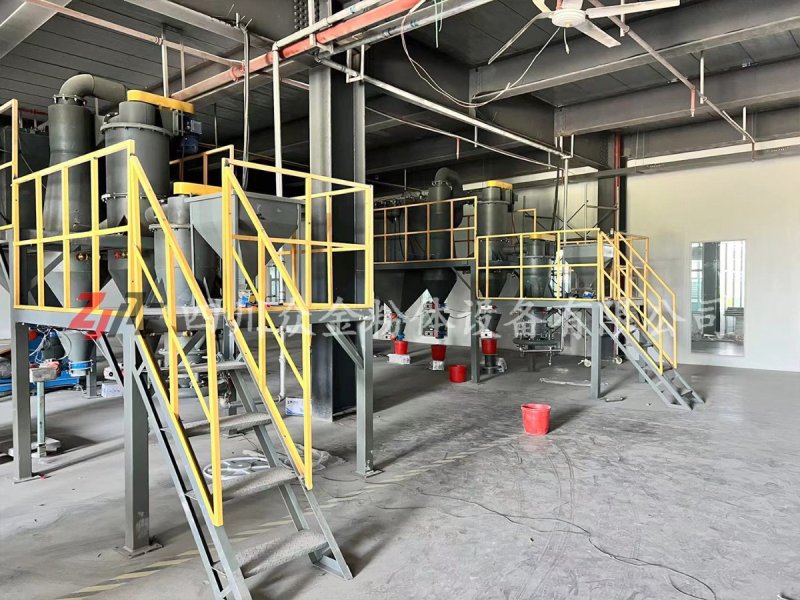
Equipment Composition:
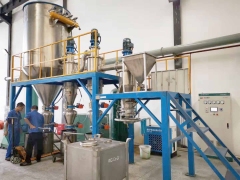
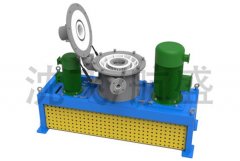
ZJThe series of diamond-specific jet mills are upgraded products of traditional fluidized bed jet mills, opposed jet mills, horizontal jet mills, and other types of jet mills. The equipment mainly consists of a crushing main unit, a high-precision vortex classifier, a cyclone collector, a bag filter, an air compressor, and other components. The full utilization of jet energy is the **key feature** of this machine.
Working Principle:
ZJThe series of diamond-specific jet mills utilizes multiple oppositely arranged nozzles to generate high-speed airflow, which accelerates the material to supersonic speeds, causing it to collide at the intersection of the nozzles to achieve ultra-fine grinding. The crushed material is carried by the upward airflow into the classification chamber of the classifier. Due to the high-speed rotation of the classification rotor, the particles are subjected to both the centrifugal force generated by the classification rotor and the centripetal force caused by the viscous effect of the airflow. When the centrifugal force on the particles exceeds the centripetal force, i.e., coarse particles above the classification particle size, they return to the grinding chamber for further impact grinding. Fine particles are carried by the airflow into the cyclone separator and collector for collection, while the gas is discharged by the induced draft fan.