- Products
-
Shops
AI Search

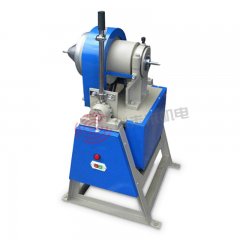
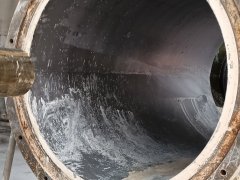
The principle of the laboratory rod mill is: the motor drives the reduction gearbox and the peripheral large gear to achieve deceleration transmission, or a low-speed synchronous motor directly drives the peripheral large gear for deceleration transmission. The drive rotates the cylinder. The cylinder is filled with an appropriate grinding medium.-Steel rod. Under the action of centrifugal force and friction, the grinding medium is lifted to a certain height and falls in a throwing or cascading state. The material to be ground continuously enters the interior of the cylinder through the feed opening, is crushed by the moving grinding medium, and the product is discharged from the machine through overflow and the force of continuous feeding for the next process operation. The laboratory rod mill is widely used in industries such as cement, silicate products, new building materials, refractory materials, fertilizers, ferrous and non-ferrous metal beneficiation, as well as glass and ceramic production, for dry or wet grinding of various ores and other grindable materials.
Technical Parameters:
ModelModel | Unit | XMB160*200 | XMB200*240 | XMB240*300 | |||||||
Cylinder dimensionsTank size | mm | 160/200 | 200/240 | 240/300 | |||||||
VolumeVolume | L | 4.02 | 7.5 | 13.57 | |||||||
Ore grinding volumeCapacity | g | 300-800 | 500-1000 | 1000-5000 | |||||||
Feed particle sizeFeeder size | mm | 2 | 2 | 3 | |||||||
Discharge particle sizeoutput size | mm | 0.074 | 0.074 | 0.074 | |||||||
Cylinder rotation speedDrum speed | r/min | 120 | 110 | 96 | |||||||
Powerpower | kw | 0.25 | 0.55 | 0.55 | |||||||
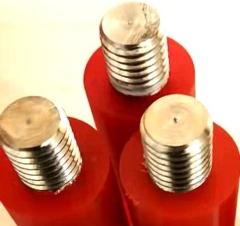
Grinding mediummaterial | steel barRod | DiameterD | Mm | 18 | 20 | 15 | 18 | 22 | 15 | 18 | 22 |
LengthL | Mm | 185 | 225 | 286 | |||||||
quantityQty | Rootpcs | 10 | 9 | 17 | 9 | 9 | 33 | 13 | 6 | ||
WeightW | Kg | 3.55 | 4.09 | 4.9 | 4.2 | 4.9 | 12.7 | 7.48 | 5 | ||
SizeDimension size | mm | 1052/530/1160 | 1052/615/1160 | 1052/615/1160 | |||||||
WeightWeight | kg | 91 | 150 | 162 | |||||||