- Products
-
Shops
AI Search

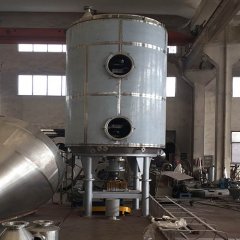
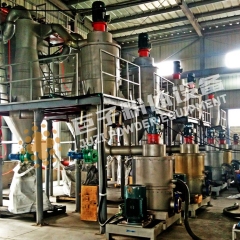
Ternary precursor nickel-cobalt-manganese hydroxide disc drying equipment
The disc drying equipment for ternary precursor (nickel-cobalt-manganese hydroxide) is a highly efficient conductive continuous drying device. The material is in the form of a filter cake with a particle size of 3 to 15 μm, an initial moisture content of 10% to 20%, and a final moisture content requirement of <0.5%.
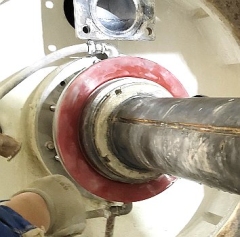
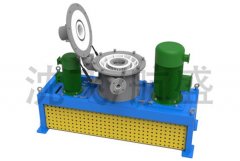
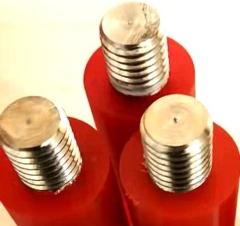
Due to the material's certain viscosity, our company has installed a crushing device for coarse crushing before the disc dryer, and a variable frequency screw is used to achieve controlled feeding for the disc dryer. In terms of materials, the parts of the equipment that come into contact with the material are made of stainless steel, while the rest are carbon steel. However, during processing, the stainless steel surfaces (including stainless steel castings) are subjected to pickling and passivation treatment, and the carbon steel surfaces are degreased, derusted, and coated with two layers of anti-rust and anti-corrosion paint to ensure long-term and high-quality operation of the equipment. In the disc dryer, the rake plates are made of PTFE, and the connection between the rake blades and the rake rod is isolated using PTFE sleeves.
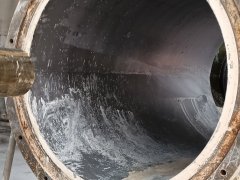
When the equipment is drying, a heating medium is introduced into the hollow drying trays. The heating medium can be in the form of saturated steam, hot water, or thermal oil. It enters from one end of the drying tray and exits from the other end. The dried material falls from the last layer of drying trays to the bottom of the shell, and is then moved by the rake blades to the discharge outlet for removal. Moisture escapes from the material and is discharged through the moisture exhaust port located on the top cover.
Continuous operation with high thermal efficiency. The disc continuous dryer performs drying through conductive heat transfer. During the drying process, only a very small amount of air (or no air at all) is introduced into the dryer, resulting in minimal exhaust gas carryover. Therefore, its thermal efficiency can reach over 65%.
Low power consumption and low noise. Due to the very thin material layer during the drying process and the low spindle speed, the power required for the material conveying system is minimal, resulting in very low electricity consumption. The total power consumption of the entire drying unit is only 1/5 to 1/7 of that of convection-based heat transfer units, and the noise level is very low.
The material is heated evenly, resulting in a short drying time. During the drying process, the material rolls forward along an Archimedean spiral trajectory in the drying pan, covering a distance five times the radius of the drying pan. As it descends layer by layer, the contact time of the material with the heating pan surface is nearly identical, ensuring very uniform heating.
Low material loss and good environmental protection.
High drying capacity.
The equipment operates in a sealed and continuous manner, reducing the labor intensity for workers.