- Products
-
Shops
AI Search
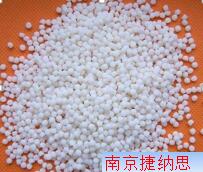
Dynamically vulcanized thermoplastic elastomer (TPV) refers to a thermoplastic elastomer prepared by melt-blending rubber and plastic under high temperature and strong shear, followed by the addition of a crosslinking agent for dynamic vulcanization. TPV has a unique structure that is distinctly different from simple rubber-plastic blend systems. In TPV, even when the rubber content exceeds 50%, the microstructure still exhibits crosslinked rubber particles uniformly dispersed in a continuous plastic phase, forming a "sea-island" structure.
Dynamically vulcanized thermoplastic elastomer (TPV) refers to a thermoplastic elastomer prepared by melt-blending rubber and plastic under high temperature and strong shear, followed by the addition of a crosslinking agent for dynamic vulcanization. TPV has a unique structure that is distinctly different from simple rubber-plastic blend systems. In TPV, even when the rubber content exceeds 50%, the microstructure still exhibits crosslinked rubber particles uniformly dispersed in a continuous plastic phase, forming a "sea-island" structure.
Dynamically vulcanized thermoplastic elastomers combine the advantages of rubber and polyolefin resins, offering excellent heat and aging resistance as well as good impact performance. Compared to traditional rubber, dynamically vulcanized thermoplastic elastomers are easier to process, can be repeatedly molded, and their scraps and waste materials are recyclable, making them a **functional material with great development potential**. They have gradually replaced traditional rubber and are widely used in industries such as automotive, construction, and electronics.
Dynamically vulcanized thermoplastic elastomers are widely used in the automotive industry. Automotive interiors made with TPV can reduce noise and vibration, lower system costs, decrease component weight, and significantly enhance the level of interior decoration and environmental compliance.
TPV holds an important position in the construction industry. Due to its flexibility at low temperatures, excellent UV stability, and resistance to compression set, it can be used for long-term outdoor applications. Moreover, TPV offers superior extrusion processability, allowing it to adapt to the shape of the extrusion die, thereby completely replacing traditional vulcanized rubber, which involves complex processes and inconsistent quality.
Through formula optimization and raw material selection, the produced TPV can replace silicone rubber, which releases allergenic substances and nitrosamines. It can be widely used in the medical and health field.
Homepage|About Us|News Center|Product Showcase|Technical service|Talent Recruitment|Feedback|Union