- Products
-
Shops
AI Search
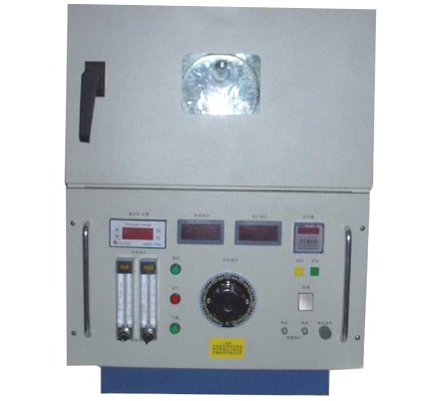
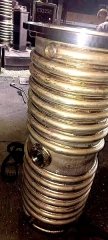
The plasma reactor is based on plasma processing equipment, modified and innovated to meet experimental requirements. The instrument mainly consists of two parts: the plasma processing equipment and the reaction chamber. On the basis of the plasma processing equipment, a reaction chamber is added, and inert or reactive gases are introduced to achieve the desired reaction atmosphere. Within the achievable range, plasma treatment is carried out to meet the required specifications. Compared with traditional reactor types, the plasma reactor offers advantages such as high efficiency, speed, and no pollution, and it can provide different reaction gas atmospheres to suit various experimental needs. Compared with traditional reactor types, the plasma reactor offers advantages such as high efficiency, speed, and no pollution, and it can provide different reaction gas atmospheres to suit various experimental needs.
The plasma reactor is based on plasma processing equipment, modified and innovated to meet experimental requirements. The instrument mainly consists of two parts: the plasma processing equipment and the reaction chamber. On the basis of the plasma processing equipment, a reaction chamber is added, and inert or reactive gases are introduced to achieve the desired reaction atmosphere. Within the achievable range, plasma treatment is carried out to meet the required specifications. Compared with traditional reactor types, the plasma reactor offers advantages such as high efficiency, rapid operation, and no pollution, and it can provide different reaction gas atmospheres to suit various experimental needs. Compared with traditional reactor types, the plasma reactor offers advantages such as high efficiency, rapid operation, and no pollution, and it can provide different reaction gas atmospheres to suit various experimental needs.
Product Model and Parameters
Instrument Application
Plasma reactors offer advantages such as high efficiency, rapid processing, and pollution-free operation. They can provide different reaction gas atmospheres to meet various experimental requirements. Plasma reactors are applicable in surface treatment, nanomaterial preparation, and other fields. Currently, they play a significant role in polymerization, pyrolysis, reduction, and catalytic reactions. For example, plasma reactors are used in experiments such as synthesizing nanomaterials, high-temperature cracking, polymer polymerization, and organic degradation. Substantial applications of plasma reactors have been achieved in areas such as sensors, in-situ reactions, polymerization reactions, and nanomaterial preparation.
Application Examples
Research Achievements
1.Amphiphilic egg-derived carbon dots: rapid plasma fabrication, pyrolysis process and pulticolor printing patterns, Angew. Chem. Int. Ed.2012, 51, 9297–9301;
2. Available plasma-ignited frontal polymerization approach toward facile fabrication of functional polymer hydrogels, Chem. Mater., 2010, 22, 5653–5659.