- Products
-
Shops
AI Search

Performance Features:
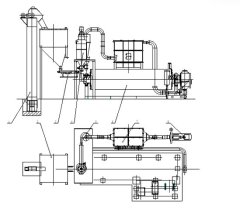
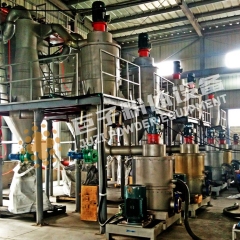
The outstanding features of this ultrafine ball mill classification production line are the significant progress and breakthroughs achieved in energy-saving technology, environmental protection, classification precision, and equipment lifespan, representing the current level of ball mill classification technology.
1Through the optimized configuration of ball milling and classification equipment, the energy consumption of the production line has been significantly reduced.
2The production line features adjustable one-time classification fineness ranging from 200 to 2,500 mesh. With the addition of an ultra-fine classification main unit, the classification fineness can reach 3,000 to 5,000 mesh, achieving a relatively high level of domestic dry classification. This resolves the current situation where two sets of classification equipment are required for producing ultra-fine products.
3The ultra-fine ball mill has been innovatively designed based on existing ball mills, resulting in reduced equipment power consumption, a more scientific and reasonable grinding media ratio, and significantly improved grinding efficiency. It can effectively produce ultra-fine powders and adjust the particle size distribution of the finished product as required.
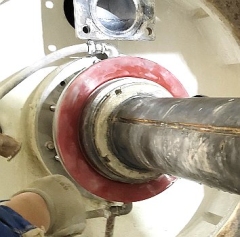
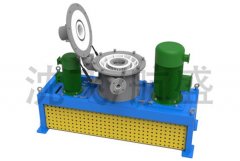
4Based on the existing classification equipment, improvements and innovative designs have been made. By innovating the structural form of the classification zone cavity, the sealing structure of the classification impeller, the impeller material, and the structural form of the secondary air in the equipment, the equipment's lifespan has been effectively extended. The classification efficiency is high, the classification precision is excellent, the cut point is accurate, and the issue of severe product tailing in the original classification equipment has been resolved.
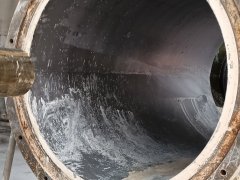
5In the ultra-fine ball milling production line, the parts in contact with the material are entirely made of non-iron liners. Depending on the material, liners and grinding media are selected from materials that are the same as or similar to the material composition, effectively preventing contamination of the finished product.
6Innovative design of the production line installation structure results in a small footprint, low investment in civil engineering and auxiliary equipment, and an excellent production environment.
7Low equipment failure rate, the system adopts intelligent frequency conversion control, with a high degree of automation and easy operation.
8It can undertake technical renovation projects for other production lines, reducing product energy consumption, improving classification accuracy, and increasing the added value of products.
Scope of Application:
Soft materials: calcite, marble, limestone, barite, kaolin, gypsum, fly ash, etc.
Hard materials: silicon carbide, brown corundum, bauxite, mullite, zircon sand, etc.
High-purity materials: quartz, feldspar, alumina, phosphors, etc.