- Products
-
Shops
AI Search

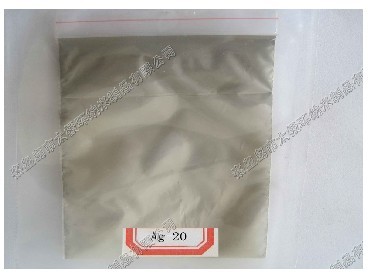
Product Introduction: Nanoscale silver powder appears black with no other colors mixed in, spherical in shape, and without significant agglomeration. Its size lies between atomic clusters and macroscopic particles, combining the properties of nanomaterials and elemental silver. It exhibits high surface activity, surface energy, and catalytic performance, making it widely applicable in catalyst materials, semiconductor materials, low-temperature thermal conductive materials, antibacterial materials, and medical materials.
Application Scope:
1. Application in chemical reactions: Leveraging their high surface activity, metal nanoparticles are expected to become a new generation of efficient catalysts, gas storage materials, and low-melting-point materials.
2. Applications in the field of optics: Silver nanoparticles have potential applications in optical waveguides, optical switches, molecular identification, and catalysis.
3. Application in the field of inorganic antibacterial agents: A typical characteristic of nano-silver is its broad-spectrum bactericidal and antibacterial properties. Silver-based antibacterial agents exhibit sufficient safety in the antibacterial functional modification of textiles, achieving a sterilization rate of over 99%. Furthermore, nano-silver antibacterial fibers and nano-silver antibacterial nonwoven fabrics fully demonstrate their market potential in medical, hygiene, and industrial applications.
4. Application in Coatings: Adding a small amount of nano-silver powder to coatings to impart antibacterial properties holds practical significance. Due to surface effects, its antibacterial capability is over 200 times that of micron-sized silver particles, and its antibacterial performance far exceeds that of traditional silver ion bactericides.
5. Application in Ceramics: Antibacterial ceramics are a type of functional new material, produced by adding inorganic antibacterial agents to the raw materials used in pottery making, particularly in ceramic glazes. This process has minimal impact on the production techniques, technical performance, and microstructure of daily-use ceramics, and their performance indicators all meet the requirements of national quality standards for daily-use ceramics.
6. Silver nanoparticles are also applied in other fields, such as photosensitive materials. Silver halide photosensitive materials are one of the fields with the **highest** silver usage, widely used in photographic film, photographic paper, medical X-ray film, and more. The use of nanotechnology can endow conventional plastic wrap with multiple functions, including atmosphere regulation, moisture retention, and slow-release anti-mold properties.
Packaging Specification: Double-layer plastic anti-static packaging
Packaging Quantity: 100g/bag