- Products
-
Shops
AI Search

Working Principle:
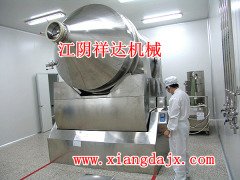
The EYH two-dimensional mixer mainly consists of three major parts: the rotating drum, the swing frame, and the machine frame. The rotating drum is mounted on the swing frame, supported by four rollers, and axially positioned by two retaining wheels. Among the four support rollers, two driving rollers are driven by a rotational power system to rotate the drum. The swing frame is driven by a set of crank-rocker mechanisms, which are mounted on the machine frame. The swing frame is supported on the machine frame by bearing assemblies.
Product Features:
The rotating drum of the EYH two-dimensional mixer can perform two movements simultaneously: one is the rotation of the drum, and the other is the swinging of the drum along with the swing frame. While the materials to be mixed rotate, tumble, and blend inside the drum due to its rotation, they also undergo left-right mixing motion caused by the drum's swinging. Under the combined effect of these two movements, the materials are thoroughly mixed in a short period of time.
| Application Areas: Food, Pharmaceutical, Chemical | Material Type: Powder and granular materials | Applicable Materials: General |
| Power Type: Electric | Working method: Diffusion mixer | Cylinder movement mode: two-dimensional |
| Structural form: Cylindrical mixer | Product Type: Brand New | Brand: Xiangda |
| Model: EYH | Layout type: Horizontal | **Charging Amount:** 250 (Kg) |
| Processing capacity range: 101-500 (kg) | Production Capacity: 500 (Kg/batch) | Overall dimensions (length × width × height): 1300 × 2980 × 1894 × 1766 (mm) |
| Machine weight: 1700 (Kg) | Material Particle Size: 10-300 (mesh) | Discharge method: butterfly valve discharge |
| Specification: 1000 | Total Motor Power (kW): 3 | Charging Volume (L): 500 |
| Number of shakes and rotations: 19.8 |
Purchase Instructions
1. Software Documentation
The drawings and documents to be provided by the buyer include: process flow diagrams, general layout and elevation equipment arrangement drawings, and electrical and instrumentation schematic diagrams.
The textual materials provided by the buyer include: the equipment's dedicated operation manual, inspection certificate, etc.
2. Installation and Debugging
Installation: The supplier shall dispatch personnel to provide guidance for installation, and the buyer shall assign personnel to participate in the installation and provide lifting equipment.
Debugging: After installation, the supplier shall dispatch personnel to provide on-site guidance for equipment debugging.
3. Acceptance Check
After the equipment installation is completed, conduct an acceptance check of the equipment's integrity and appearance quality.
After equipment debugging meets the conditions stipulated in the contract, it shall be deemed qualified, and both parties shall go through the formalities.
4. Personnel Training
The supplier shall dispatch personnel to train the demand side's staff on operation and routine maintenance methods.