- Products
-
Shops
AI Search

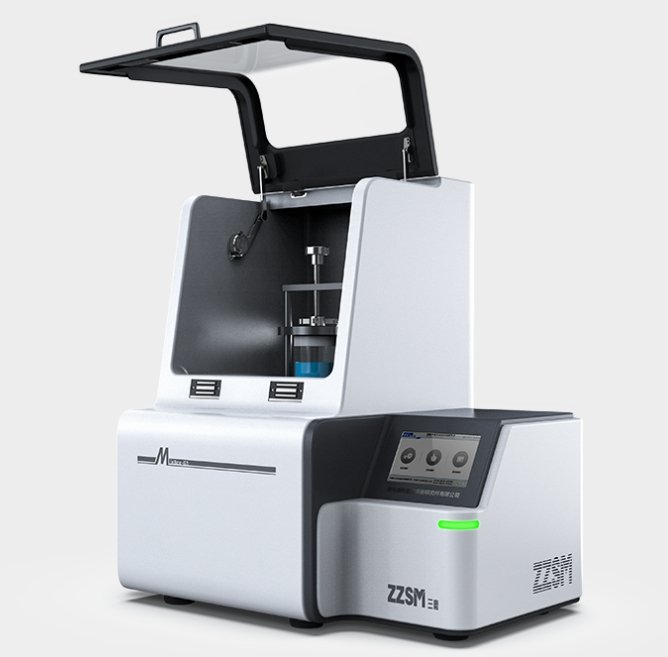
Acoustic Resonance Mixing (RAM) is an advanced bladeless mixing technology based on a specialized mechanical resonance system that generates low-frequency (approximately 60 Hz) high-intensity acoustic vibration excitation (**vibration acceleration of 100g; note: rocket launch acceleration is approximately 23g**). It creates a coupling effect between macroscopic vibration mixing and microscopic acoustic streaming mixing in multiphase flows, achieving uniform and rapid mixing throughout the entire field without dead zones. This technology has been hailed by international experts as a "game-changing disruptive technology" in the field of mixing energetic materials and other substances. Acoustic resonance mixing enables uniform blending of traditionally difficult-to-mix materials such as ultrafine powders, materials with significant density differences, slurries, and high-viscosity materials. Additionally, it can be applied to material crushing, coating, emulsification, eutectic synthesis, and other processes. Schematic diagram of the acoustic resonance mixing principle.
Characteristics of Acoustic Resonance Mixing Technology
Efficiency:
Acoustic resonance mixing achieves material blending through low-frequency, high-intensity acoustic wave energy, with mixing efficiency several to dozens of times higher than traditional mixing technologies. It can achieve uniform mixing of most materials within 5 to 10 minutes.
Uniform
Acoustic resonance mixing generates macroscopic vibrational mixing and microscopic acoustic streaming mixing during the mixing process. The resulting shear field enables uniform, dead-angle-free mixing of difficult-to-disperse materials such as ultrafine particles, those with significant density differences, and high-viscosity substances.
Clean and environmentally friendly.
Acoustic resonance mixing uses individually sealed containers, allowing one material per container for mixing. It relies on acoustic energy for blending without any stirring blades, thereby preventing cross-contamination and making cleaning easy.
Stable and reliable:
Acoustic resonance mixing, with its immense energy density, can fully break mixing boundaries. Extensive experimental validation has shown that acoustic resonance mixing exhibits good mixing repeatability. Additionally, it offers excellent process adaptability, being suitable for both dry and wet mixing.