- Products
-
Shops
AI Search

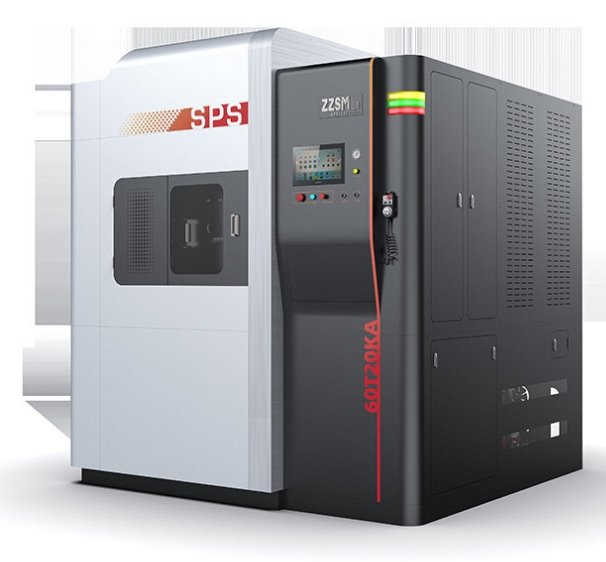
Spark Plasma Sintering (SPS) is an advanced pressure sintering technology that utilizes the instantaneous high temperature, surface activation, and discharge impact pressure generated by pulsed discharge to excite plasma, enabling rapid sintering of powders. SPS integrates plasma activation, hot pressing, and resistance heating, offering outstanding advantages such as fast heating rates, short sintering times, controllable microstructure, and energy efficiency with environmental friendliness. It holds significant application potential in the preparation of high-performance materials.
Characteristics of Spark Plasma Sintering Technology
Rapid sintering:
The heating rate can reach over 500°C/min. The sintering time is significantly shorter than that of traditional sintering methods such as hot pressing, HIP, and pressureless sintering.
Broad temperature range sintering:
The sintering temperature covers a wide range from low temperatures to high temperatures up to 2400°C.
Purification & Activation Sintering:
The effect of particle surface purification (removal of adsorbed gases & oxide films) and particle surface activation enables the sintering of difficult-to-sinter materials.
Density-controlled sintering
From a porous body to a dense sintered body, density control is simple and flexible.
Fine-grained sintering:
Rapid heating inhibits grain growth, regulating the microstructure to prepare the desired sintered body (one of the preparation methods for nanocrystalline materials).
Temperature gradient sintering
Creating a temperature gradient (hundreds of °C/mm) within the mold enables the simultaneous sintering of materials with different melting points (one of the approaches for preparing functionally graded materials).