- Products
-
Shops
AI Search
Salt spray resistant additiveNano silica dispersion liquid
13305******, 13305631650, qq:524915046
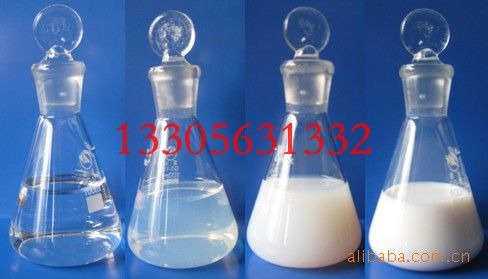
Nano silica dispersion liquidPerformance:
1.Nano silica dispersion liquidUltra-strong resistance to acid, alkali, and high temperatures: ICompanyThe developed and produced nano-silica solution is available in acidic, neutral, and alkaline types, and products with similar pH levels should be used in different environments. This product exhibits strong resistance to acid, alkali, and temperature stability. It demonstrates excellent stability in strongly acidic environments, such as solutions containing trivalent chromium, hexavalent chromium, and phosphoric acid. Under sealed conditions at 80°C, it does not undergo gelation changes for six months, ensuring the product's performance and quality.
2.Ultra-strong permeability: The ultrafine nano-SiO2, with a particle size in the range of 8–15 nm, inherently possesses high activity, endowing the product with strong permeability. It can reach edge areas that are inaccessible in metal surface treatment processes such as electroplating, effectively filling defects like ultra-fine pores, thereby enhancing corrosion resistance and salt spray resistance.
3. High Reactivity and Insulation Performance: Nano-silica can act on microporous defect sites within a very short time (30 to 60 seconds). After proper temperature (<100°C) baking and drying, it will react and bond with the substrate and surrounding auxiliary materials, effectively providing anti-corrosion protection to enhance the workpiece's resistance to corrosion, salt spray, and other effects.
NanometerSilica dispersion liquidSiO2Mechanism of action:
The mechanism by which nano-SiO2 materials enhance the corrosion resistance and salt spray resistance of electroplated metal components and coiled metals differs from that of galvanization or protective paint application. Processes such as electroplating and painting cannot guarantee complete and thorough protection of the edges or even the main areas of components. Under a microscope, electroplated workpieces exhibit numerous ultra-fine pores (at the micron or even nanometer scale) exposed to the air. These unprotected defect sites become the origins of electrochemical reactions that lead to rust formation on metal workpieces. In contrast, nanomaterials leverage their unique permeability, insulation properties, and reactivity to effectively reach and act upon these defect areas that electroplating or painting processes cannot cover, thereby significantly improving the corrosion resistance and salt spray resistance of metal components.
NanometerRequest for information Please provide the price inquiry.