- Products
-
Shops
AI Search

Kaolin
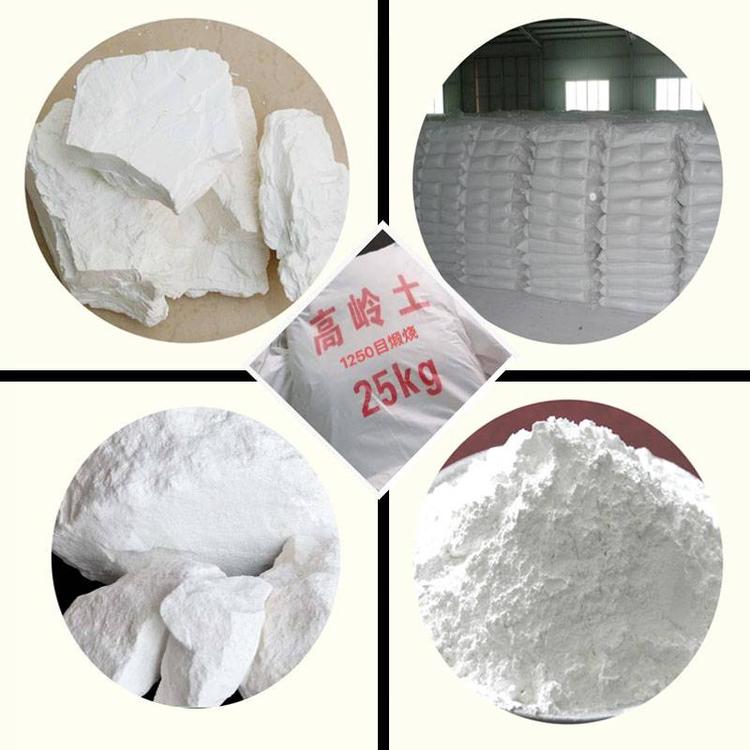
Trait:Mostly dull and lusterless; when pure, it appears white and fine, but when containing impurities, it may take on gray, yellow, brown, and other colors. Its appearance varies depending on the origin, ranging from loose, earthy clumps to dense, rock-like blocks.
Melting point:Approximately 1785°C.
Features:It is malleable; wet soil can be molded into various shapes without breaking and can remain unchanged for a long time.
Kaolin is a common and very important clay mineral in nature, formed by the weathering of feldspar or other silicate minerals in igneous and metamorphic rocks under acidic conditions lacking alkali and alkaline earth metals.
Based on its texture, plasticity, and sand content by mass, it is classified into three categories.
1. Hard kaolin: Hard in texture, non-plastic, but becomes plastic after crushing and fine grinding.
2. Soft kaolin: soft texture, strong plasticity, sand content <50%.
3. Sandy kaolin: Soft texture, weak plasticity, with a sand content mass fraction >50%.
Product Specifications:
Supply of kaolin, calcined kaolin, washed kaolin, kaolin for ceramics, kaolin for coatings, kaolin for plastics, and kaolin for papermaking. Specifications generally include 325 mesh, 400 mesh, 600 mesh, 800 mesh, 1250 mesh, 1500 mesh, 2000 mesh, 3000 mesh, etc. Other specifications can be customized.