Floating beadsUsed in coatings and paints.Advantages as follows:
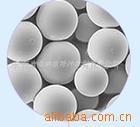
1.Low resin consumption / high potential for increased loading: Because the sphere has the smallest specific surface area among all shapes, cenospheres require the least amount of resin. The packing of particles is also improved. The broad particle size distribution of cenospheres allows smaller microspheres to fill the gaps between larger ones. The result... is essentially: high loading, high solid content, lower VOC, and reduced usage of other components.
2. Low viscosity/improved fluidity: Unlike irregularly shaped particles, cenospheres can easily roll over one another. This gives systems using cenospheres lower viscosity and better fluidity. Moreover, the sprayability of the system is also improved.
3. Hardness/Abrasion Resistance: Cenospheres are high-strength, hard microspheres that enhance the hardness, scrub resistance, and abrasion resistance of coatings.
4. Excellent thermal insulation effect: Due to the hollow spherical structure of cenospheres, they provide excellent thermal insulation when used as a filler in coatings.
5. Gloss Control: As a filler, cenospheres can reduce gloss and help control surging, even when added
Even under high loading requirements, they can eliminate the significant increase in viscosity commonly caused by ordinary matting agents, and they are also low in cost.
6.Inertness: Cenospheres are composed of inert components, thus exhibiting excellent durability, weather resistance, corrosion resistance, and chemical resistance.
7.Opacity: The hollow spherical structure of cenospheres causes light to diffuse and scatter, thereby enhancing the hiding power of the coating.
8.Dispersibility: Similar to mineral fillers, cenospheres can withstand processing in all types of mixers, extruders, and molding machines due to their thick walls and high compressive strength.
9.No Crystalline Silica Contamination: Unlike other fillers, the crystalline silica content in cenospheres is below hazardous levels. Such cenospheres are not considered carcinogenic and do not require special hazard warning labels.
10.High-solid industrial coatings: low viscosity, high loading, reduced VOC, improved hardness, controlled gloss, enhanced abrasion resistance and sprayability, and lower cost.
11. Water-soluble industrial topcoat: Increase solid content, reduce film permeability, enhance corrosion resistance, hardness, inertness, and abrasion resistance, control gloss, and lower costs.
12. Thermal insulation, heat preservation, and fireproof coatings: excellent high-temperature resistance, flame retardancy, and thermal insulation performance;
13. Maintenance coatings: chemical resistance and corrosion resistance, durability, abrasion resistance, low coating permeability, high loading capacity and low cost.
14. Powder coatings: Improve flowability, hardness, wear resistance, control gloss, and reduce costs;
15.Coil coating: flexibility, corrosion resistance, gloss control, higher solid content, cost reduction.
16. Primer: Improves salt spray resistance, temperature resistance, and chemical resistance; increases solid content and reduces cost.
17. Architectural coatings: durability, weather resistance, higher PVC, increased opacity, improved abrasion resistance, and uniform gloss; 18. Adhesive cement and mortar: improved rheology, increased dosage, enhanced durability, and reduced shrinkage deformation.