- Products
-
Shops
AI Search

Catalyst materials primarily serve a catalytic role in the synthesis of diamonds, significantly reducing the conditions required for the transformation of graphite into diamond. Without the involvement of catalyst materials, the transformation temperature of graphite to diamond is around 2000°C, with a pressure range of 15-20 GPa. With the participation of catalyst materials, the transformation temperature can be substantially lowered to approximately 1300°C, and the pressure is drastically reduced to between 5-6 GPa. It is precisely the involvement of catalyst materials that enables the large-scale industrial production of synthetic diamonds.
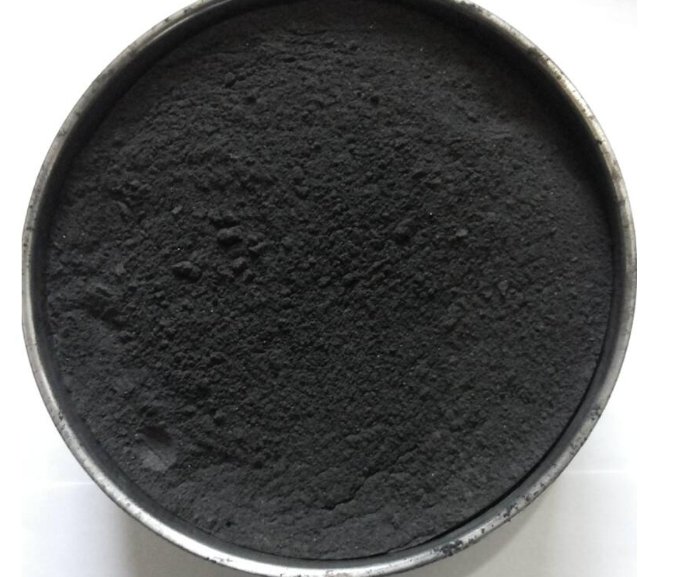
In May 2010, the company began research on synthetic diamond catalyst technology and product development. After years of technical research and experimentation, product quality has steadily improved, and the variety of products has continuously expanded and been refined. The company's current main catalyst material product is the most widely used iron-nickel alloy water-atomized catalyst in China. The production process is characterized by environmental protection, energy efficiency, high production efficiency, and stable and controllable quality. At present, the company has fully mastered the technology for producing synthetic diamond catalysts, continuously exploring and experimenting with its production processes and formula adjustment techniques, and holds complete independent intellectual property rights. The catalyst formula products for synthesizing diamonds of various particle sizes and colors can meet the needs of different users. Currently developed products include: catalyst alloy sheets for producing industrial-grade large single-crystal diamonds and colorless transparent large single-crystal diamonds, catalyst powders for producing MBD and SMD grade diamond single crystals, and catalysts specifically designed for producing EMD grade high-yield Type I materials.
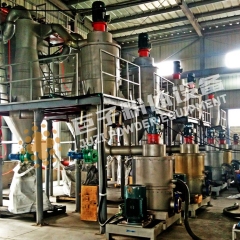
Catalyst Powder Production Process: The production of iron-nickel alloy water-atomized catalyst adopts domestic technology**. First, the prepared raw materials are loaded into a melting furnace for liquefaction, melting, stirring, and mixing. The molten metal, after surface impurity removal, is poured into an intermediate tundish. Through a high-temperature-resistant nozzle placed at its bottom, the metal is condensed into a metal liquid stream with a diameter of ≤10mm, which rapidly enters the atomization chamber. The atomization chamber is protected by an inert gas. The metal liquid stream, guided by the tundish and nozzle, enters the atomization zone to be impacted by high-pressure water jets. According to process requirements, the water pressure in the high-pressure pipeline is controlled at 30–50 MPa. Upon contact, the molten metal is shattered into metal micro-droplets, which are rapidly cooled into metal powder and settle at the bottom of the atomization device. Once the metal powder accumulates to a certain level in the atomization device, the bottom valve is opened to collect the powder. A hydrocyclone designed for water-powder separation is installed at the bottom of the device to discharge atomization water and continuously collect the atomized powder. The collected metal powder undergoes further dewatering and drying, followed by sieving, packaging, and quality inspection. After passing inspection, it is ready for storage and sale.
The key to catalyst production lies in the spraying process, where factors such as nozzle structure, nozzle distribution, spray pressure, spray method, and water inlet method all affect the quality of catalyst production. Based on the original production equipment, we have carried out technical upgrades to the equipment, further improving the quality of the synthesized catalyst. After the technical upgrade, the first-pass yield of powder from the equipment increased from the original 75% to over 88%; production efficiency significantly improved, rising from 70 kg/h to 150 kg/h; the particle size distribution became notably more concentrated, with the peak particle size mainly distributed below -625 mesh. Due to the precise control of particle size, the catalyst powder has a larger specific surface area. During mixing, granulation, and pressing of the core column, the catalyst achieves full contact with high-purity graphite, enhancing the catalytic effect. This not only reduces synthesis conditions but also significantly improves the quality of the synthesized diamond, resulting in a deep yellow color and a transparency level of III or above.