- Products
-
Shops
AI Search

Model/Type | UG-LH30N | Manufacturer/Place of Origin | Suzhou | Product Grade | Nano aluminum hydroxide |
Content | 99.9(%) | Usage | Coatings, fireproof panels, artificial stone, artificial leather, polyurethane, polyamide, polyolefin, unsaturated polyester resin, synthetic rubber, and various functional polymer products. | Packaging specifications | Multi-layer paper-plastic composite bag packaging |
Implementation Quality Standards | National Standard |
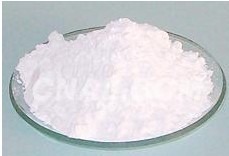
Product Name: Hydrophobic Nano Aluminum Hydroxide
Product Introduction
Based on the chemical properties of different matrix materials, special additives and processes are used to perform surface activation and coating treatment on nano-aluminum hydroxide. This enables the nano-aluminum hydroxide particles to be fully and uniformly dispersed in the matrix resin, while the surface coating layer can undergo bonding reactions with the functional groups of the matrix resin. This not only imparts flame retardancy to the composite material but also improves its mechanical strength.
Product Features
1. Good interfacial compatibility with resin—resists sedimentation and improves the decline in mechanical properties of composites caused by high filling.
2. Special surface treatment, powder self-flowability – facilitates dispersion under shear, reduces the viscosity of the resin blend, and optimizes processing performance.
3. Low moisture content – Excessive moisture escaping during the processing and molding of composite materials can lead to severe internal defects. A hydrophobic surface coating can completely isolate the powder from the air, preventing moisture absorption and deterioration.
4. Excellent flame retardant and smoke suppression performance – It dehydrates and decomposes upon heating, effectively inhibiting the temperature rise and thermal degradation of polymers, and suppresses smoke generation through adsorption. Suitable for composite materials with processing and molding temperatures below 200°C.
5. Excellent Insulation Performance – The fluidized purification process significantly reduces the content of impurity ions such as iron, sodium, and potassium.
6. High Whiteness – Does not interfere with the coloring of composite material products.
Technical Parameters
Model/Type | Main Ingredients | particle sizeUm | Content%(Pre-processing) | I'm sorry, but "白度" does not correspond to a standard term in Chinese. It might be a typo or a specific term from a certain context. Could you please provide more context or check the spelling? If you meant "百度" (Baidu), the English translation would be "Baidu." | Water content % | pHvalue | Surface condition |
UG-L30N | Al(OH)3 | 0.03 | 99.99 | ≥97 | ≤0.3 | 7.5-9.5 | Hydrophobic |
UG-L100N | Al(OH)3 | 0.1 | 99.99 | ≥97 | ≤0.3 | 7.5-9.5 | Hydrophobic |
UG-LH30N | Al(OH)3 | 0.03 | 99.9 | ≥97 | ≤0.3 | 7.5-9.5 | hydrophobic |
UG-LH100N | Al(OH)3 | 0.1 | 99.9 | ≥97 | ≤0.3 | 7.5-9.5 | Hydrophobic |
Instructions for Use
1. When used alone, selection should be based on the performance requirements of the product. Particle size is closely related to the properties of composite materials: the smaller the particle size, the better the surface smoothness and the more significant the reinforcement effect. However, it also increases the viscosity during blending. Please carefully adjust the formulation to balance various properties.
2. Using a blend of particles with different particle sizes for filling can, at an appropriate ratio, form a dense packing within the polymer system, thereby enhancing the flame retardant effect. A well-designed composite system can prevent filler sedimentation or floating, while also reducing the viscosity of the resin blend under the same filler loading, which is beneficial for shear dispersion.
3. After ultra-fine processing, nano-aluminum hydroxide tends to agglomerate due to its increased specific surface area, resulting in poor compatibility with polymers and difficulty in uniform dispersion, which affects the physical properties of composite materials. Hydrophobic nano-aluminum hydroxide exhibits good interfacial compatibility with polymers, as its surface coating layer can undergo bonding reactions with the functional groups of the base resin. This reduces the viscosity of the blend, eliminates interfacial stress concentration, and improves the mechanical properties of the composite material. Due to differences in surface functional groups, different types of hydrophobic products may have slight variations in their applicability to resin systems. It is recommended to conduct a careful evaluation or contact our company for further assistance.
4. It is recommended to determine the **dosage** through experimentation.
Application Reference
Electronic and electrical potting compounds, epoxy resin casting compounds, molding compounds, LED encapsulation materials, electrical switches, wire and cable materials, foaming materials, high-performance adhesives, coatings, fireproof panels, artificial stone, synthetic leather, polyurethane, polyamide, polyolefin, unsaturated polyester resin, synthetic rubber, and various functional polymer products.
Precautions
This product should be stored in a cool, dry, and well-ventilated area, protected from ground moisture and kept away from high-temperature heat sources. During transportation, it must be protected from water and pressure, handled with care during loading and unloading to prevent packaging damage. It should not be mixed or stored with other acidic or alkaline substances. When the ambient relative humidity exceeds 80%, avoid exposure to air; if necessary, bake at 110°C before use. After use, seal it properly to prevent moisture, and it is recommended to use the entire contents immediately after opening the packaging.
Product packaging
Net weight: 20KG/bag, packaged in multi-layer paper-plastic composite bags.