- Products
-
Shops
AI Search

Overview:
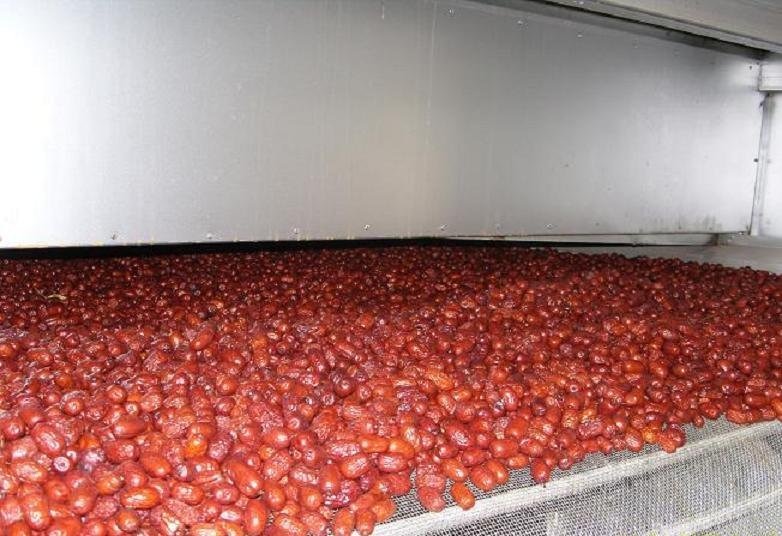
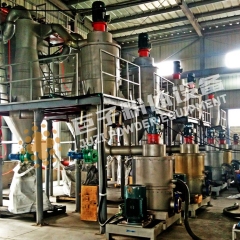
The DWT dehydration dryer is a specialized equipment developed based on traditional mesh belt dryers, featuring strong targeting, practicality, and high energy efficiency. It is widely used for dehydrating various regional and seasonal vegetables and fruits, such as garlic slices, pumpkins, konjac, white radishes, yams, and bamboo shoots. With over 50 users and more than 80 sets of online equipment, it is the most experienced vegetable drying equipment manufacturer in China. The factory's technical personnel have been providing long-term tracking services to these users, conducting in-depth debugging and research on-site, obtaining first-hand practical data, and combining advanced foreign technologies to continuously improve and refine the equipment. To date, the third generation of the DWT series vegetable dehydration dryer has been developed. When producing equipment for users, we design and manufacture the most suitable and highest-quality vegetable drying equipment based on the characteristics of the products to be dried, the user's process requirements, and the experience accumulated over more than a decade.
Application:
It can meet the drying and large-scale continuous production needs of strip-shaped, block-shaped, flake-shaped, and large-particle vegetable materials such as roots, stems, and leaves, while **maximally preserving** the nutritional content and color of the products.
Typical materials for drying include: garlic slices, pumpkin, carrot, konjac, Chinese yam, bamboo shoot, horseradish, onion, apple, and others.
Features:The drying area, air pressure, air volume, drying temperature, and mesh belt speed can all be adjusted to accommodate the characteristics and quality requirements of the vegetables.
Different water treatment processes and necessary auxiliary equipment can be adopted based on the specific characteristics of the vegetables.
Principle:A vegetable dehydrator is mainly composed of key components such as a feeder, a drying bed, a heat exchanger, and a moisture exhaust fan.
When the dryer is in operation, cold air is heated through a heat exchanger. Using a scientifically rational circulation method, the hot air flows through the bed surface to uniformly exchange heat and mass with the material being dried. Within each unit of the machine, the hot airflow is recirculated by the circulation fan, and finally, low-temperature, high-humidity air is discharged, completing the entire drying process smoothly and efficiently.
Technical Parameter Table:
| Model/Model number | DWT1.6-Ⅰ (Seasoning Station) | DWT1.6-Ⅱ (Middle Platform) | DWT1.6-Ⅲ (Unloading Table) | DWT2-Ⅰ (Seasoning Station) | DWT2-Ⅱ (Middle Platform) | DWT2-Ⅲ (Unloading Platform) |
| Network bandwidth (m) | 1.6 | 1.6 | 1.6 | 2 | 2 | 2 |
| Dry section length (m) | 10 | 10 | 8 | 10 | 10 | 8 |
| Fabric thickness mm | ≤100 | ≤100 | ≤100 | ≤100 | ≤100 | ≤100 |
| Temperature in ℃ | 50-150℃ | 50-150℃ | 50-150℃ | 50-150℃ | 50-150℃ | 50-150℃ |
| Heat exchange area m2 | 525 | 398 | 262.5 | 656 | 497 | 327.5 |
| Steam Pressure MPa | 0.2-0.8 | 0.2-0.8 | 0.2-0.8 | 0.2-0.8 | 0.2-0.8 | 0.2-0.8 |
| Drying time (h) | 0.2-1.2 | 0.2-1.2 | 0.2-1.2 | 0.2-1.2 | 0.2-1.2 | 0.2-1.2 |
| Installed Power (kW) | 15.75 | 12.75 | 9.55 | 20.75 | 16.75 | 12.55 |
| Overall dimensions (m) | 12×1.81×1.9 | 12×1.81×1.9 | 10×1.81×1.9 | 12×2.4×1.92 | 12×2.4×1.92 | 10×2.4×1.92 |
Note: 1. The belt dryers of the same specification listed in the above table are used in series for the feeding platform, intermediate platform, and discharge platform to meet the production process requirements for vegetable dehydration and drying, significantly increase output, and effectively ensure product quality.
2. The equipment height does not include the height of the fan or air duct.
3. Some parameters are adjusted based on different materials during design, subject to the final design.