- Products
-
Shops
AI Search

Brief Description of Inorganic Pigment Materials
Inorganic pigments are oxides of non-ferrous metals or insoluble metal salts of certain metals. They are further divided into natural inorganic pigments and synthetic inorganic pigments. Natural inorganic pigments are mineral pigments, which are made from natural minerals or inorganic compounds. Synthetic inorganic pigments offer a complete range of colors, with bright, pure hues and strong covering power.With the global economic recovery, industries such as construction materials, coatings and paints, plastics, and printing inks have experienced rapid growth both domestically and internationally, leading to a sharp increase in the demand for inorganic pigments. As the coatings industry develops rapidly, inorganic pigments, as one of its key raw materials, have also made significant progress, with titanium dioxide and iron oxide accounting for the largest share**.
Inorganic pigment uses:
Inorganic pigments are widely used in coatings, plastics, synthetic fibers, rubber, building materials, stationery and educational supplies, painting pigments, inks, and paper.
Inorganic Pigment DryerOverview:
This product can indirectly heat or cool paste-like, granular, powdery, and slurry materials, enabling unit operations such as drying, cooling, heating, sterilization, reaction, and low-temperature combustion. The specially designed wedge-shaped stirring heat transfer blades in the equipment offer high heat transfer efficiency and self-cleaning functionality for the heat transfer surfaces.
Inorganic Pigment DryerWorking principle
Densely arranged wedge-shaped hollow blades are mounted on the hollow shaft, and the heat medium flows through the blades via the hollow shaft. The heat transfer area per unit effective volume is very large, with the heat medium temperature ranging from -40°C to 320°C. The medium can be steam or liquid types, such as hot water or thermal oil. Through indirect conduction heating, there is no heat loss caused by air being carried away, and all the heat is used to heat the material. The only heat loss is the heat dissipated to the environment through the insulation layer of the equipment body. The wedge-shaped blade heat transfer surface has a self-cleaning function. The relative motion between material particles and the wedge-shaped surface creates a scrubbing effect, which can remove materials adhering to the wedge-shaped surface, ensuring that the heat transfer surface remains clean during operation. The shell of the blade dryer is Ω-shaped, and typically two to four hollow stirring shafts are arranged inside the shell. The shell is equipped with a sealed end cover and a top cover to prevent material dust from leaking out, thereby fully leveraging its functionality.
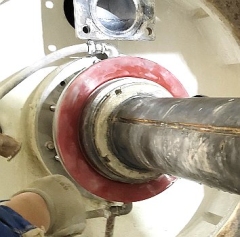
The heat transfer medium flows through the rotary joint, passes through the shell jacket and the hollow stirring shaft. The hollow stirring shaft has different internal structures depending on the type of heat transfer medium to ensure optimal heat transfer performance.
Inorganic Pigment DryerPerformance Features
Low energy consumption of the paddle dryer: Due to indirect heating, there is no large amount of entrained air to carry away heat, and the outer wall of the dryer is equipped with an insulation layer. For slurry materials, evaporating 1 kg of water requires only 1.2 kg of steam.
Low Cost of Paddle Dryer System: With a huge heat transfer surface per unit effective volume, the processing time is shortened, and the equipment size is reduced. This significantly decreases the building area and space required.
Wide range of material processing: By using different heat transfer media, it can handle both heat-sensitive materials and those requiring high-temperature treatment. Common media include: steam, thermal oil, hot water, cooling water, etc.
It can be used for both continuous and intermittent operations, and can be applied in many fields.
Low environmental pollution: No use of carrier air, minimal entrainment of dust and materials. Very low solvent evaporation from materials, making treatment easy. For conditions involving polluting materials or the need to recover solvents, this can be adopted.Closed-loop cycle.
Low operating cost: The structure has minimal wear and very low maintenance costs.
Stable operation: Due to the special compression-expansion stirring action of the wedge-shaped blades, the material particles are fully in contact with the heat transfer surface. Within the axial zone, the gradients of temperature, humidity, and mixing degree of the material are very small, thereby ensuring process stability.
Inorganic Pigment DryerSuitable for materials
The paddle dryer has been successfully applied in fields such as food, chemical, petrochemical, dye, and industrial sludge. Its characteristics of heat transfer, cooling, and stirring enable it to perform the following unit operations: combustion (low temperature), cooling, drying (solvent recovery), heating (melting), reaction, and sterilization. The stirring paddles also serve as heat transfer surfaces, increasing the heat transfer area per unit effective volume and shortening processing time. The wedge-shaped paddle heat transfer surfaces also have self-cleaning functionality. The compression-expansion stirring function ensures uniform mixing of materials. Materials move in a "plug flow" pattern along the axial direction, with minimal gradients in temperature, humidity, and mixing degree within the axial interval. When using thermal oil as the heat medium, the paddle dryer can perform low-temperature combustion operations. For example: calcium sulfate dihydrate (Ca₂SO₄·2H₂O) is converted into calcium sulfate hemihydrate (Ca₂SO₄·1/2H₂O) through combustion. Sodium bicarbonate (NaHCO₃) is calcined into soda ash (Na₂HCO₃), among others. By introducing a cooling medium, such as water or chilled brine, it can be used for cooling. For instance, the paddle-type soda ash cooler used in the soda ash industry replaces traditional air-cooled soda ash coolers, saving energy and exhaust gas treatment equipment while reducing operating costs. Drying, the primary function of the equipment, eliminates the need for hot air, making solvent recovery, energy consumption, and environmental control easier to manage. It is particularly suitable for materials requiring solvent recovery, as well as those that are flammable, oxidizable, or heat-sensitive. It has been widely used in the fine chemical, petrochemical, and dye industries. The uniformity of temperature, humidity, and mixing degree within the axial interval allows the equipment to be used for heating or melting, or for conducting reactions with solid materials. It has been successfully applied in the compound fertilizer and modified starch industries. The paddle dryer can also be used for sterilizing food and flour. The large heating area per unit effective volume quickly heats the material to the sterilization temperature, avoiding prolonged heating that could alter the material's quality.
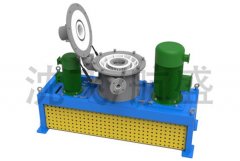
Installation Structure Diagram
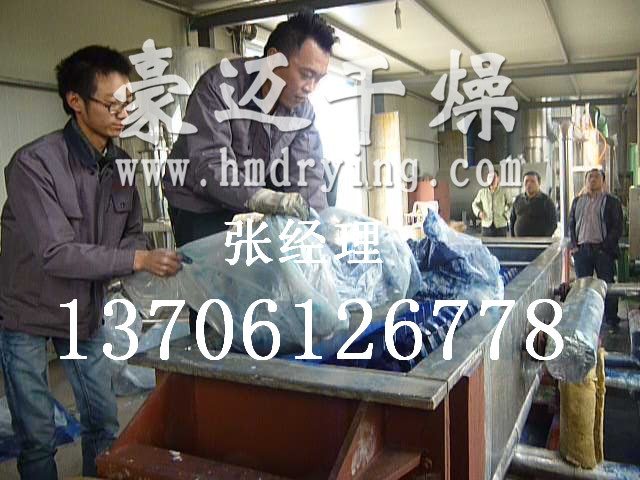
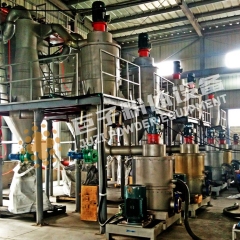
Inorganic Pigment Dryer Case Study:
MoreParameters of Inorganic Pigment Dryer:
Technical consultation and solution design. You are welcome to call and discuss. Contact number: 13706****** Manager Zhang