- Products
-
Shops
AI Search

Product Parameters
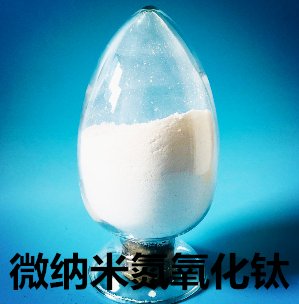
Product | Titanium oxynitride nanoparticlesTiON) |
Product Model | ZH-TiON-01 |
Average particle size | 30nm |
Product Purity | 99.9% |
Specific surface area | 58.116m2/g |
Theoretical density | 4.300g/cm3 |
Bulk density | 0.062g/cm3 |
Melt Dot | 1500℃ |
Boiling Dot | 2200℃ |
Crystal type | Nearly spherical |
Outside View | White fluffy powder |
Dispersion | Prepared by gas-phase method, easily dispersible in liquids and polymer materials. |
Note | The product particle size can be customized. The company offers surface treatment technology, dispersants, and application technical guidance. |
Product Features
Titanium oxynitride nanoparticles(TiON)Using aerosol ablation methodPreparation: characterized by high purity, small particle size, uniform distribution, large specific surface area, high surface activity, and low bulk density; nanoscale in photocatalysts.TiON is widely used as a catalyst for photocatalytic oxidation reactions due to its stable chemical properties, strong redox and photocathodic corrosion resistance, insolubility, non-toxicity, and low cost. It is employed to remove pollutants from the atmosphere and water, making it an ideal material for addressing energy and environmental issues.
Product Applications
1 nanometer titanium oxynitride is applied toWastewater treatment: Industrial wastewater contains a large amount of toxic and harmful organic substances, which are difficult to eliminate using biological treatment technologies. Nano-Under light conditions, TiON exhibits strong oxidation properties, enabling redox reactions with hydrocarbons, halogenated compounds, carboxylic acids, and other substances in water, leading to their gradual degradation and complete oxidation into environmentally friendly products.CO2andH2Oand other harmless substances;
2 nm titanium oxynitride applied toPhotocatalyst: NanoTiONThe bandgap is less than3.2eV, therefore400nmUnder visible light conditions at the above wavelengths, it can still achieve catalytic degradation of toxic and harmful substances in the air, resulting in environmental purification effects, which is superior to pure anatase titanium dioxide photocatalysts.
3-nanometer titanium oxynitride applied toSelf-cleaning coating: This product has strong catalytic oxidation properties. When added to the coating matrix, it can autonomously decompose organic pollutants that fall or adhere to the coating surface, breaking them down intoCO2and other substances like water are carried away by air circulation to achieve a self-cleaning effect.
4 nm titanium oxynitride applied toAntimicrobial agent: NanoTiONIt has a strong photocatalytic bactericidal effect. Under visible light irradiation,TiONDecompose water into free radicals, which penetrate the bacterial cell wall, disrupt the cell wall, degrade the internal cellular structure, and subsequently kill the cells, thereby achieving antibacterial and bactericidal effects.
5-nanometer titanium oxynitride is applied toAntibacterial composite materialsTiONIt has strong photocatalytic capabilities. Adding an appropriate amount of nano-TiONMade into a polymer composite material, it can prevent the product from mold and bacterial growth even in low-light environments.
6 nanometersTitanium oxynitride is primarily used in the aerospace field.It can be made into a very thin coating for hardening and protecting smooth surfaces, and can also be used as a non-toxic product in medical implants.
Packaging and Storage
This product is filled with inert gas.Plastic bagPackaging: Store sealed in a dry, cool environment. Avoid exposure to air to prevent moisture-induced oxidative agglomeration, which may affect dispersion performance and usage effectiveness. Packaging quantities can be provided according to customer requirements, with sub-packaging available.。