- Products
-
Shops
AI Search

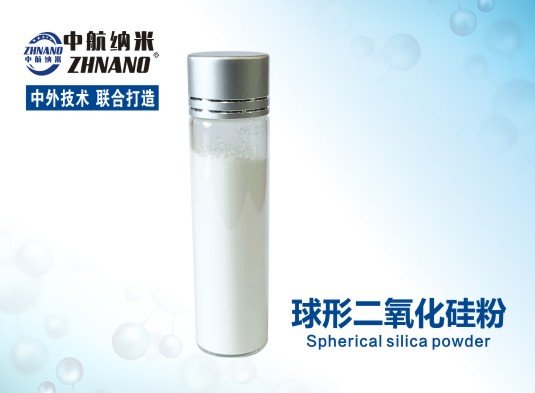
Spherical silica powder
Product Features
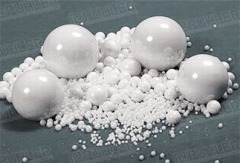
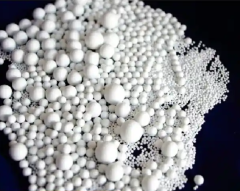
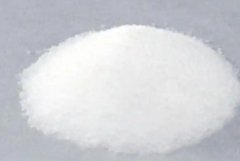
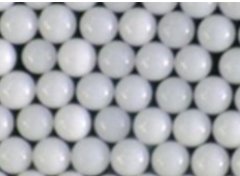
Spherical silica is prepared using the plasma spheroidization combustion method, featuring a small specific surface area, a clean surface with no residual impurities, high sphericity, and easy dispersibility. It achieves electronic-grade purity, with particle sizes as small as submicron or nanometer levels, uniform particle distribution, and no agglomeration. As a filler material, spherical silica powder enhances the rigidity, wear resistance, weather resistance, impact and compression resistance, tensile strength, flame retardancy, arc insulation properties, and UV radiation resistance of electronic products.
Product Parameters
| Product Name | Model/Type | Average particle size (μm) | Purity (%) | Specific surface area (m²/g) | Apparent density (g/cm3) | Appearance | Color |
| Spherical Silicon Dioxide | ZH-SiO2300N | 0.3 | 99.99 | 12.453 | 0.12 | Regular spherical | White |
| Spherical Silicon Dioxide | ZH-SiO2500N | 0.5 | 99.99 | 10.427 | 0.16 | Regular spherical | White |
| Spherical Silicon Dioxide | ZH-SiO21U | 1 | 99.9 | 8.456 | 0.43 | Regular spherical | White |
| Spherical Silicon Dioxide | ZH-SiO23U | 3 | 99.9 | 6.543 | 0.65 | Regular spherical | White |
| Spherical Silicon Dioxide | ZH-SiO25U | 5 | 99.9 | 5.574 | 0.76 | Regular spherical | White |
| Spherical Silicon Dioxide | ZH-SiO210U | 10 | 99.9 | 4.789 | 0.89 | Regular spherical | White |
| Spherical Silicon Dioxide | ZH-SiO220U | 20 | 99.9 | 3.156 | 0.93 | Regular spherical | White |
| Spherical Silicon Dioxide | ZH-SiO240U | 40 | 99.9 | 2.468 | 1.12 | Regular spherical | White |
| Custom processing | Provide customers with customized particle size and surface modification treatment. | ||||||
Product Applications
1. Epoxy Molding Compound (EMC): Spherical silica powder is primarily used for large-scale and ultra-large-scale integrated circuit packaging. When used as a filler in epoxy resin systems, it can reduce the amount of epoxy resin required. The main uses and properties of spherical silica powder are as follows: Its spherical shape provides good surface fluidity, allowing it to form a uniform film when mixed with resin, requiring less resin while maintaining good flowability. The powder has a high filling capacity, with a weight ratio of up to 91%. Therefore, spheroidization increases the filling rate of silica powder. The higher the filling rate of silica powder, the lower its thermal expansion coefficient and thermal conductivity, making it closer to the thermal expansion coefficient of single-crystal silicon. This improves the performance of the resulting electronic components. Secondly, the molding compound made from spheroidized powder exhibits lower stress and higher strength. When the stress concentration of angular powder molding compound is set to 1, the stress of spherical powder is only 0.6. As a result, when spherical powder molding compound is used to encapsulate integrated circuit chips, the yield rate is high, and mechanical damage is less likely to occur during transportation, installation, and use. Thirdly, spherical powder has a low friction coefficient, causing minimal wear on molds and extending their service life. Compared to angular powder, it can improve mold lifespan, which is crucial for reducing costs and enhancing economic efficiency for packaging manufacturers. When the integration level of integrated circuits is high, the spacing between wires in ultra-large-scale integrated circuits becomes very small. If the molding compound has high radioactivity, it can cause source errors during the operation of the integrated circuits, affecting their reliability. Therefore, strict requirements are imposed on radioactivity.
2. The application of spherical silica powder in copper-clad laminates (CCL) primarily aims to reduce the thermal expansion rate of CCL, enhance its heat resistance and moisture-heat resistance, lower moisture absorption, improve substrate peel strength, and increase the rigidity and crack resistance under mechanical impact of thin CCL substrates. Spherical silica powder, with its high packing density and uniform stress distribution, can improve its fluidity in fillers and reduce filler viscosity. It is widely used in the integrated circuit encapsulation material industry and the high-performance copper-clad laminate industry.
3. Spherical silica powder imparts excellent light diffusion properties when combined with resins such as PC, PMMA, PS, and PP, and can also provide light diffusion to films when added to spray coatings.
4. Spherical nano-silicon dioxide is effective in reducing firing temperatures and improving yield rates when applied to special high-temperature resistant ceramic materials. As a carrier and filler, high-purity spherical silica powder is used to enhance the toughness and smoothness of ceramic products. When combined with high-performance resin and ceramic matrices, spherical silica powder forms advanced composite materials. These advanced composite materials, made into high-temperature resistant ceramic matrix composites, are ideal heat-resistant tile materials for aerospace vehicles such as aircraft, rockets, satellites, and spacecraft.
Packaging and Storage
This product is packaged in inert gas-filled plastic bags and should be stored sealed in a dry, cool environment. It should not be exposed to air to prevent moisture-induced oxidative agglomeration, which may affect dispersion performance and usage effectiveness. The packaging quantity can be provided according to customer requirements, with sub-packaging available.