- Products
-
Shops
AI Search

I. Project Overview:
Bean paste refers to a paste made by grinding various types of beans into powder, cooking them, and then mixing them with sugar syrup (pre-cooked liquid syrup) before boiling them into a thick consistency. Bean paste is commonly used as a filling for pastries and can be made into a variety of delicious foods.
II. Working Principle
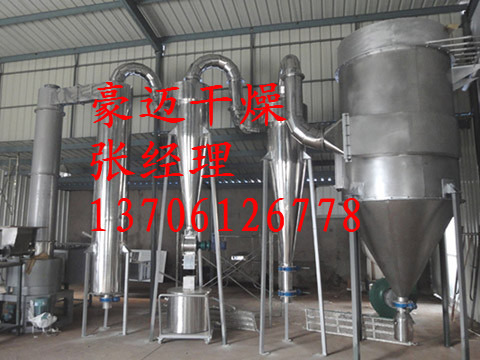
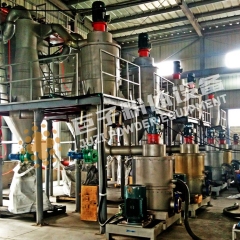
The flash dryer specifically designed for bean paste operates by introducing hot air tangentially through an inlet pipe into the annular gap at the bottom of the drying chamber, where it rises in a spiral motion. Simultaneously, the material is quantitatively fed into the tower by a feeder, undergoing thorough heat exchange with the hot air. Larger and wetter materials are mechanically broken down by the action of a stirrer, while materials with lower moisture content and smaller particle sizes ascend together with the rotating airflow. They are then transported to a separator for gas-solid separation, where the finished product is collected and packaged. The exhaust gas is treated by a dust removal device before being discharged into the atmosphere.
III. Equipment Advantages
1. The high circumferential air velocity inside the drying chamber and the short material residence time effectively prevent material adhesion to the walls and deterioration of heat-sensitive materials, while enabling the production of uniform powdered products in a single drying process, eliminating the need for crushing, sieving, and other steps.
2. The drying chamber is equipped with classification rings and swirl blades, allowing for adjustable material fineness and final moisture content. A special air distribution device reduces equipment resistance and effectively improves the uniformity of material drying.
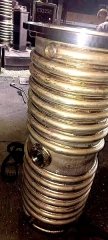
3. A special cooling device and pneumatic sealing mechanism are installed at the bottom of the dryer to prevent material deterioration in the high-temperature zone at the bottom.
4. It can effectively control the final moisture content and fineness. By adjusting the feeding rate, hot air temperature, and classifier, the moisture content and fineness of the product are ensured to be uniform and consistent.
IV. Applicable Materials
Paste-like, slurry-like, filter cake, and other materials, as well as materials dewatered by plate-and-frame filter presses or centrifuges. For example:
1. Inorganic categories: boric acid, calcium carbonate, hydroxides, copper sulfate, iron oxide, barium carbonate, antimony trioxide, various metal hydroxides, various heavy metal salts, synthetic cryolite, etc.;
2 Organic compounds: Atrazine (pesticide insecticide), cadmium laurate, benzoic acid, benzoin, captan, sodium oxalate, cellulose acetate, etc.;
3 Ceramics: kaolin, silicon trioxide, clay, etc.;
4. Dye categories: anthraquinone, black iron oxide, indigo pigment, butyric acid, titanium hydroxide, zinc sulfide, various azo dye intermediates.
5 Food Category: Soy protein isolate, gelatinized starch, distiller's grains, wheat sugar, wheat starch, etc.