- Products
-
Shops
AI Search

Glufosinate-ammonium, as the world's second-largest herbicide tolerated by genetically modified crops, is commonly used in orchards, vineyards, potato fields, non-cultivated land, and other areas to control annual and perennial dicotyledonous and gramineous weeds, such as *Alopecurus myosuroides*, *Digitaria sanguinalis*, *Echinochloa crus-galli*, *Hordeum vulgare* (wild barley), *Lolium multiflorum*, *Setaria viridis*, *Setaria pumila*, *Triticum aestivum* (wild wheat), *Zea mays* (wild corn), *Dactylis glomerata*, *Deschampsia flexuosa*, *Festuca* species, and more. Glufosinate-ammonium has low toxicity, is safe for crops, degrades easily in soil, and can rapidly kill over 100 species of gramineous and broadleaf weeds. Its herbicidal speed is faster than glyphosate, and it can eliminate perennial malignant weeds that glyphosate cannot control. These advantages make it superior to other herbicides.
Glufosinate-ammonium technical powder is a white crystalline substance with a slight odor. Its melting point is 210°C, and its boiling point is 519.1°C at 760 mmHg. It has low solubility in common organic solvents and is stable to light. Based on the characteristics of glufosinate-ammonium, our company recommends using a disc dryer for drying glufosinate-ammonium.
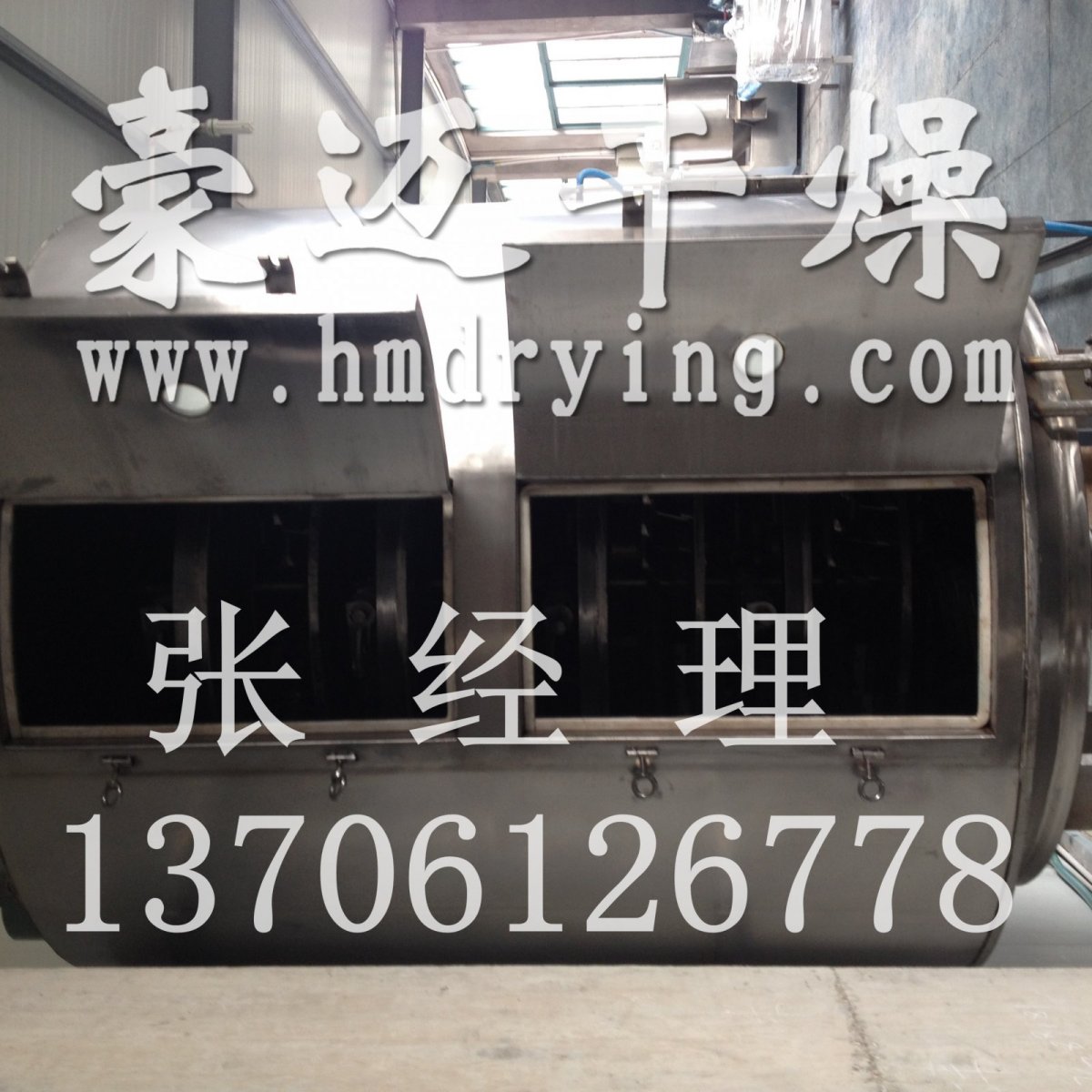
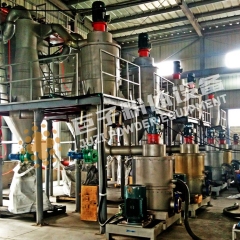
Glufosinate-ammonium-specific disc dryer
A disc dryer, also known as a multi-layer disc dryer, is a conduction-type contact dryer. This equipment has been continuously improved and developed based on fixed-bed conduction dryers and stirring-type dryers such as rake dryers. During the drying process, the heat carrier is introduced into the fixed discs, indirectly heating the wet material on the disc surfaces through conduction. With the stirring action, the moisture in the material continuously evaporates, resulting in a qualified dried product at the bottom.
Plate dryers can be used for both drying and cooling, as well as for heating reactions such as roasting and sublimation. Due to their numerous advantages, including continuous drying, high thermal efficiency, fast processing speed, controllable temperature, excellent product quality, small footprint, low pollution, and wide applicability, they are widely used in industries such as chemicals, pesticides, pharmaceuticals, dyes, and food.
Structure and Principle of Glufosinate-ammonium Dryer
The disc dryer mainly consists of components such as the shell and frame, hollow heating discs, main shaft with stirring arms and rake blades, upper and lower bearings, variable-speed drive, feeder, and control instrument. Wet material is continuously fed from the feeder onto the first layer of drying discs at the upper part of the dryer. The rake arm with rake blades performs a rotary motion, causing the rake blades to continuously turn and spread the material. The material flows across the surface of the drying discs along an exponential spiral path. Material on the small drying discs is moved to the outer edge and falls onto the outer edge of the large drying disc below. On the large drying disc, the material moves inward and falls from the central discharge opening into the next layer of small drying discs below. The large and small drying discs are arranged alternately, allowing the material to flow continuously through the entire dryer. Heating medium is introduced into the hollow drying discs, which can be in the form of saturated steam, hot water, or thermal oil. The heating medium enters from one end of the drying disc and exits from the other end. The dried material falls from the last layer of drying discs to the bottom of the shell and is finally moved by the rake blades to the discharge outlet for removal. Moisture escapes from the material and is discharged through the moisture exhaust port located on the top cover. For vacuum-type disc dryers, the moisture is discharged through the vacuum pump port on the top cover. The dry material discharged from the bottom can be directly packaged. By adding auxiliary equipment such as finned heaters, solvent recovery condensers, bag filters, dry material back-mixing mechanisms, and induced draft fans, the drying capacity can be enhanced. This allows for drying paste-like and heat-sensitive materials, convenient recovery of solvents, and the ability to perform pyrolysis and reaction operations.
Characteristics of the Glufosinate-ammonium Disc Dryer
1. Mechanical material transport enables continuous production with adjustable processing capacity. It eliminates the heavy workload of loading, unloading, and manual tray turning, resulting in lower labor intensity, better working conditions, and easier management.
2. High drying efficiency and strong evaporation capacity.
3. Small footprint, compact structure, simple equipment installation, and suitable for both indoor and outdoor on-site use.
4. The exhaust speed of tail gas or steam is low, resulting in minimal dust dispersion, meeting the requirements for the discharge of the "three wastes" (waste gas, wastewater, and solid waste), and improving the working environment. It is particularly suitable for drying pesticide raw materials, eliminating the need for additional dust removal equipment.
Parameters of the disc dryer:
Changzhou Haomai Drying Engineering Co., Ltd.
Here is the English translation of the Chinese text "网址" while keeping the original format: Website URL
Contact phone number: 13706******
Contact: Manager Zhang