- Products
-
Shops
AI Search
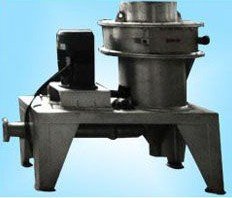
I. Product Overview of F-Series Crushing and Shaping Machine:
The F-series crushing and shaping machine, also known as the F-series vertical impact crusher, is designed based on the BAMAC rock-on-rock high-efficiency crusher from Tidco International Group in New Zealand. The development of vertical impact crushers internationally has generally gone through three stages.
**Vertical Shaft Impact Crusher** was registered as early as the 1950s. However, due to the severe wear of the rotor impeller and the lining plates of the outer ring of the machine body under high-speed impact, the crusher could not operate normally, leading to a halt in its development. Solving the wear issue of the crusher's working components under high-speed conditions to ensure normal operation became a key challenge for the industrial application of high-speed vertical shaft impact crushers. Therefore, despite the crusher's advantages of high efficiency, superior product particle size, and particle shape, no breakthrough progress was achieved until the 1970s.
In the early 1980s, Bryan Bartley and Jim McDonald proposed the prototype of the BAMAC vertical high-efficiency impact crusher in New Zealand. After continuous improvements, in the late 1980s, New Zealand's Tidco company launched the single-impact and double-impact BAMAC vertical impact crushers.
By the mid-1990s, this type of machinery had been widely used worldwide and was introduced to China, where it was well received by industries such as abrasives, refractory materials, artificial sand and gravel, and mining. For example, Zhengzhou No.2 Abrasive Factory used it to process brown corundum abrasives, and the Three Gorges Project used it to produce high-quality sand and gravel.
However, due to its high cost, many small and medium-sized enterprises in China, especially abrasive companies, find it unaffordable and can only watch helplessly. Additionally, issues such as its single functionality, the lack of small-scale machines suited to China's specific conditions, and problems with after-sales service and spare parts supply have prevented it from being widely adopted in China.
It was against this backdrop that our factory began the development of this model, and in 1998, we launched the single-punch small-scale machine in the abrasive industry, naming it the F400 Crushing and Shaping Machine. It achieved an overwhelming response, selling over 40 units that same year. Subsequently, we developed and produced a series of models, including the FF400, F700, and FF700, which not only met the demands of the abrasive industry but also found successful applications in industries such as non-metallic minerals, refractory materials, artificial sand production, and glass, ceramics, and cement.
Especially in applications involving high-hardness materials such as the abrasive industry, this series of machines demonstrates advantages like low wear, high efficiency, and high product bulk density. These comprehensive benefits are difficult to replicate with any other form of crushing. As the requirements for abrasive products continue to rise, the application of this machine series will become even more widespread, inevitably exerting a profound impact on China's abrasive industry.
II. Working Principle of the F-Series Crushing and Shaping Machine:
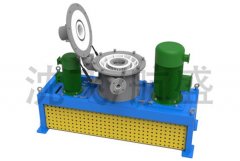
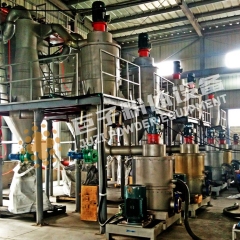
The F-series crushing and shaping machine consists of a crushing system, a dust removal system, and an electrical control system.
The motor drives the central vertical shaft through a V-belt, causing the flywheel to rotate at high speed. As the material passes through the flywheel, it undergoes high-speed centrifugal motion, gaining kinetic energy and being ejected at high velocity. The ejected material rushes into the crushing chamber, where it collides and rubs against itself, achieving the shaping effect.
Features of the F-Series Crushing and Shaping Machine:The production material has good particle shape, with no needle-like or flaky particles.
The bulk density of the production material is high, and the surface cleanliness of the particles is good. Since the material is crushed through self-collision without the involvement of other media, the original purity of the raw material is essentially maintained.
Scope of Application:
Suitable for crushing and shaping of superhard materials (granular sand).
Our company is fully equipped with testing and inspection facilities, and we welcome sample testing.
III. Technical Parameters of F-Series Crushing and Shaping Machine:
Model | Feed rate | Feed particle size | Installed power |
| F400B | 2-3t/h | <10mm | 11-15kw |
| F400C | 4t/h | <20mm | 15-20kw |
| F500A | 5-6t/h | <25mm | 22-30kw |
| F500B | 5-3t/h | <10mm | 22-25kw |
| F500C | 8-10t/h | <30mm | 37-45kw |
| F700 | 2-3t/h | <10mm | 30-37kw |