- Products
-
Shops
AI Search

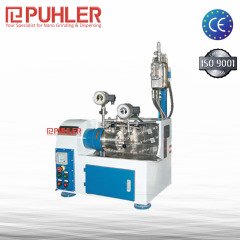
Pühler PHN 0.5 Experimental Star Nano Bead Mill
PHE 1 and PHN 0.5 from the Pailer Experimental Star Grinder series
China's **protected product, the Pühler LabStar, is a Pühler series pin-type high-flow nano bead mill, a new type of nano grinding equipment. It meets the fineness requirements of various nano-new materials such as topcoats, conductive pastes, lithium batteries, carbon nanotubes, MLCC, etc., and is used for preliminary research and development, as well as scaling up basic experimental data.**
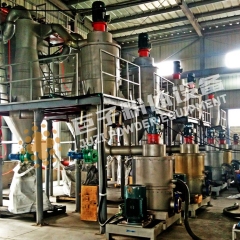
Piller PHN Experimental Star Nano Bead MillSuccessfully applied to high-quality and high-yield industrial production, after centuries of innovation and relentless pursuit, the Pühler Nano Grinding Division has become an undisputed expert in dispersion and nano-grinding technology. The well-known Pühler PHN series pin-type high-flow nano bead mill, known as the Pühler Experimental Star, requires its components to meet high quality standards and excellent wear resistance for the completion of the entire machine. With a variety of machine configurations, PUHLER can provide the ** bead mill to meet your product and processing requirements. This includes both batch and recirculation processes. The grinding beads are accelerated by the ** pin-type rotor accelerator, and the unique structural design of the high-flow separation screen cylinder creates an internal grinding bead path within the chamber, ensuring the accumulation of ** energy in a short time. The high-speed rotation of the grinding beads reduces the axial movement of the beads toward the outlet caused by the flow of the material.
Pühler marks the successful research, development, and manufacturing of a small-to-medium-sized nano bead mill by PHN. The features of this model are:
1) Fine dispersion and grinding of products with varying viscosity levels, from micron to nanometer scale;
2) For channel or cyclic processes, the minimum batch size is 500 ml.
3) The design materials of engineering ceramics (zirconia/silicon carbide/specially wear-resistant alloy steel) ensure that the ground products are completely free from metal contamination.
4) The entire double-end mechanical seal grinding unit is very easy to disassemble, facilitating separate cleaning and disinfection.
5) Based on the unique ** large-flow dynamic separator, ** products can be obtained - achieving * narrow particle size distribution through detection.
6) Both easy and convenient for cleaning operations.
7) Advanced process control system ensures the reading and monitoring of various data during equipment operation, while also facilitating the transfer of experimental data to industrial production.
8) Unique water-cooled motor and cooling system design ensures quiet operation with noise levels below 65 dB(A).
Application Areas
Piller Pühler PHN Experimental Star Nano Bead Mill:Mainly applied in the ultra-fine grinding and dispersion of materials requiring "zero pollution" and high hardness.
1) Color paste / Color filter / TFT LCD: R, G, B, Y, and BM have been successfully dispersed and ground to the nanoscale, with transparency exceeding 90%, viscosity controlled at 5-15 CPS, and moisture content below 1%.
2) Ink-jet Inks: Pigment-based ink-jet inks have been successfully dispersed and ground to the nanoscale, with viscosity controlled below 5 CPS.
3) CMP (Chemical Mechanical Polish) slurry: The particle size of the polishing slurry required for semiconductor wafer polishing has reached the nanometer level and can meet the requirement of no metal ion precipitation.
4) TiOPc (optical contact): A photoconductor coated on the drum of laser printers, which has been ground and dispersed to the nanoscale.
5) Nano-level powder grinding, such as TiO2, ZrO2, Al2O3, ZnO, Clay, CaCO3, etc., can be dispersed and ground down to 30 nm.
6) Dispersion of nanoscale powders. For example, dispersing nanoscale powders into polymers, or adding nanoscale powders to plastics, rubber, etc., for dispersion.
7) The pharmaceutical must meet nanoscale requirements and also be able to satisfy FDA requirements.
8) Food additives must meet nanoscale requirements. For example, β-carotene... must comply with GMP requirements.
9) Electronic chemicals must meet nanoscale requirements and be capable of preventing the precipitation of metal ions.
10) Other special **, aviation nanomaterials.
11) For example: electronics industry, optoelectronics industry, pharmaceutical and biochemical industry, chemical fiber industry, building materials industry, metal industry, magnetic materials, health products, biopharmaceuticals and cell disruption, oxides, nanomaterials, pharmaceutical and biochemical industry, soap, leather, electronic ceramics, conductive pastes, offset printing inks, textiles, inkjet inks, chip polishing fluids, cell disruption, cosmetics, inkjet inks, metal nanomaterials, plastic materials, special nano-aviation materials, and other industries.