- Products
-
Shops
AI Search

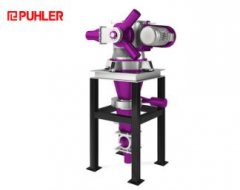
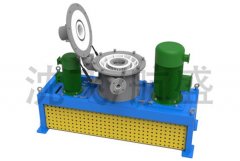
New generation turbo ultrafine classifier TSD
The TSD Turboplex ultrafine classifier from MORPH DHM is an ideal ultrafine powder classification equipment.
In the grinding and classification circulation system, the energy consumption of the classifier section increases as the product fineness improves. Therefore, forD50<For 1µm products, the market demand for low-energy classifiers will continue to grow. The new-generation turbo ultrafine classifier TSD operates based on a novel classification principle. This principle is founded on the solid bed flow (fluidized bed) concept, replacing the traditional flow concept. This new concept makes it possible to significantly reduce pressure drop and classification energy consumption. The special blade geometry generates a uniform material flow, and the new-generation turbo adopts a direct-drive transmission, with the classification wheel's peripheral **speed reaching up to 120 m/s, enabling classification to even finer particle sizes.
For applications in the submicron range, the advantages of the new generation of classifiers are evident: low energy consumption and high output. Additionally, the existingThe ATP classifier can be easily upgraded to a new generation classifier system. Compared with standard classification wheels on the market, the new generation classification wheel can reduce pressure drop by approximately 60%.
However, when producing ultrafine limestone and talc fillers, the classification fineness is the most important factor. In other applications, the emphasis is on coarse products with a very narrow particle size distribution. Here, the new generation of classifiers also proves useful. In this specific case, compared to traditional methods, the new generation of classifiers can increase production output.33% to 38%, while ensuring no change in quality. At the same time, the reduction in pressure drop can also substantially lower energy consumption. The product classification particle size is a function of the peripheral speed or the edge speed of the classifier wheel and the radial velocity of the air passing through the classifier wheel. The fineness of the product can be controlled by adjusting the rotational speed of the classifier wheel. Materials that do not meet the particle size requirements are sent to the bottom of the classifier.
High-efficiency ultra-fine classifier canD97=4µm or finer range for classification work. The classifying wheel is manufactured using an integral manufacturing method, and the material can also be silicon carbide or aluminum oxide. In such wear-resistant manufacturing, this unit can operate at the same speed as a steel classifier and thus achieve the same classification particle size. This integral design is highly suitable for processing wear-resistant materials such as feldspar and quartz.
Features:
Compared to standard turbo air classification wheels, energy consumption is reduced.30-50%. The classification fineness is reduced to D50=0.5μm.
High yield
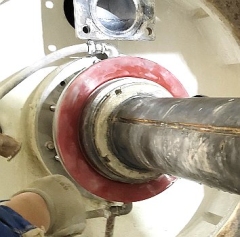
Easy to upgrade. Convert existing equipment toTSD, simply replace the classification wheel and drive unit.
Abrasion-resistant protection:
Optional tungsten carbide classification wheel
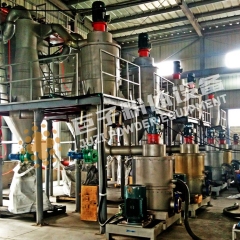
Application Scope: Ultra-fine products, medium hardness feed. Examples: limestone, talc, silica powder, graphite, barite, mica, and kaolin..