- Products
-
Shops
AI Search

Whether it's extremely hard or temperature-sensitive materials, there's no problem.!!
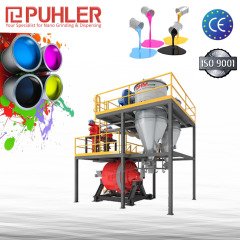
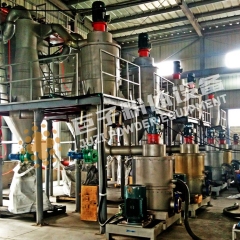
PUHLER The fineness range that can be achieved by the produced fluidized bed jet mill is97%The materials have arrived.1 – 70umChoose arbitrarily.. The ideal product fineness is dynamically adjusted through the built-in classification wheel. Compared with mechanical classification mills, the jet millPRGIt uses high-speed airflow to provide crushing energy, and relies on the mutual collision and grinding of materials to prevent wear on the internal grinding components of the mill.
This machine can also be used in series with multi-stage classifiers to obtain multi-stage products. It features a reasonable structure and multiple functions: it can be used as a crusher, as a standalone classifier, or in a multi-stage classification series, allowing multiple products to be obtained in a single production run.1~6A granular product that can form closed or open circuit operations with other crushing equipment, truly achieving multi-purpose functionality. At the same time, its compact structure, low height, and easy disassembly and cleaning make operation and maintenance convenient, and product changeovers simple.
1.The fineness isd97<1 um 到 d97 70 um (Based on limestone);
2.Fluidized bed jet mills are suitable for fine grinding of both soft and hard materials.
3.The wind wheel precisely controls the particle size;
4.Minimal equipment wear;
5.The classification wheel automatically rotates and adjusts to achieve *fineness*.
6.The classifier wheel automatically separates materials through airflow, with no coarse particles.
7.The classification wheel uses compressed air to protect the bearings.
8.Full autogenous grinding-No tool wear.-No pollution;
9.The temperature of the grinding chamber is kept constant by cold air.(20°C), Therefore, it is also suitable for temperature-sensitive products;
10.Low pressure; high efficiency, fine particle size;
11.Easy to clean and maintain, with high product repeatability.
12.There are various models and styles available.: Impact-resistant type, airtight type, inert gas type.
Application Examples
Black and color toner; Organic and inorganic pigments; Talc and other minerals ;Silicate ;Powder coating ;lGlass powder ;Plant protective agent ;Natural and synthetic graphite ;Hard metal compounds and other metal powders ;Ceramic glaze ;Dental ceramics ;It can also be widely used in chemical industry, pharmaceuticals, pesticides, refractory materials, abrasives, additives, flame retardants, electronic materials,ACUltra-fine grinding of foaming agents, carbon black, non-metallic minerals, and battery materials. The airflow can utilize compressed air, inert gases, or superheated steam.
1. High-purity, ultra-hard materials, Typical materials include: phosphor powder, titanium dioxide, silicon, aluminum, copper, and various high-purity pigments.
2. Fine chemicals, ceramics, abrasives, and refractory materials, Typical materials include: garnet, silicon carbide, corundum, cerium oxide, aluminum oxide, boron carbide, tungsten carbide, emery, and others.
3. Food, medicine, and health products, Typical materials include: pollen, hawthorn, pearl powder, stomach medicine, nimodipine,Antibiotic drugs, contrast agents, lingzhi (reishi mushroom), Chinese gall, and fleeceflower root, among others.
4. Magnetic powder, mobile phone electromagnetic powder, photocopier toner, and electronic materials, Typical materials include: lead-acid batteries, nickel-cadmium batteries, nickel-manganese batteries, ferrite, manganese tetroxide, manganese dioxide, lithium cobalt oxide, lithium manganese oxide, carbon, and others.
5. Non-metallic minerals and powder metallurgy, Typical materials include: quartz, barite, kaolin, heavy calcium carbonate, talc, mica, graphite, wollastonite, and others.
6. Reflective materials, pigments, dyes, and powder coatings, Typical materials include: iron oxide, titanium dioxide, glass beads, etc.
7. Pesticides, feed, and biological materials,
8. Typical materials include: fly ash, titanium dioxide, pulverized coal, petroleum coke, carbon black, graphite, mica, talc, quartz, calcite, barite, diatomite, and aluminum hydroxide./Materials such as magnesium, metal oxides, and pesticides.
9. Non-metallic mineralsTypical materials include: calcium carbonate, kaolin, talc, graphite, calcite, wollastonite, barite, pyrophyllite, etc.
10. Ultra-fine processing of Chinese herbal medicines and raw materialsTypical materials include: pollen, hawthorn, shiitake mushrooms, pearl powder, stomach medicine, nimodipine, antibiotic drugs, contrast agents, lingzhi (reishi mushroom), Chinese gall, and fleeceflower root, among others.