- Products
-
Shops
AI Search

One,Introduction to Roller Jar Mill
Introduction
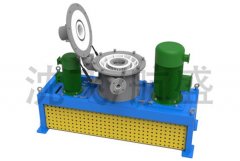
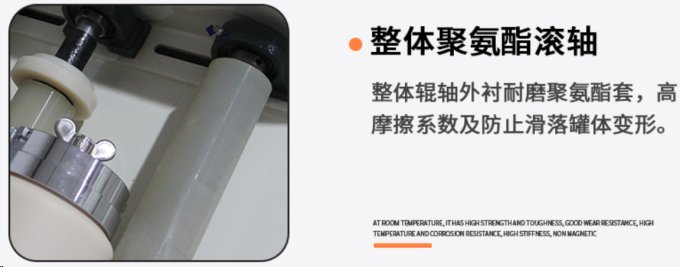
A roller ball mill is a relatively critical piece of basic equipment in the powder grinding and mixing process. Its working principle involves a main shaft connected to a motor, pulley, and bearings for transmission. The relative motion between the main shaft and the tank generates friction with the surface of the ball mill tank, driving another passive shaft to achieve rolling. The entire roller shaft is lined with a wear-resistant polyurethane sleeve to increase the friction coefficient and prevent deformation of the tank from slipping. Our company offers a complete range of roller ball mill varieties and specifications, organized into structured and comprehensive series. The main product series includeDry grinding ball mills, wet grinding ball mills, lined ball mills, grinding and screening ball mills, laboratory ball mills, various customized types, and more.
Application
It is widely used in the production industries of cement, silicate products, new building materials, refractory materials, material chemistry laboratories, bio-fertilizers, non-ferrous metal beneficiation, as well as glass and ceramics, for dry or wet mixing of various ores and other grindable materials. It is also extensively applied in the grinding and mixing processes during the processing of electronics, ceramics, coatings, glass powder, fluorescent materials, non-metallic minerals, pharmaceuticals, electronic materials, magnetic materials, equipment batteries, biological cultivation, food packaging, and battery materials.
Mixed
It operates by moving along two rollers, generating regular motion of the grinding balls. The internal movement is uniform, preventing issues such as wall sticking or sedimentation. ** Its advantage lies not in ultra-fine grinding, but in dry powder mixing, slurry mixing, and nano mixing. Among all machine types, the mixing effect of the roller ball mill is far superior to other ball milling equipment. In experimental data analysis reports, the powder curve it presents is narrower with a higher peak, allowing the material to exhibit greater stability in subsequent processes.。
II.Product Features
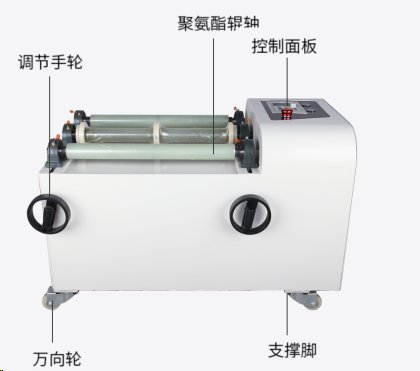
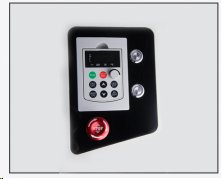
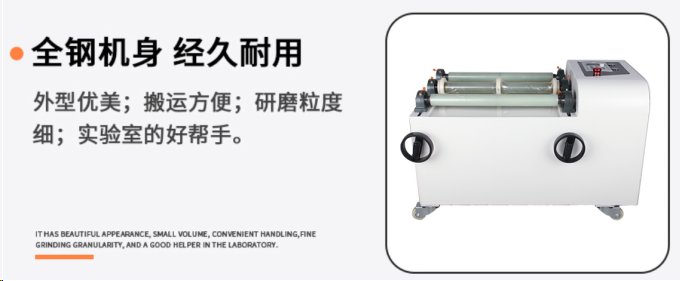
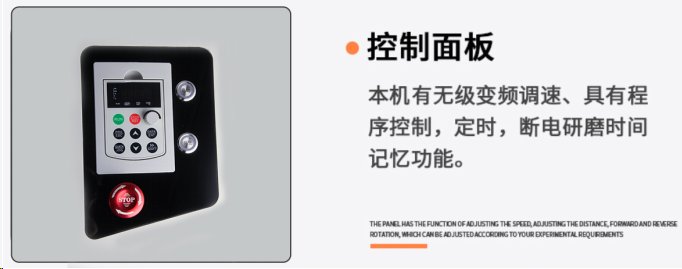
●This machine features variable frequency speed control, program control, and stepless speed regulation.
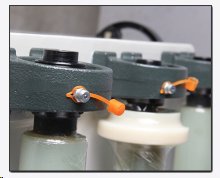
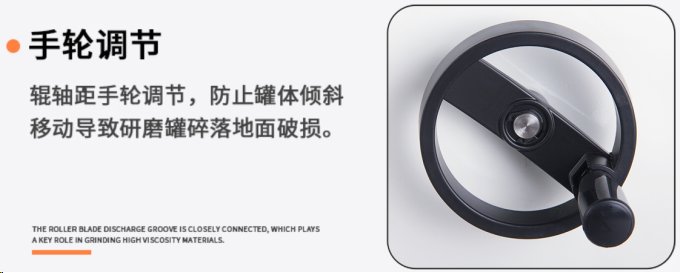
● The roller spacing is adjusted manually with a handwheel to prevent the tank body from shifting or deviating.
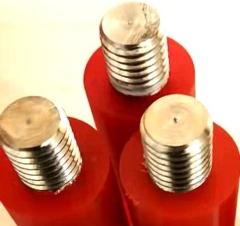
● The entire roller shaft is externally lined with a wear-resistant polyurethane sleeve to increase the friction coefficient and prevent deformation of the tank body from slipping.
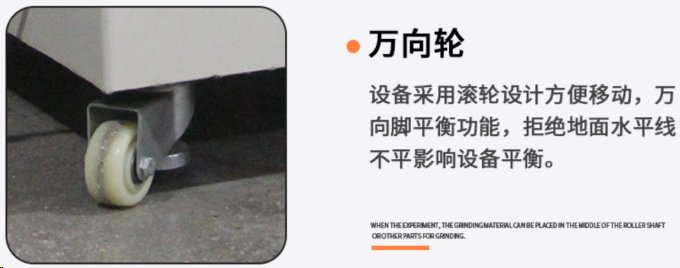
● Equipped with universal wheels for easy mobility. The universal caster leveling function ensures stable operation.
●Single-layer, four-station, easy to use.
III.Product Parameters
Model | GMS1-4 | GMS3-4 | GMS5-4 | GMS10-4 | GMS10-4B | GMS20-4 | GMS30-4 |
The volume of the mixing tank. | 500ml-1L | 500ml-3L | 500ml-5L | 500ml-10L | 500ml-10L | 500ml-20L | 500ml-30L |
Roller diameter*Length | Φ38*(185*2) | Φ58*(250*2) | Φ58*290 | Φ68*(349*2) | Φ68*(349*2) | Φ78*(424*2) | Φ78*(424*2) |
Powerkw) | 0.55 | 0.55 | 0.75 | 1.5 | 1.5 | 3 | 4 |
The spacing of the handwheel is adjustable. | 62-160 | 76-230 | 67-280 | 67-230 | 67-230 | 30-340 | 35-290 |
Adjustable jar diameter | Φ50-Φ160 | Φ70-Φ180 | Φ70-Φ260 | Φ50-Φ280 | Φ60-Φ280 | Φ60-Φ320 | Φ60-Φ360 |
Layer count/workstation | Single layer/four-station | Single layer/four-station | Single layer/four-station | Single layerFour-station | Double-decker/four-station | Single layerFour-station | Single layer/four-station |
Power supply (v/hz) | 220v/50hz | 220v/50hz | 220v/50hz | 380v/50hz | 380v/50hz | 380v/50hz | 380v/50hz |
Roller speed | 5-1000 | 5-1000 | 5-1000 | 5-1200 | 5-720 | 5-720 | 5-712 |
Transmission method | Synchronous belt | Synchronous belt | Synchronous belt | Synchronous belt | Synchronous belt | Synchronous belt | Synchronous belt |
Number of rollers | Three | Three | Three | Three | Four | Four | Four |
IV. Product Introduction
V. Detailed Features
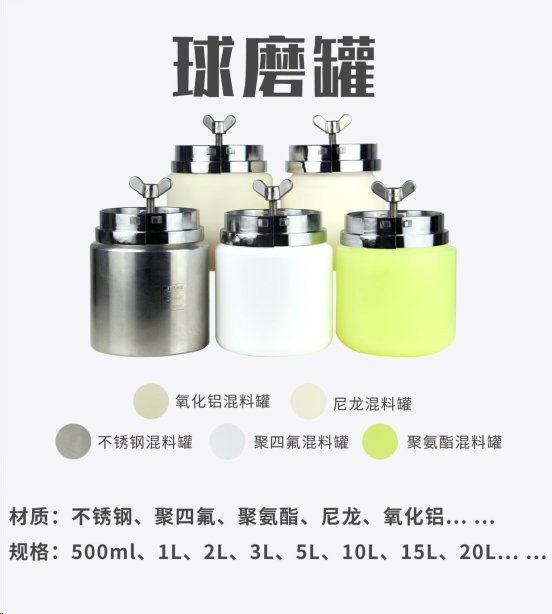
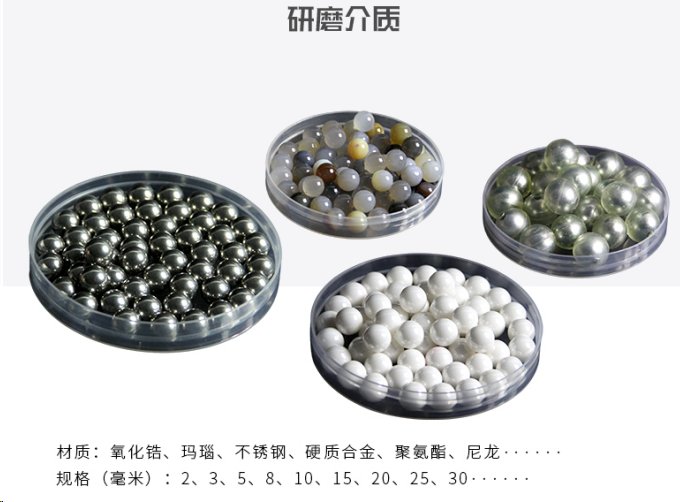
VI. Ball Mill Jar and Grinding Media