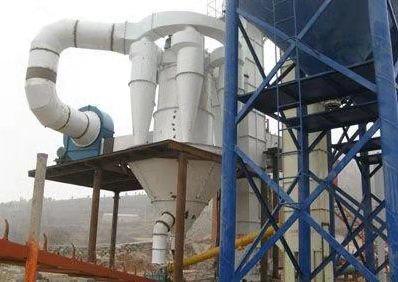
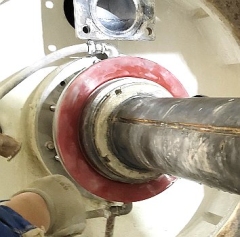
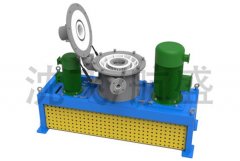
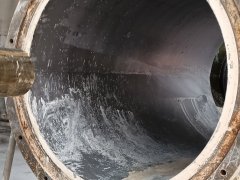
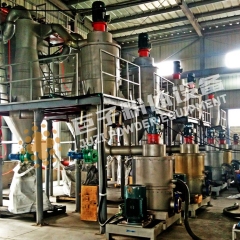
A classifier is a powder separation device widely used in dry powder classification processes. There are many types of classifiers, each suited to different materials based on its structural design. Different models are also customized according to customers' requirements for material fineness. The classifiers produced by our company include the O-SEPA vortex classifier, high-efficiency low-wear classifier for sand and gravel, T-SEPAX combined three-in-one classifier, FLZH series combined internal circulation classifier, dynamic classifier for coal mills, high-fineness classifier for slag powder and fly ash, and ultra-fine classifier for heavy calcium carbonate powder. 1. O-SEPA Classifier (1) Overview The O-SEPA classifier is a high-efficiency powder classification device primarily used to enhance circulating grinding systems or classification systems. This classifier operates on the principle of vortex classification, offering significantly improved performance compared to traditional centrifugal classifiers. (2) Working Principle Working Principle of O-SEPA Classifier: The raw material enters the classifier through the feed inlet, where it is impacted and dispersed on the spreading plate, moving along the circumferential direction. After colliding with the buffer plate, it is introduced into the classification chamber. Inside the chamber, the powder particles dispersed by the airflow undergo vortex adjustment through guide vanes and the rotor, achieving classification by balancing centrifugal force with inward airflow. Fine powder, along with the classification air (air or dust-laden air) supplied by the primary and secondary air inlets, is transported to the center of the classification chamber and then into the outlet duct. Meanwhile, coarse powder subjected to centrifugal force is directed to the peripheral guide vanes, flowing along the inner side of the vanes. The fine powder adhering to the surface of the coarse powder is washed away by the air entering through the primary and secondary air inlets, enabling secondary classification of the coarse powder. The coarse powder then falls into the lower hopper for collection. (3) Product Features The OSEPA classifier features advanced principles and a clear classification mechanism. Compared to traditional centrifugal and cyclone classifiers, it offers the following main advantages: (a) Increase production; (b) Reduce energy consumption; (c) Improve quality, reduce costs; (d) Simple operation, convenient fineness adjustment; (e) Low wear and tear, simple maintenance; (f) Large capacity for processing powder materials; (g) High powder selection efficiency. II. High-Efficiency, Low-Wear Sand and Stone Classifier (1) Overview The sand and gravel classifier produced by our company adopts a combination of a cascade flow and dynamic rotor classifier for the classification of sand and gravel materials. The materials undergo two-stage classification inside the classifier: the **first stage** involves a power-free cascade flow preliminary classification to separate fine particles from the material, while the **second stage** uses a dynamic rotor for precise fine powder particle size classification. Users can adjust the rotational speed of the dynamic rotor as needed to control the fineness of the classified powder. (2) Performance Characteristics This classifier is significantly different from previous classifiers. In the past, classifiers typically fed material from the upper part, where the material was discharged onto a high-speed rotating rotor spreading plate for distribution and classification, or onto a high-speed rotating spreading impeller for the same purpose. Due to the high-speed rotation of the spreading device, it experienced rapid wear, often leading to issues such as rotor imbalance and increased vibration. This resulted in heavy maintenance workloads and made the system particularly sensitive to occasional large stone particles mixed in with the fine sand material. The sand and gravel classifier produced by our company adopts a combination of cascade and dynamic rotor classifiers for the classification of sand and gravel materials. The material distribution utilizes a non-powered cascade classification device. Due to the absence of high-speed rotating components, the wear of the primary classification equipment is well controlled, and it is insensitive to occasional mixed particles. III. T-SEPAX Combined Three-Separation Classifier (1) Overview The T-SEPAX combined three-stage separator breaks away from the conventional closed-circuit grinding system's "coarse and fine powder" two-stage separation theory, dividing materials into three parts: coarse powder, medium-coarse powder, and fine powder. This product features a simple system configuration and low cost, significantly increasing mill output. Its internal structure is well-designed, delivering outstanding separation performance. When configured in intermediate-discharge drying raw material mills and multi-stage grinding systems, it achieves optimal results. (2) Working Principle In working condition, the high-speed motor drives the vertical transmission shaft to rotate through the transmission device. The material enters the classification chamber through the feed inlet located at the upper part of the classifier chamber, and then passes through the gap between the upper and lower cones of the medium-coarse powder collection cone and the powder passage pipe to fall onto the spreading plate. The spreading plate rotates with the vertical transmission shaft, and under the action of inertial centrifugal force, the material is evenly scattered outward. The dispersed material, under the action of high-speed airflow from the external fan entering the classification chamber through the air inlet, causes the coarse and heavy particles in the material to be thrown toward the inner wall surface of the classification chamber under the influence of inertial centrifugal force. After collision, they lose kinetic energy, slide down along the wall surface, and fall into the coarse powder collection cone. The remaining particles are swept up by the rotating upward airflow. When passing through the action area of the large blades, under the impact of the large blades, another portion of coarse powder particles is thrown to the inner wall surface of the classification chamber. After collision, they lose kinetic energy, slide down along the wall surface, and fall into the coarse powder collection cone. The medium-coarse powder and fine powder, after passing through the large fan blade, continue to rise under the action of upward airflow, passing through the vertical guide vanes and entering the secondary classification zone. Under the influence of the strong and stable planar vortex formed by the rotating cage rotor, the medium-coarse powder is thrown toward the vertical guide vanes by centrifugal force, loses kinetic energy, falls into the medium-coarse powder collection cone, and is discharged through the medium-coarse powder pipe. The fine powder that meets the requirements passes through the cage rotor and enters its interior, then flows with the circulating air into the high-efficiency, low-resistance cyclone separator, where it subsequently slides into the fine powder collection cone and becomes the final product. I. FLZHN Series Combined Internal Circulation Classifier (1) Overview The FLZHN series combined internal circulation classifier is a high-efficiency, low-cost powder classification equipment developed by our company for the tail discharge lifting circulation grinding system. This equipment uses multiple cyclone dust collectors distributed around the classifier housing to collect and separate the finished product. The air from the cyclone dust collectors is returned to the classifier by the fan. This equipment can be used in raw material drying and grinding systems where the raw material moisture content does not exceed 6%, or in grinding systems that do not require moisture drying, thereby reducing the investment in bag dust collectors. (2) Working Principle The material entering the classifier consists of two parts. The majority of the material is fed through the feed inlet, where it is divided into two streams by a distribution chute. These two streams are then fed from two points onto the spreading plate at the top of the rotor. As the rotor rotates, the spreading plate scatters the material falling onto it in all directions. After hitting the walls, the material falls into the classification zone, where it is classified under the combined action of the classification airflow and the rotor's rotation. Qualified material enters the rotor with the airflow, passes through the air outlet into the cyclone, where the finished product is collected and discharged through the outlet. The exhaust gas exits from the top outlet of the cyclone, enters the circulating fan, and then returns to the classifier. Unqualified material is collected by the inner cone of the classifier and passes through the annular outlet between the inner cone and the impact cone into the space between the inner and outer cones. After being re-cleaned by the rising airflow, the coarse powder (unqualified material) is discharged through the return material outlet. The other part of the material is carried by the airflow and enters the classifier through the air inlet. It first impacts the impact cone and is forced to change direction, while the airflow speed rapidly decreases. At this point, larger-sized material loses kinetic energy and falls into the coarse powder. The remaining material continues to rise, passes through the guide vanes, and enters the classification zone for further classification. II. Dynamic Coal Mill Classifier (1) Overview The MDS air-swept coal mill dynamic classifier is a high-performance classifier that integrates coarse powder separation and a horizontal vortex classifier. It is primarily used in air-swept coal mill systems, and can also be applied to air-swept raw material mill systems and the classification of materials such as fly ash. In other words, any grinding system that employs an air-swept tube mill can utilize this classifier. (2) Performance Characteristics a. The classification principle is advanced, utilizing vertical guide vanes combined with a straight cage-type rotor, which forms a high-quality separation structure and achieves high powder selection efficiency. b. The main shaft of the classifier adopts stepless variable frequency speed regulation, making fineness adjustment convenient, sensitive, and reliable. c. The vulnerable parts of the classifier are made of wear-resistant materials or treated with anti-wear processes, resulting in extremely low wear rates, effectively extending the service life. Service life d. The entire machine operates under negative pressure, ensuring no dust pollution. The system has a simple structure and operates stably and reliably. e. High output: 50-100% higher than open-circuit grinding systems, 10-30% higher than centrifugal classifier systems, and compared to systems with The output of the air-swept coal mill system with the old-style coarse powder separator has increased by more than 20%. f. Low power consumption: Under the same output, the power consumption is 5–20% lower compared to systems using centrifugal classifiers. g. Wide range of product fineness adjustment: The specific surface area of the product can be selected within the range of 260 to 650 m²/kg. VI. FLGX Series High-Fineness Classifier (1) Overview The FLGX series high-fineness classifier is a sorting equipment developed by our company for high-fineness powder separation in slag micropowder production lines, desulfurizer grinding and classification production lines, and high-fineness fly ash grinding production lines. It is suitable for classifying high-fineness powders with a specific surface area of 400 to 600 ㎡/Kg. (2) Structural Characteristics a. Designed based on the principle of strong vortex classification, with a cage-type impeller arranged vertically; b. A specially designed powder classification equipment for high-fineness powders with a specific surface area of 400–600 ㎡/Kg. c. High processing capacity, low energy consumption, and high classification efficiency; d. The product grading cut points are accurate, with no coarse particles mixed into the product. e. The fineness of the product can be arbitrarily adjusted by varying the rotor speed through frequency conversion or adjusting the opening of the air valve, making the adjustment of product varieties simple and convenient.
7. FLCX Series Ultra-fine Classifier (1) Overview The FLCX series ultrafine classifier utilizes the principle of particle size cutting with a high-speed rotating impeller. The impeller operates at a higher rotational speed, resulting in greater linear velocity, increased centrifugal force, and more precise manufacturing. It is suitable for powder classification ranging from 100 mesh to 1600 mesh and is widely used in the classification of ultrafine powders in the heavy calcium carbonate industry and chemical industry. (2) Working Principle Under the suction force of the fan, the material moves rapidly from the lower feed inlet of the classifier into the classification zone along with the upward airflow. In the classification zone, the strong centrifugal force generated by the high-speed rotating classification impeller separates coarse and fine materials. Fine particles meeting the required particle size pass through the gaps between the classification impeller blades and are collected by a separator or dust collector. Coarse particles, along with some fine particles, descend along the cylinder wall to the secondary air inlet. There, under the strong elutriation effect of the secondary air, the coarse and fine particles are separated. The fine particles rise back to the classification zone for secondary classification, while the coarse particles descend to the discharge outlet for removal, thereby achieving particle classification. (3) Product Features a. Scope of Application: Suitable for dry classification of most materials, can be connected in multiple stages to achieve classification into multiple particle size ranges at once. b. Product particle size: 150μm~10μm (100 mesh~1600 mesh), controllable and adjustable according to your needs. c. Product output: Closely related to indicators such as raw material particle size distribution, specific gravity, moisture content, and flowability. d. Optional feeding method: Using a hopper + variable frequency screw control + negative pressure conveying feeding method, with quantifiable and controllable dosing. e. Optional discharge methods: through a dust collector or cyclone discharger, with electric discharge valves or pneumatic butterfly valves installed as per customer requirements. or manual butterfly valve f. Product Quality: Ceramic linings can be installed on the inner walls of the equipment, significantly extending its service life. g. Working Environment: No special requirements for the workshop; low dust and low pollution on site, with a negative pressure system that meets emission standards.
Friendly reminder: Due to differences in purchase situations and consultation times for each inquirer, the following response is provided for reference only.3Valid within days, for reference only by other netizens.。
Product Inquiry分页占位
发布询price咨询
Consultation Type:
Consultation Content:
Henan Fuland Heavy Industry Machinery Co., Ltd.
Contact人:Manager Deng
Phone:18519933863
WeChat:18519933863
Email:
Address:No. 18, Dongfang Road, Mazhai Industrial Park, Erqi District, Zhengzhou City
Please let us know if you are inquiring about...「New Material Help」I saw it online; it helps facilitate the transaction.。