- Products
-
Shops
AI Search

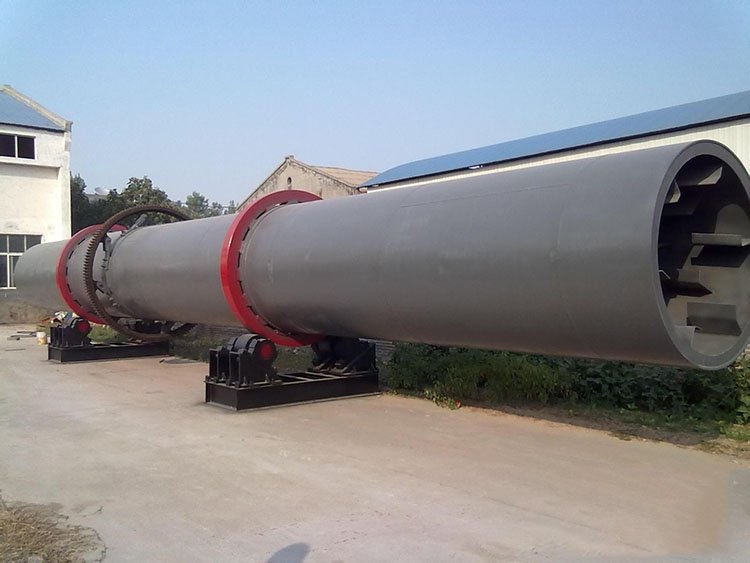
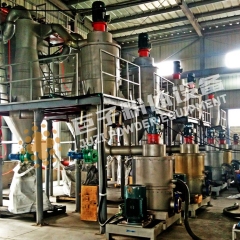
Dryers are primarily used in industries such as mineral processing, building materials, metallurgy, and chemical engineering to dry materials with a certain moisture content or particle size. Rotary dryers have strong adaptability to materials, can dry various types of materials, and feature simple and reliable operation, making them widely adopted.
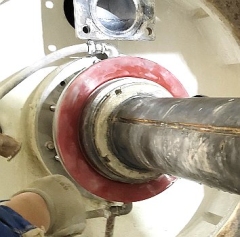
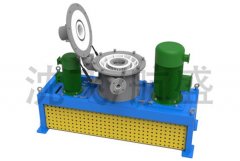
This machine is mainly composed of components such as the rotating body, lifting plates, transmission device, support device, and sealing rings. The dryer in our factory adopts a new type of lifting plate device, which has multiple functions including guiding, flow equalization, and material lifting. It enables the material to be evenly distributed across the radial cross-section of the dryer, forming a thin, uniform, and complete material curtain that fully contacts the hot airflow, thereby achieving the goal of fully utilizing thermal energy.
| Low Energy Consumption The dryer in our factory operates with optimized parameters, resulting in coal and electricity consumption that is more than 10-15% lower than that of conventional dryers. | High yield, with a production increase of 10-15% or more, has been widely applied in cement and mineral processing enterprises. |
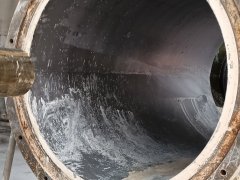
The heat source of the dryer comes from the combustion device, and this dryer adopts a co-current heating method. Therefore, the material to be dried enters the cylinder from the feed box and feed chute, and is immediately pushed backward by the spiral lifting plates. Due to the inclined placement of the dryer, the material flows toward the rear end under the influence of gravity and rotation. At the same time, the material is repeatedly lifted by the lifting plates, carried to the upper end, and continuously scattered down, forming a uniform curtain of material inside the cylinder. This allows full heat exchange with the hot airflow in the cylinder. Through repeated scattering, the moisture contained in the material is gradually dried, thereby achieving the purpose of drying.
| Specifications (m) | Cylinder volume (m³) | Production capacity (t/h) | Installation slope (%) | **Intake Air Temperature (℃) | Main motor (kw) | Total weight (t) |
| Φ1.2×8.0 | 9.0 | 1.9-2.4 | 3-5 | 700-800 | 7.5 | 9 |
| Φ1.2×10 | 11.3 | 2.4-3.0 | 3-5 | 700-800 | 7.5 | 11 |
| Φ1.5×12 | 21.2 | 4.5-5.7 | 3-5 | 700-800 | 15 | 18.5 |
| Φ1.5×14 | 24.7 | 5.3-6.6 | 3-5 | 700-800 | 15 | 19.7 |
| Φ1.5×15 | 26.5 | 5.7-7.1 | 3-5 | 700-800 | 15 | 20.5 |
| Φ1.8×12 | 30.5 | 6.5-8.1 | 3-5 | 700-800 | 18.5 | 21.5 |
| Φ1.8×14 | 35.6 | 7.6-9.5 | 3-5 | 700-800 | 18.5 | 23 |
| Φ2.2×12 | 45.6 | 9.7-12.2 | 3-5 | 700-800 | 22 | 33.5 |
| Φ2.2×14 | 53.2 | 11.4-14.2 | 3-5 | 700-800 | 22 | 36 |
| Φ2.2×16 | 60.8 | 13.0-16.2 | 3-5 | 700-800 | 22 | 38 |
| Φ2.4×14 | 63.3 | 13.5-16.9 | 3-5 | 700-800 | 37 | 45 |
| Φ2.4×18 | 81.4 | 17.4-21.7 | 3-5 | 700-800 | 37 | 49 |
| Φ2.4×20 | 90.4 | 19.3-24.1 | 3-5 | 700-800 | 45 | 54 |
| Φ2.4×22 | 99.5 | 21.2-26.5 | 3-5 | 700-800 | 45 | 58 |
| Φ2.6×24 | 127.4 | 27.2-34.0 | 3-5 | 700-800 | 55 | 73 |
| Φ3.0×20 | 141.3 | 30.1-37.7 | 3-5 | 700-800 | 75 | 85 |
| Φ3.0×25 | 176.6 | 37.7-47.1 | 3-5 | 700-800 | 75 | 95 |
| Φ3.2×25 | 201 | 42.9-53.6 | 3-5 | 700-800 | 90 | 110 |
| Φ3.6×28 | 285 | 60.8-76.0 | 3-5 | 700-800 | 160 | 135 |
Indirect Heat Transfer Dryer
| Cylinder Diameter × Cylinder Length Project | Outer cylinder inner diameter (mm) | Inner cylinder inner diameter (mm) | Cylinder length (m) | Cylinder Volume (m³) | Cylinder inclination | Type of lifting plate | **Intake Air Temperature (℃) | External dimensions (m) |
| Φ1.5×15m | 1500 | 500 | 15 | 20.27 | 3-5% | Lifting type | 850 | 16.2×2.7×2.7 |
| Φ1.5×17m | 17 | 22.97 | 18.2×2.7×2.7 | |||||
| Φ1.5×19m | 19 | 25.68 | 20.0×2.9×2.9 | |||||
| Φ1.8×21m | 1800 | 650 | 21 | 35.91 | 3-5% | Lifting type | 850 | 22.5×2.7×2.7 |
| Φ1.8×23m | 23 | 39.33 | 24.5×2.9×2.9 | |||||
| Φ1.8×25m | 25 | 42.75 | 26.5×2.9×2.9 | |||||
| Φ2.2×21m | 2200 | 800 | 21 | 58.10 | 3-5% | Lifting type | 850 | ---- |