- Products
-
Shops
AI Search

I. Purpose
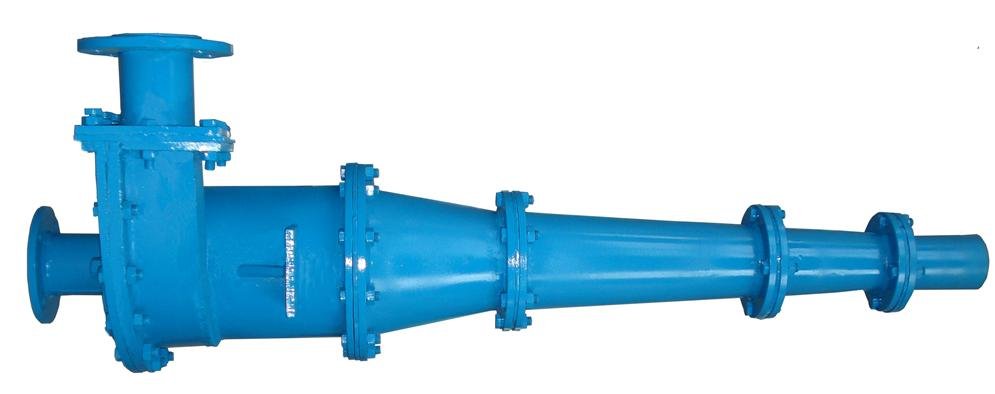
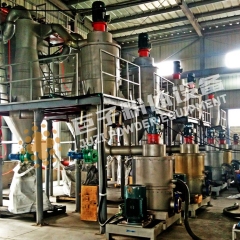
A hydrocyclone, also known as a liquid cyclone, is an efficient device for fine powder classification and solid-liquid separation, widely used in industries such as coal preparation, mineral processing, and petrochemicals. This machine is primarily employed in calcium carbonate production to remove sand, gravel, black ash, and undissolved lime particles from lime milk.
II. Structural Characteristics
The hydrocyclone mainly consists of three major parts. The middle part is the main body of the cyclone, which has a rectangular feed inlet. The top of the inlet is on the same horizontal plane as the cylinder, which can reduce short-circuiting. The internal width of the inlet pipe can be adjusted in three levels. The cone section is equipped with a support for fixation. The overflow outlet also has three options for selection. The upper part is the overflow pipe, connected to the main body via a flange; the lower part is the bottom discharge outlet, connected to the main body via threads. The hydrocyclone has no moving parts, a simple structure, high efficiency, low investment, and easy maintenance. It enables large-scale production with small equipment, making it far superior to traditional curved channel production methods.
III. Specifications and Technical Parameters
| Specifications (mm) | Ø100 | Ø125 | Ø150 |
| Feed Pressure (atm) | 1.5~3.0 | 1.5~3.0 | 1.5~3.0 |
| Processing capacity of two units in parallel (m³/h) | 10~20 | 20~30 | 20~30 |
| Import dimensions (mm×mm) | 30× 5,7,9 | 35×7,9,11 | 40×8,10,12 |
| Overflow diameter (mm) | Ø14,Ø 18,Ø26 | Ø18,Ø 25,Ø32 | Ø20,Ø 30,Ø40 |
| Bottom outlet diameter (mm) | Ø8,Ø 10 | Ø12,Ø 15 | Ø15 |
| Taper | 20° | 20° | 20° |
| Overall Dimensions (mm×mm) | 300×557 | 325×625 | 353×707 |
| Weight (kg) | 39 | 50 | 70 |