- Products
-
Shops
AI Search

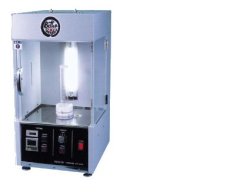
The tapping density measurement device can uniformly compress the cylinder containing the sample through tapping to measure the bulk density and approximate packing density, and can also estimate the flowability and adhesiveness of the powder.
Using the optional angle of repose measurement device, the angle of repose can be easily measured.
The sample is uniformly filled into the test tube and compressed by tapping.
It can not only measure the compression amount and tap density of the powder, but also...
The flowability and adhesion of the powder are measured simultaneously.
If the optional angle of repose (static) measuring device is added, it can also easily
Measure the angle of repose.
CharacteristicsGood reproducibility
Cleaning is simple.
Replace small container.
Testing of micro samples has also become possible.
Organic glass door to prevent sample scattering.
Filling with a sieve mesh can prevent uneven sample particle size.
Variable vibration distance
The number of vibrations can be adjusted.
Tap density
Tap density refers to the process of uniformly filling a powder into a container, then vibrating it (by lifting the container upward and allowing it to free-fall) to eliminate gaps between particles, resulting in a dense
The density obtained after actual filling. For example, the state under self-weight alone differs from the state when flowing within a device. The condition immediately after bagging also differs from that after prolonged transportation.
The density measured afterward will also vary.
In other words, after the powder is filled, there are still quite a few voids in the filling layer. During transportation and movement, these voids are subjected to vibration and impact.
It is destroyed, forming a dense state. From the above, it can be concluded that by measuring the tap density, information about the flowability and loose reduction of powder particles can be obtained.
Data related to the degree and changes in porosity.