- Products
-
Shops
AI Search

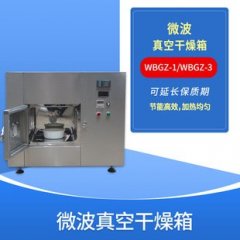
MicrowaveVacuumThe dryer utilizes the well-established microwave energy application technology.For food engineering, pharmaceutical engineering, bioengineering, chemical engineering, materials engineering, and deep processing of agricultural and sideline products.The successful development of the new generationNew, efficientDry,Sterilization equipment. It has significant advantages such as fast drying speed, low energy consumption ratio, and uniform drying and sterilization effect of materials. It can directly replace traditional dryers asForUsed for material dehydration and drying; it can also utilize the inherent sterilization capability of microwave energy to sterilize materials such as Chinese herbal medicines and Chinese herbal powder.Primarily used for dehydration, drying, and sterilization of high-value-added, heat-sensitive agricultural by-products, health products, food, medicinal herbs, fruits and vegetables, and chemical raw materials. Also applied in low-temperature concentration of chemical products, removal of crystalline water, and drying of enzyme preparations.,MicrowaveVacuumDryerSuitable for laboratories in research institutions and universities.
Features:
1Energy Efficiency and High Performance: Conventional vacuum drying equipment, due to the difficulty of heat transfer through convection in a vacuum environment, can only rely on conduction, resulting in slow heating rates, long drying cycles, and high energy consumption. Microwave vacuum drying equipment, on the other hand, uses radiant energy transfer, heating the medium as a whole without the need for additional heat transfer mediums, thereby avoiding the aforementioned drawbacks. This leads to faster speeds, higher efficiency, significantly shortened drying cycles, and reduced energy consumption. Compared to conventional drying technologies, it can improve work efficiency by more than four times.
2Uniform Heating: Since microwave heating simultaneously heats the material from both the inside and outside, the temperature difference between the interior and exterior of the material is minimal. This eliminates the inconsistency in heating between the inside and outside that often occurs with conventional heating methods, thereby significantly improving the drying quality.
3Easy to control: Due to the rapid adjustability and inertia-free characteristics of microwave power, it is easy to control in real time, facilitating the adjustment and determination of process parameters. The microwave power can be steplessly adjusted according to changes in material temperature, utilizing a human-machine interface andPLCProgrammable automation control for heating processes and heating process specifications is achievable.
4The equipment is compact in size, making installation and maintenance convenient.
5, Extends Shelf Life: The biological effects of microwave energy enable sterilization and mold prevention at lower temperatures. Due to the rapid heating speed and short duration, it **maximally** preserves the activity, vitamins, original color, and nutritional content of the materials.
6Environmental Protection: Microwave vacuum equipment does not produce the "three wastes" (waste gas, wastewater, and solid waste). Since microwave energy is controlled to operate within a heating chamber and waveguide made of metal, microwave leakage is extremely minimal and can be controlled to2.0mw/cm2It has no radioactive hazards or harmful gas emissions, produces no residual heat or dust pollution, and does not contaminate materials or the environment.
7The economic benefits are significant.
Microwave vacuum equipment demonstrates significant economic and social benefits in terms of energy saving, consumption reduction, product quality improvement, safety and hygiene, and low equipment investment costs.