- Products
-
Shops
AI Search

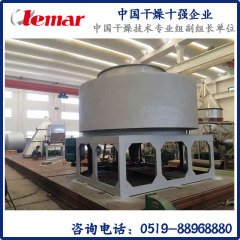
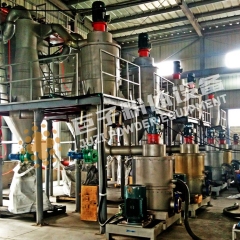
XSG Series Rotary Flash DryerThis is a new practical **product** independently developed and designed by our company, based on the digestion and absorption of advanced foreign technologies, combined with the actual drying conditions in China. It is a new type of high-efficiency fluidized drying equipment developed by our company to overcome the low efficiency and high energy consumption of static drying. During the design process, this machine fully integrates the characteristics of fluidized drying methods such as airflow drying, leveraging strengths and avoiding weaknesses, resulting in a machine with a reasonable process structure and superior performance. It truly achieves the goal of low energy consumption and high efficiency in fluidized drying.
Device Overview:
Based on the material properties of aluminum hydroxide, our company has independently developed a rapid spin flash dryer, which has achieved successful application in the drying of aluminum hydroxide by building upon the digestion and absorption of advanced foreign equipment and technology.
Device Description:
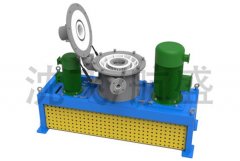
The flash dryer is mainly composed of an air intake system, heating system, feeding system, drying main unit, material collection and dust removal system, exhaust system, and control system. During operation, wet materials enter the drying chamber through a screw feeder. In the drying chamber, the materials come into contact with high-speed rotating hot air. Fine powdered materials are carried by the hot air toward the upper part of the drying chamber, while materials that cannot be carried fall to the bottom of the chamber. These materials are then crushed by the crushing device at the bottom, rapidly dispersing them and significantly increasing their contact area with the hot air. Under the action of centrifugal force (with a classification device at the top), products that have reached the desired dryness and fineness are blown out of the classification device, achieving rapid drying of the materials during this process.
Equipment Features:
Flash dryer has the advantages of high technological content, high standardization, environmental friendliness, safety, low energy consumption, and simple maintenance. In terms of design structure:
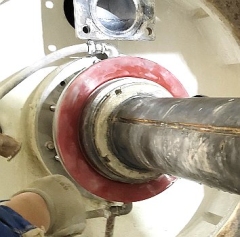
① A reverse conical structure is installed at the bottom of the dryer, allowing the cross-section of the drying gas flow to gradually expand from bottom to top. The airflow at the bottom is relatively strong, while the airflow at the top is relatively weak. This ensures that the larger particles at the bottom remain in a fluidized state, while the smaller particles at the top also remain fluidized. Additionally, the hot air rotates along the conical section, increasing the airflow velocity at the bottom, reducing the length of the cantilevered part of the stirring shaft, and enhancing the safety and reliability of operation. This design also allows the bearing to be placed outside the machine, effectively preventing it from operating in high-temperature areas, thereby extending the service life of the bearing.
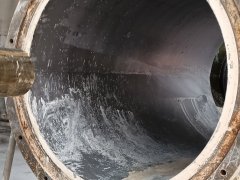
② A scraper is installed on the stirring teeth. While the material is being crushed by the stirring teeth, it is also thrown toward the machine wall and adheres to the wall surface. If not scraped off in time, it may cause equipment vibration in severe cases, or even lead to the stirrer stalling and failing to rotate. Installing a scraper on the stirring teeth allows timely removal of the material stuck to the machine wall, preventing adhesion.
③ The rotation speed of the stirring shaft is controlled by a stepless speed-regulating motor. Different rotation speeds are selected based on the product particle size requirements. The faster the stirring shaft rotates, the smaller the particle size of the resulting product.
④ A classifier is installed at the upper part of the dryer. By adjusting the pore diameter of the classifier and the height of the classification section, the air velocity is altered, thereby controlling the size and quantity of particles leaving the dryer, the final moisture content, and the residence time of the material within the drying section.
⑤ The rotation speed of the screw conveyor in the feeder is controlled by a stepless speed-regulating motor. The feeding speed is controlled based on the material properties and drying process parameters.
⑥ The equipment has a compact structure and a small footprint, integrating drying, crushing, and classification into one unit. It is an organic combination of cyclone technology, fluidization technology, spouting technology, and convection technology. After drying, no further crushing or screening is required, simplifying the production process and saving power and equipment costs.