- Products
-
Shops
AI Search

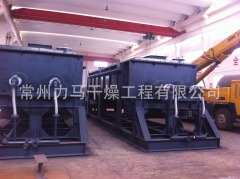
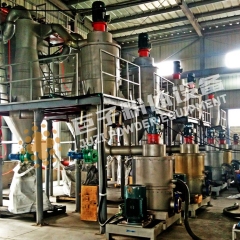
KJG-170 Twin-Shaft Paddle Dryer for Electroplating Sludge
Electroplating is a highly polluting industry, yet it is not one that people are compelled to use. Various precision parts require surface treatment and finishing through electroplating. The electroplating industry generates a large amount of sludge and wastewater that need to be treated; otherwise, it can lead to serious pollution issues. The wastewater from electroplating requires neutralization treatment with lime and other substances, but this creates another form of pollution, namely electroplating sludge. The danger of electroplating sludge lies in heavy metals and their leachate, primarily copper, nickel, chromium, cyanide, and zinc. According to current national environmental protection policies, all electroplating sludge should be uniformly collected by qualified enterprises. The treatment of electroplating sludge is a significant environmental protection cost for many electroplating companies. Using an electroplating sludge dryer to dry the sludge can greatly reduce the cost of recovery based on weight. Therefore, many companies now use electroplating sludge dryers to dry the sludge before submitting it for treatment, thereby reducing expenses.
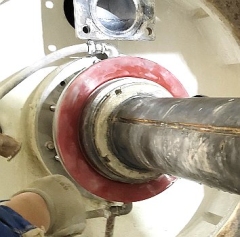
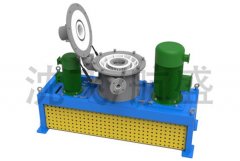
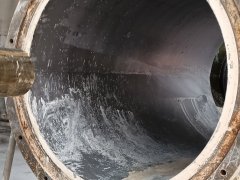
Electroplating Sludge Twin-Shaft Paddle DryerIt is a conduction-heated, low-speed stirring dryer. A jacket is installed on the dryer shell, and hollow paddles are mounted on the hollow shaft, through which a heat carrier is circulated. Under the agitation of the stirring paddles, the wet material undergoes thorough heat exchange with the heated surfaces of the shell and paddles, thereby achieving the drying objective.
Electroplating Sludge Twin-Screw DryerThermal efficiency reaches 80%–90%, with high heat transfer coefficient and significant water evaporation capacity. The special blade structure provides a large heating area, compact unit volume, and minimal floor space. It supports both continuous and batch operations, can perform atmospheric drying or vacuum drying for heat-sensitive materials, and enables heating evaporation as well as cooling crystallization. It can also serve as a pre-dryer for secondary drying, with the ability to recover solvents during the drying process. Heat transfer media include thermal oil, steam, water, hot air, and cooling liquids. Whether for organic or inorganic materials, granular or viscous substances, or materials with high or low moisture content, drying is achievable. The twin-shaft paddle dryer has been successfully applied in fields such as food, chemicals, petrochemicals, dyes, and industrial sludge, performing operations including drying, solvent recovery, cooling, heating and melting, low-temperature combustion, reaction, and sterilization.